
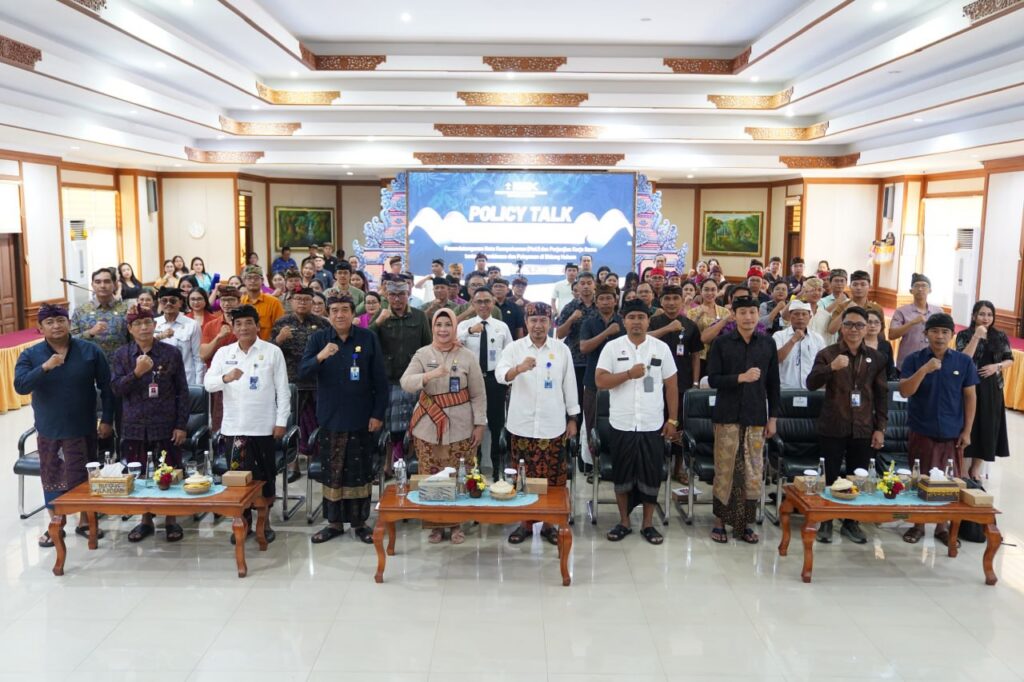
Denpasar – Udayana University (Unud) and the Bali Regional Office of the Ministry of Law (Kanwil Kemenkum) strengthened their synergy through a Policy Talk on Strengthening the Capacity of Policy Analysts in the Region, which was accompanied by the signing of a Memorandum of Understanding and Cooperation Agreement between the two institutions at the Bali Regional Office of the Ministry of Law in Denpasar on Thursday (June 4, 2026).
Themed “Strengthening Policy Analysts as Initiators of Adaptive, Precise, and Innovative Regional Policies in Bali Province,” the event served as a platform to strengthen the capacity of civil servants and strengthen collaboration between the government, academics, and stakeholders in producing quality public policies.
The event was attended by the Rector of Udayana University, Prof. Ir. I Ketut Sudarsana, S.T., Ph.D., Head of the Bali Regional Office of the Ministry of Law; Eem Nurmanah, S.Sos., M.Si.; Heads of Regional Offices of the Ministry of Law throughout Indonesia who participated virtually; the Vice Rector for Planning, Cooperation, and Information of Udayana University; and the Dean of the Faculty of Social and Political Sciences of Udayana University. The event was also attended by policy analysts, administrators, supervisors, and functional officials within the Ministry of Law, both offline and online.
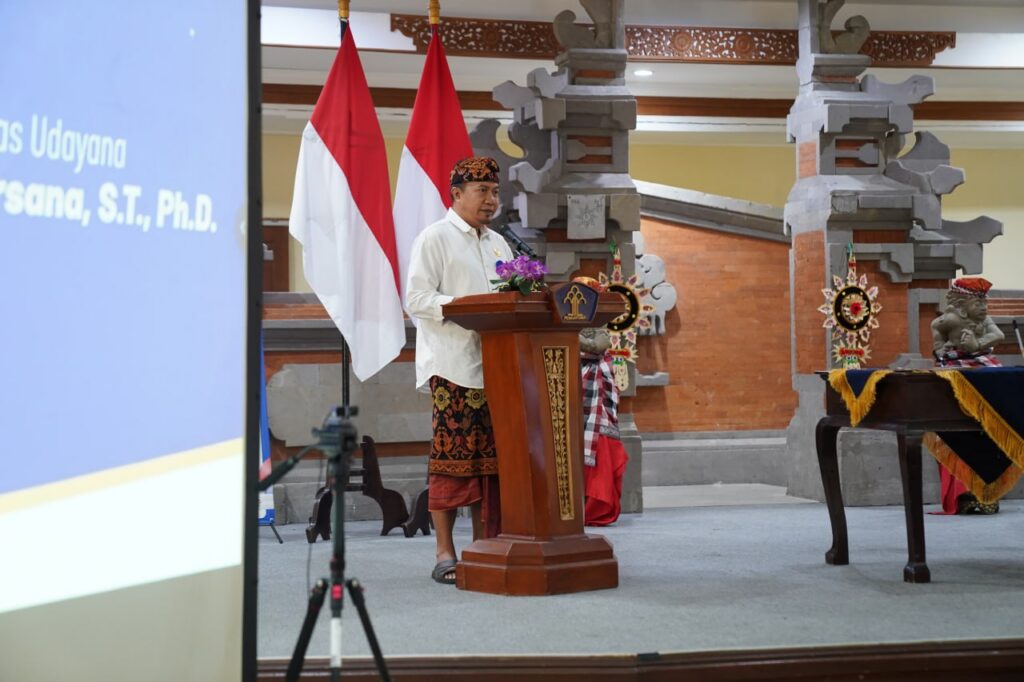
The Rector of Udayana University, Prof. Ir. I Ketut Sudarsana, S.T., Ph.D., stated that the collaboration between Udayana University and the Bali Regional Office of the Ministry of Law is a strategic step in strengthening the relationship between academia and government.
“Udayana University, as an institution of higher education, has a responsibility to implement the Tri Dharma of Higher Education. However, we recognize that current challenges cannot be solved alone. Strong collaboration between universities and the government is needed to produce solutions that benefit society,” said the Rector.
The Rector explained that the scope of the agreed-upon collaboration includes education and training, student internship programs, practitioner involvement in learning, human resource capacity building, and intellectual property protection. Through this collaboration, Udayana University hopes that the research results of lecturers and students, as well as the various cultural potentials of Bali, will receive optimal legal protection.
“Through this collaboration, we hope that the research results of Udayana University lecturers and students, as well as the various cultural potentials of Bali, will receive optimal legal protection, while also providing broader benefits to the community,” he said.
Concluding his remarks, the Rector expressed his hope that the synergy that has been established will produce concrete programs that have a direct impact on students, lecturers, government agencies, and the community.
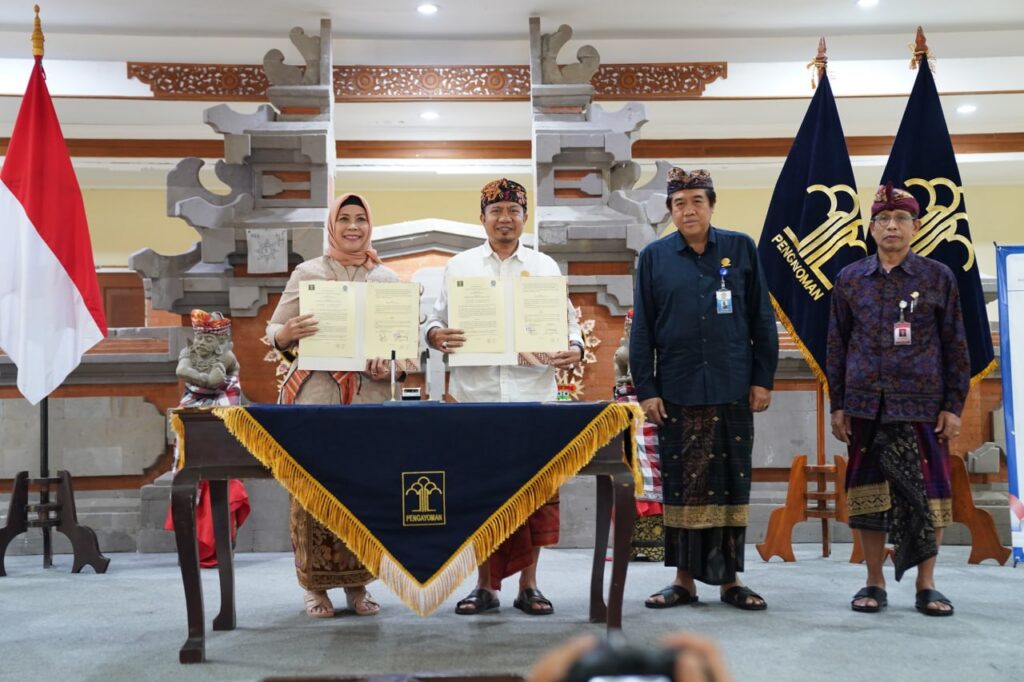
“I hope this collaboration can be followed up in an applicable and measurable manner, so that it has a real impact that can be directly felt by students, lecturers, institutions of the Ministry of Law, and most importantly, the Balinese people,” the Rector concluded.
Meanwhile, the Head of the Bali Regional Office of the Ministry of Law, Eem Nurmanah, S.Sos., M.Si., emphasized the importance of the role of Policy Analysts in producing quality, evidence-based policy recommendations.
“Good policies don’t emerge spontaneously. Quality policies must be developed through a systematic, data-driven process, supported by comprehensive analysis, and take into account the characteristics and needs of the target community,” Eem emphasized.
According to her, Bali has strong social capital through local culture and wisdom, which must be an essential part of the public policymaking process.
“Regional policies cannot simply be based on data and evidence (evidence-based policy), but must also consider local values that live and thrive within the community. The Tri Hita Karana philosophy, which emphasizes the harmonious relationship between humans and God, fellow humans, and the environment, is a highly relevant foundation for developing regional policies that are sustainable, inclusive, and oriented towards community welfare,” she explained.
To enrich the participants’ insights, this activity presented Dewi Oktaviani, S.IP., M.H., Associate Expert Policy Analyst at the Indonesian Institute of Public Administration, who discussed strengthening the strategic role of policy analysts in modern governance. Another resource person, Dr. Komang Adi Sastra Wijaya, S.S., M.AP., Coordinator of the Public Administration Study Program at Udayana University, presented material on the structure and techniques for preparing effective and communicative policy briefs based on the values of Tri Hita Karana and Sad Kerthi in supporting Balinese regional policies. This activity was guided by moderator A.A. Raka Jayaningsih, S.I.Kom., M.Med.Kom., Lecturer in Communication Science at Udayana University who facilitated the discussion between the resource person and participants.