Badung, Bali – Household waste remains a challenge for many villages, ranging from excessive food waste to used cooking oil that is often discarded indiscriminately, posing a risk of environmental pollution. Addressing these issues, students from Udayana University’s 33rd Community Service and Empowerment Program (KKN-PPM) introduced an educational initiative combining environmental, health, and economic empowerment aspects. The program featured a session on household waste control—specifically curbing food waste and managing used cooking oil—alongside a workshop on purifying used cooking oil and transforming it into aromatherapy candles.
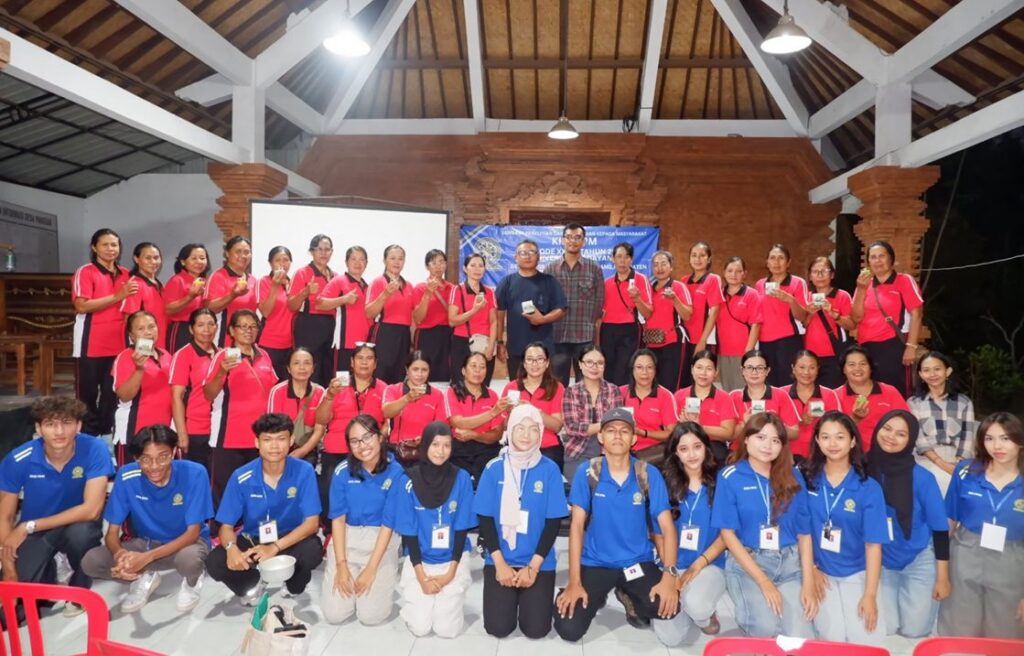
Held on Monday, August 3, 2026, at the Pangsan Village Office in Petang District, Badung Regency, the event was attended by 30 members of the Pangsan Village Family Welfare Empowerment (PKK) group and the Pangsan Village Secretary, I Gusti Ngurah Made Bawa. In his remarks, he commended the Udayana University KKN students for launching a solution-oriented educational program designed to raise community awareness regarding household waste management while creating economic opportunities through waste utilization.
The first session was led by Ir. I Gede Arie Mahendra Putra, S.TP., M.TP., IPM., ASEAN Eng., a lecturer in the Food Technology Study Program at Udayana University’s Faculty of Agricultural Technology and the Field Supervisor for the 2026 KKN-PPM XXXIII program in Pangsan Village. During his presentation on curbing food waste, participants learned that reducing household waste can begin with simple steps—such as planning food purchases, storing food correctly, and making optimal use of ingredients. This education aimed not only to reduce food waste but also to help improve household spending efficiency and support family food security. Next, Ni Komang Sri Budihartini, S.TP., M.TP., a lecturer from the Agro-industrial Technology Study Program at Udayana University’s Faculty of Agricultural Technology, educated participants on the negative health impacts of repeatedly using used cooking oil and the dangers of disposing of it directly into the environment. Through this session, participants were introduced to the circular economy concept of transforming waste into products with both utility and economic value.
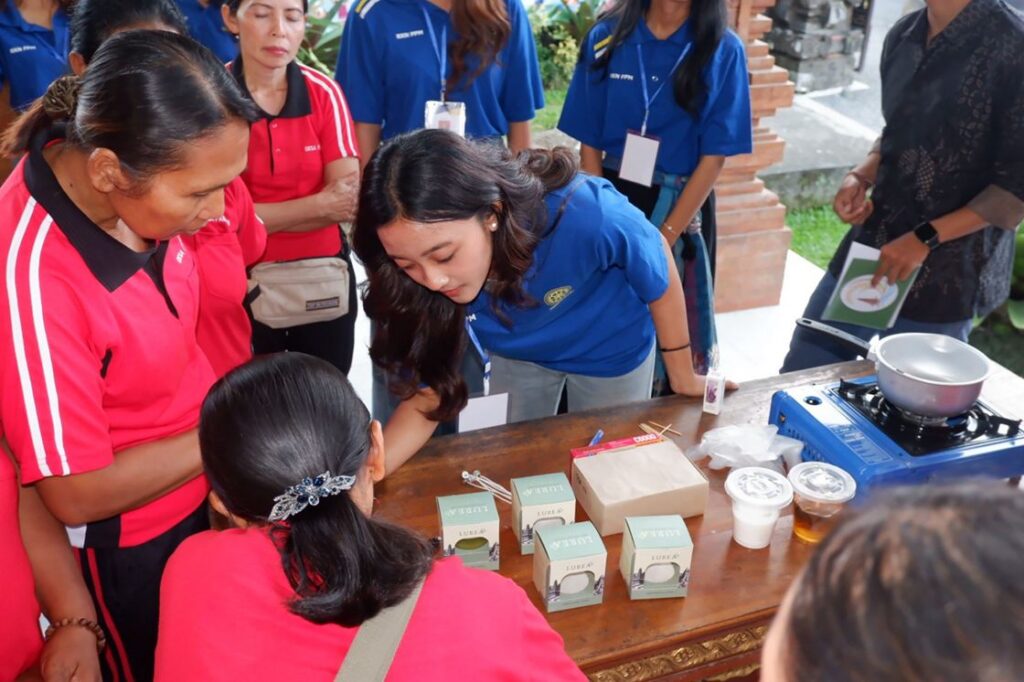
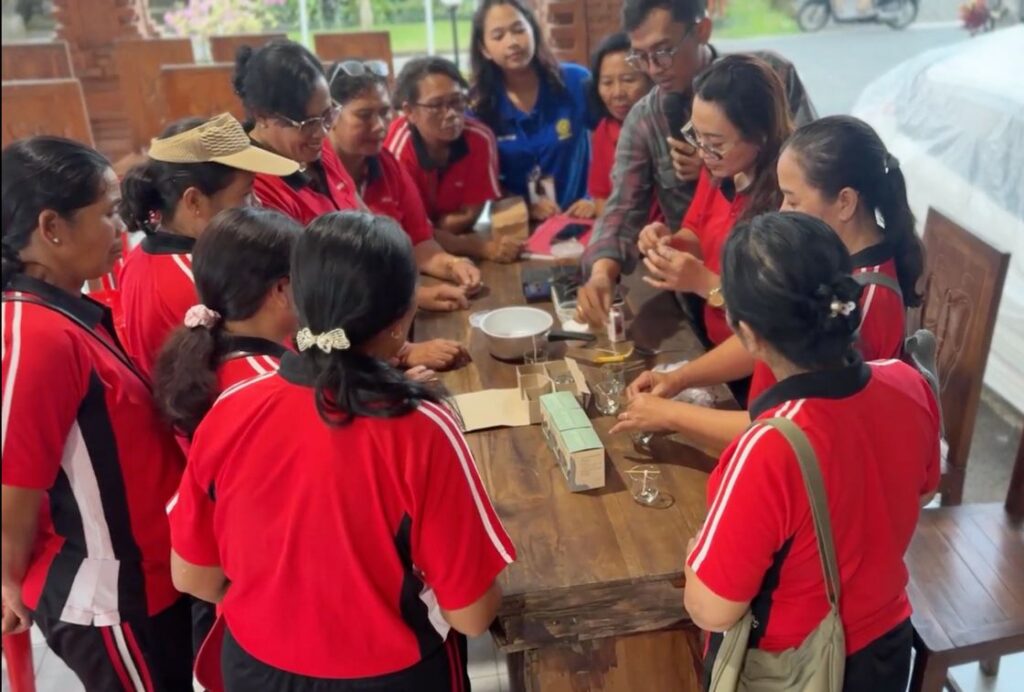
The highlight of the event was an interactive workshop that provided hands-on practical experience for all participants. PKK members not only learned techniques for purifying used cooking oil but also practiced making aromatherapy candles—covering everything from mixing ingredients and molding to creating attractive product packaging. To foster entrepreneurial skills, participants also received training on calculating production costs, setting selling prices, and employing simple strategies to develop these products into home-based business opportunities. The workshop atmosphere was lively and enthusiastic; participants actively engaged in discussions, asked questions, and eagerly followed every step of the practical activities. This high level of participation demonstrated the community’s strong interest in innovations that are not only environmentally friendly but also offer the potential to boost family income by turning household waste into value-added products.
This program serves as a tangible example of Udayana University’s community service initiatives aimed at supporting sustainable development at the village level. Through collaboration between the university, the village government, and the community, the education provided—covering the “Stop Food Waste” campaign and the conversion of used cooking oil into aromatherapy candles—aims to foster a culture of wiser waste management, reduce environmental pollution, and stimulate circular economy-based business opportunities. It is hoped that the knowledge and skills gained during this event will continue to be applied and developed by the residents of Pangsan Village, ultimately creating an environment that is cleaner, healthier, more productive, and sustainable.