
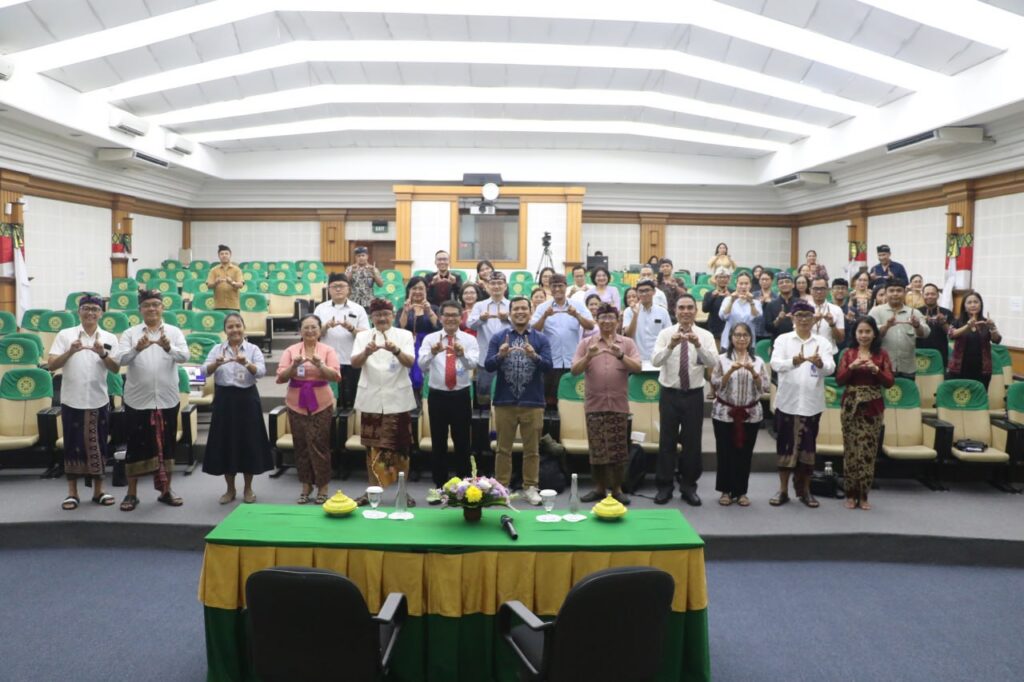
Denpasar – Udayana University held a Technical Guidance (Bimtek) on Strengthening Collaboration Governance on Thursday (June 25, 2026) in the Dr. A.A. Made Djelantik Meeting Room, Faculty of Medicine Building, Unud Sudirman Campus, Denpasar. The event, which featured Firman Hidayat, S.S., M.Si., Head of the Evaluation and Cooperation Division of the Cooperation Bureau of the Ministry of Higher Education, Science, and Technology, as a resource person, aimed to improve the capacity of collaboration managers at Udayana University in realizing professional, accountable, and impactful collaboration governance.
Vice Rector for Academic Affairs, Prof. Ir. I Nengah Sujaya, M.Agr.Sc., Ph.D., representing the Rector of Udayana University, stated in his remarks that amidst the increasingly competitive dynamics of higher education, collaboration is no longer viewed as merely an administrative activity, but has become a strategic instrument in supporting the implementation of the Tri Dharma of Higher Education, enhancing the institution’s reputation, and accelerating the achievement of university performance targets.
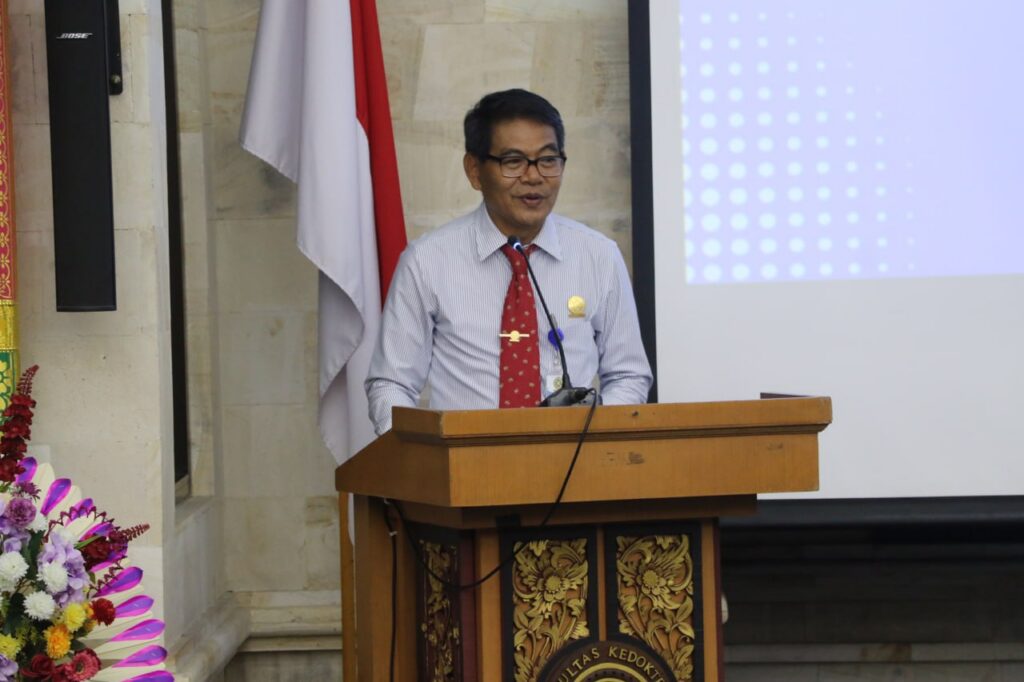
According to the Vice Rector, Udayana University continues to expand its partnership network with various institutions at the national and international levels. This collaboration has made tangible contributions in the fields of education, research, community service, human resource development, faculty and student mobility, and strengthening innovation and downstreaming research results.
“The success of a collaboration is not only measured by the number of signed documents. What is far more important is how the collaboration can be implemented in real life, generating benefits for the institution and the community, and being well documented and reported,” he said.
He further stated that the governance of collaboration is closely linked to the achievement of various Key Performance Indicators (KPIs) of higher education. Various strategic programs such as off-campus learning, teaching practitioners, collaborative research, student exchanges, internationalization, and innovation development require a strong and sustainable foundation for collaboration.
The Vice Rector also emphasized the importance of optimizing reporting through the Laporkerma application, so that all collaborative documents, including Memoranda of Understanding (MoUs), Memoranda of Agreement (MoAs), and Implementation Agreements (IAs), can be recorded completely, validly, and in accordance with regulations.
“Often, a unit has implemented excellent collaboration and made a real impact, but because documentation and reporting are suboptimal, these contributions are not reflected in national data or institutional performance reports. As a result, the true achievements achieved cannot be fully recognized,” he emphasized.
Through this Technical Guidance, the Vice Rector hopes that all collaboration managers within Udayana University will have a shared understanding of regulations, governance, administration, and reporting mechanisms, so that every collaboration established is not only high-quality in implementation, but also orderly in documentation and reporting.
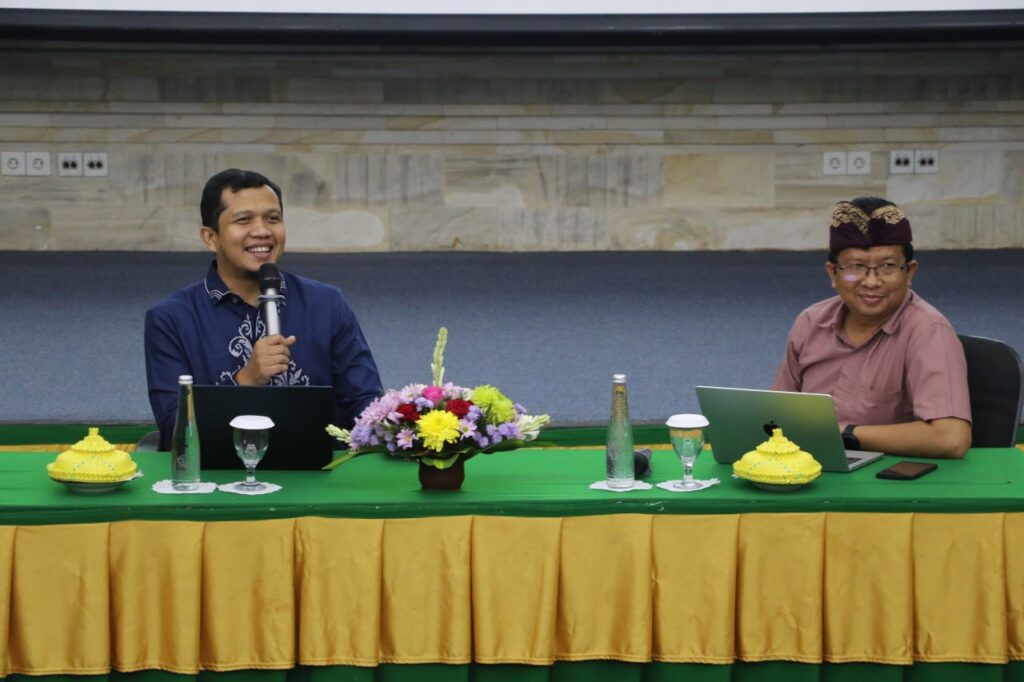
Meanwhile, Firman Hidayat, S.S., M.Si., a resource person from the Ministry of Higher Education, Science, and Technology, presented material on Optimizing Impactful Higher Education Collaboration. In his presentation, he explained that universities are currently required to transform into fourth-generation institutions (Fourth Generation Universities), namely universities that not only carry out education and research, but are also capable of producing innovations that have a real impact on economic development and community welfare.
Firman explained that strengthening collaboration is key to realizing this vision. Collaboration between universities, industry, government, and the community needs to be built sustainably to generate knowledge transfer, research downstreaming, innovation development, and increased graduate competitiveness. He also highlighted various challenges in higher education, such as the suboptimal linkage between curriculum and workplace needs, limited utilization of research results, and the need to strengthen collaborative networks that provide direct benefits to society.
During his presentation, Firman also presented Udayana University’s collaboration data, which shows that to date, there are 5,091 collaboration documents recorded, consisting of 1,925 MoUs, 1,603 MoAs, and 1,563 Implementation Arrangements (IAs). This data demonstrates Udayana University’s significant potential in building partnership networks. However, it still requires strengthened implementation, validation, and reporting through the Laporkerma system to ensure all achievements are properly documented.
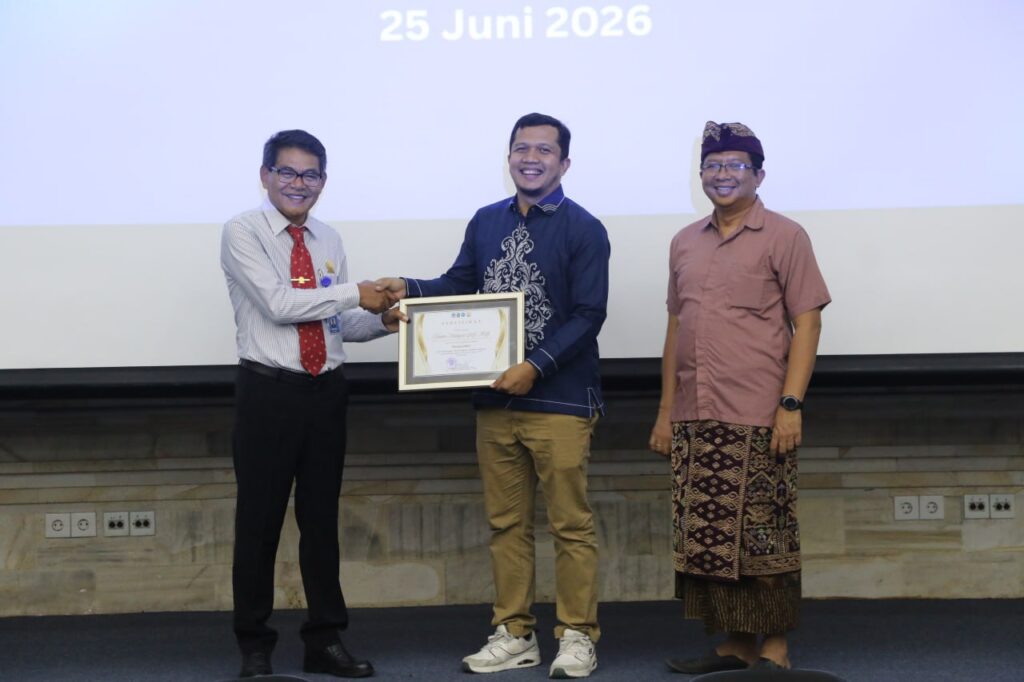
Furthermore, Firman emphasized that future university partnerships should not be dominated solely by student internships, but should also expand through joint research, curriculum alignment with industry needs, teaching factory development, industrial training, and long-term collaborations that can generate sustainable impacts for society and the business world.
Through this Technical Guidance, Udayana University affirms its commitment to continuously strengthening high-quality, accountable, and results-oriented collaborative governance. This strengthened governance is expected to support the achievement of the university’s strategic targets, enhance the institution’s reputation at the national and international levels, and strengthen Udayana University’s role as a university that delivers real impact on society through sustainable collaboration.