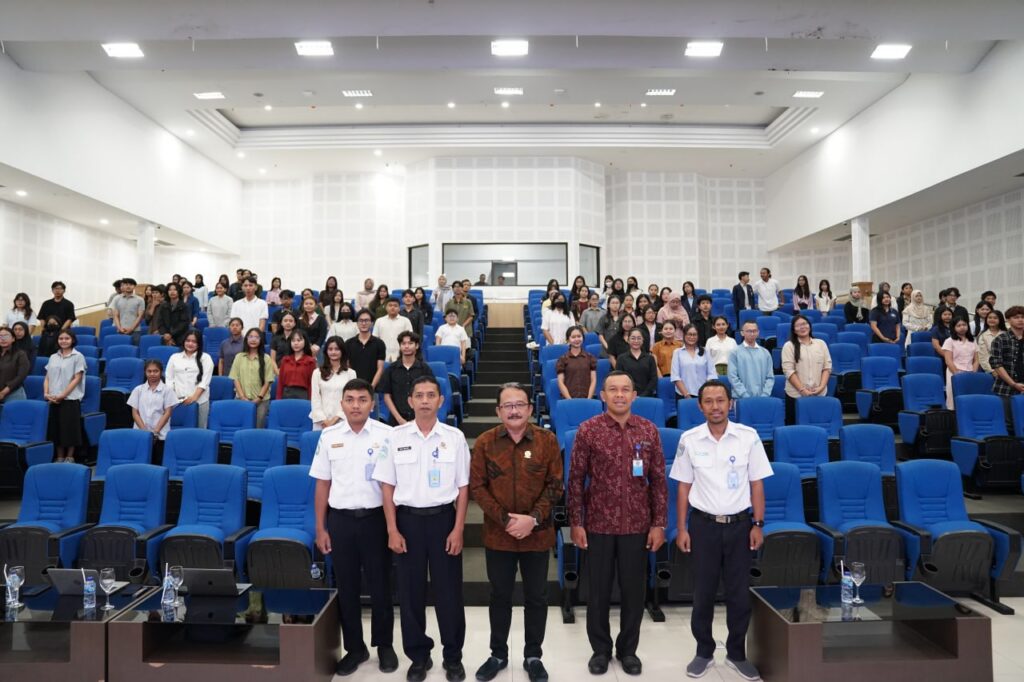
JIMBARAN – Udayana University (Unud), in collaboration with the Geophysical Station of the Meteorology, Climatology, and Geophysics Agency (BMKG) Denpasar, held an event called “Earthquake, Tsunami, and Lightning Preparedness Socialization and Simulation in the Bali Region.” This educational event took place on Wednesday (July 8, 2026) in the Lecture Building (LB) Hall, Udayana University Jimbaran Campus.
This activity was initiated as a concrete response to the geographical conditions of Bali, which is surrounded by active tectonic plates and the potential for extreme weather. Through theoretical training and practical simulations, this collaboration aims to build collective awareness to reduce the risk of disaster impacts in the academic environment.
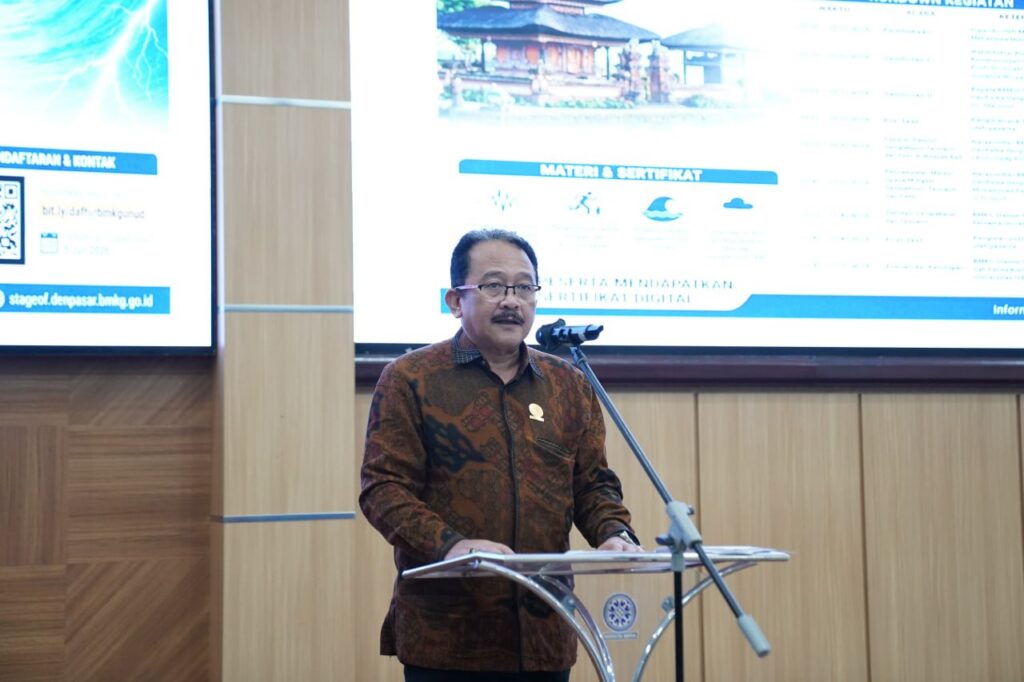
The event was opened by the Vice Rector for Student Affairs of Udayana University, Prof. Dr. Gusti Ngurah Alit Susanta Wirya, S.P., M.Agr. In his remarks, the Vice Rector emphasized that as an educational center with thousands of academics, Udayana University has a moral responsibility to prioritize safety and become a pioneer in disaster resilience.
“We all know and love Bali. However, the threat of earthquakes, tsunamis, and lightning strikes is something we cannot predict with certainty. We cannot prevent disasters, but we can greatly reduce their impact and casualties if we know what to do. The key is preparedness,” said Prof. Alit.
The Vice Rector also advised all participants to take the series of activities, especially the simulation sessions, seriously. “Creating a disaster-ready campus is a necessity, not an option. Through the simulations, we will train our physical and mental reflexes,” he added.
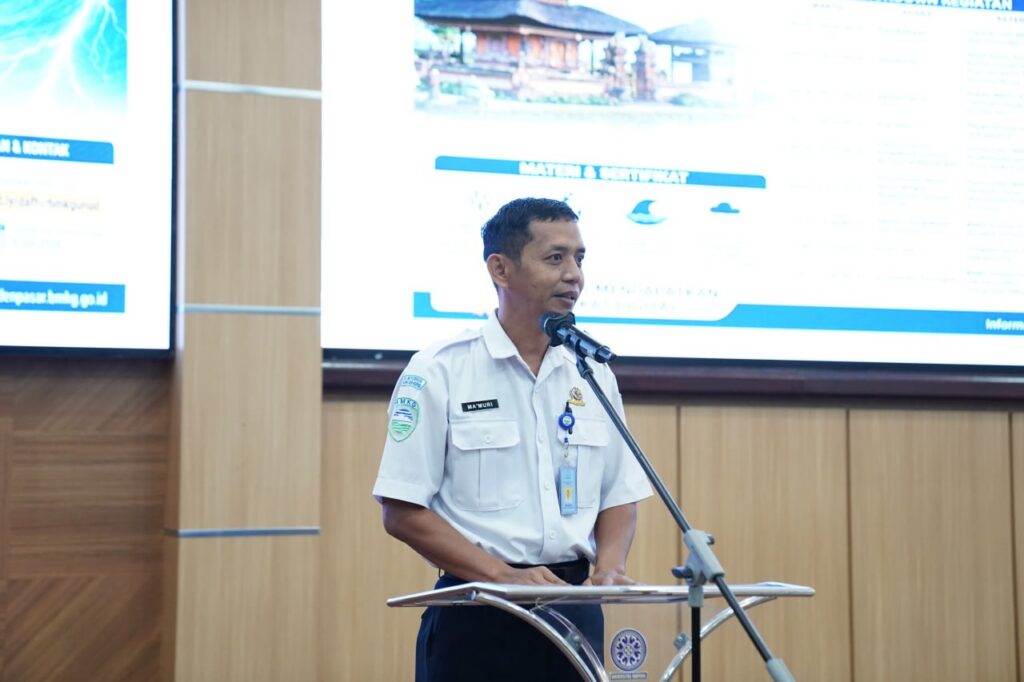
The Head of the BMKG Denpasar Geophysical Station, Dr. Ma’muri, also expressed his appreciation. He stated that educational and mitigation activities like this are one of the BMKG’s primary duties in protecting the public. Furthermore, Dr. Dr. Ma’muri hopes that the collaboration between the BMKG and Udayana University can expand to a broader and more sustainable academic field.
“We at the Denpasar Geophysical Station welcome Udayana University students who wish to undertake Field Work Internships (PKL). We also hope to collaborate further in research and scientific paper or thesis writing, especially with colleagues from the Physics Department,” said Dr. Ma’muri.
Furthermore, Dr. Ma’muri shared the successful experiences of BMKG stations in other regions that have implemented the Thematic Community Service Program (KKN). Through this program, BMKG provides students with training in disaster management in the form of Training of Trainers (TOT) before they are deployed to the community. Thus, KKN students can become effective agents of disaster mitigation awareness for residents in their service locations.
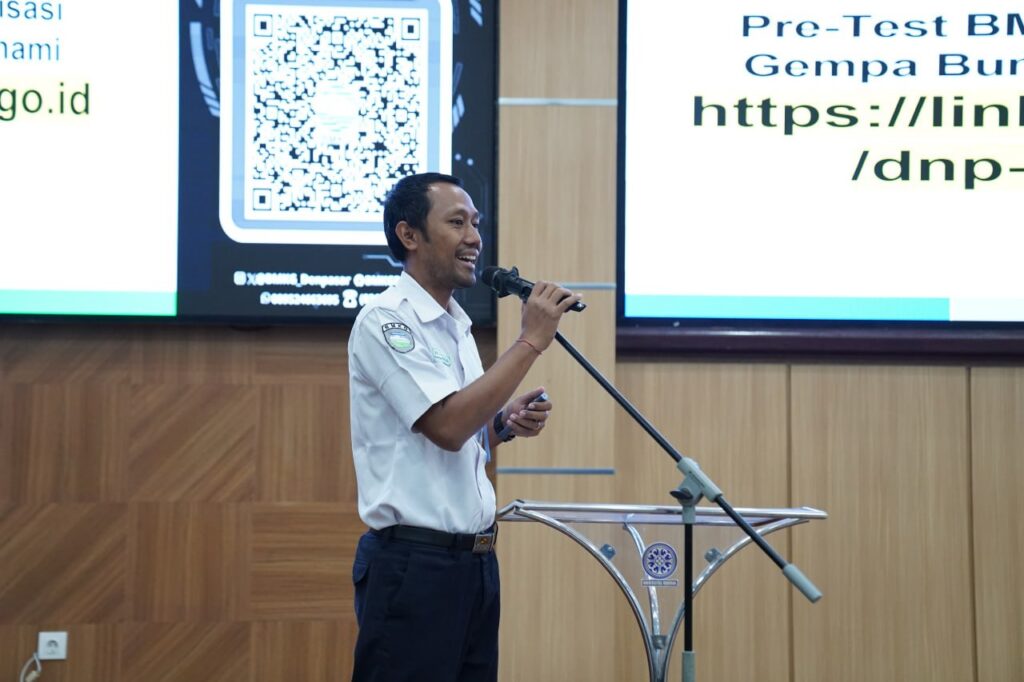
The event featured two speakers from the Meteorology, Climatology, and Geophysics Agency (BMKG). The first speaker, I Putu Dedy Pratama, M.Sc., presented on “Earthquake, Tsunami, and Lightning Potential in the Bali Region,” providing a spatial map and scientific understanding of local disaster threats. The second speaker, Muhammad Fadhila Affan, S.Tr.Geof., then thoroughly discussed “Earthquake, Tsunami, and Lightning Mitigation Efforts,” including steps for self-rescue in high-rise buildings and green open spaces.
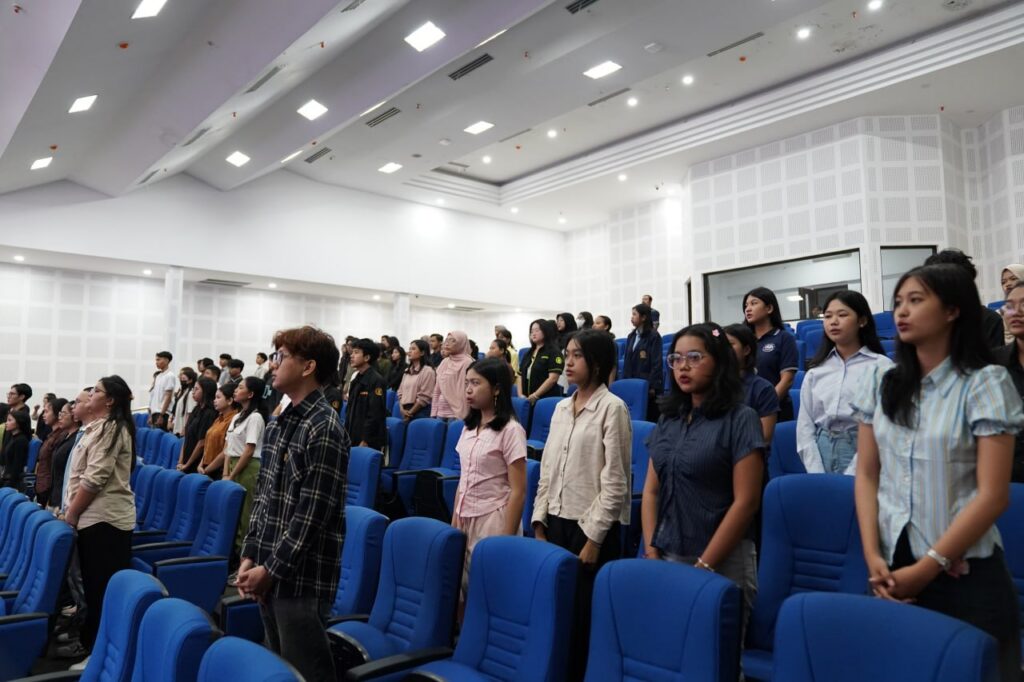
Following the presentation, all participants, accompanied by the BMKG team, conducted a comprehensive self-rescue simulation, followed by a post-test and joint evaluation. Through this strong synergy between academics and disaster management agencies, it is hoped that Udayana University will produce a generation that is not only academically superior but also resilient and responsive to environmental safety.