
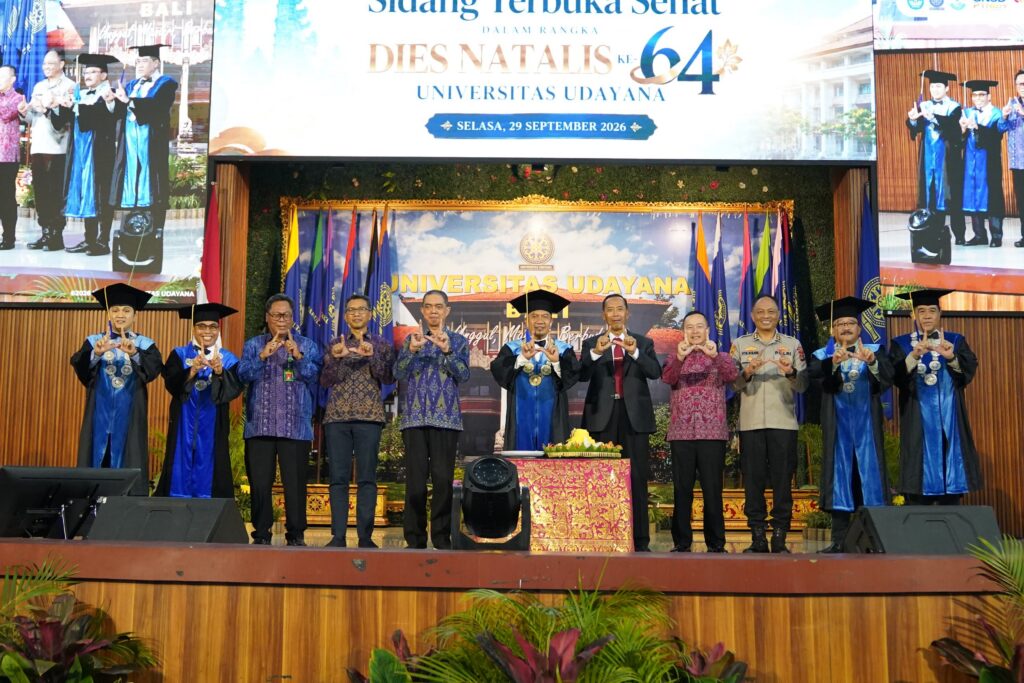
Badung – Udayana University (Unud) held an Open Senate Session to commemorate the peak of its 64th Anniversary celebrations at the Widya Sabha Auditorium, Unud Jimbaran Campus, on Tuesday (September 29, 2026). Carrying the theme “Upholding Tradition, Accelerating Transformation, Synergizing for the Nation,” this year’s anniversary marked a historic moment for Unud, coinciding with the completion of its institutional transformation from a Public Service Agency State University (PTN-BLU) to a State University with Legal Entity Status (PTN-BH).
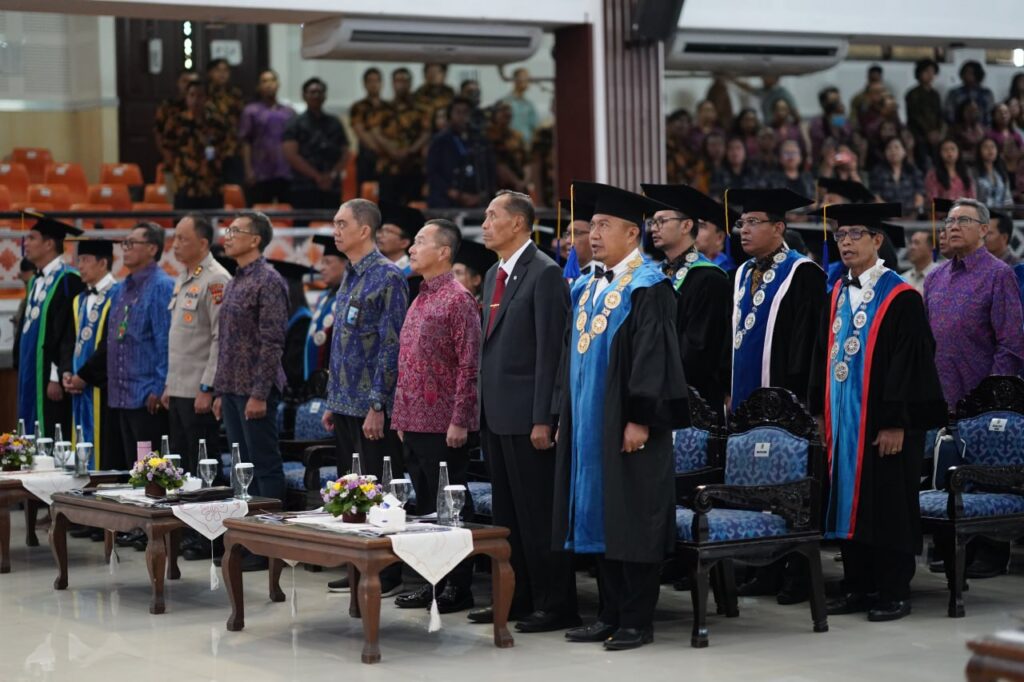
The Open Senate Session was attended by the Deputy Minister of Higher Education, Science, and Technology (Wamendiktisaintek) of the Republic of Indonesia, Prof. Dr. Fauzan, M.Pd.; Udayana University Rector Prof. Ir. I Ketut Sudarsana, S.T., Ph.D.; representatives from the Bali Province Regional Leadership Coordination Forum (Forkopimda); heads of government agencies; community and traditional leaders; and the Udayana University academic community.
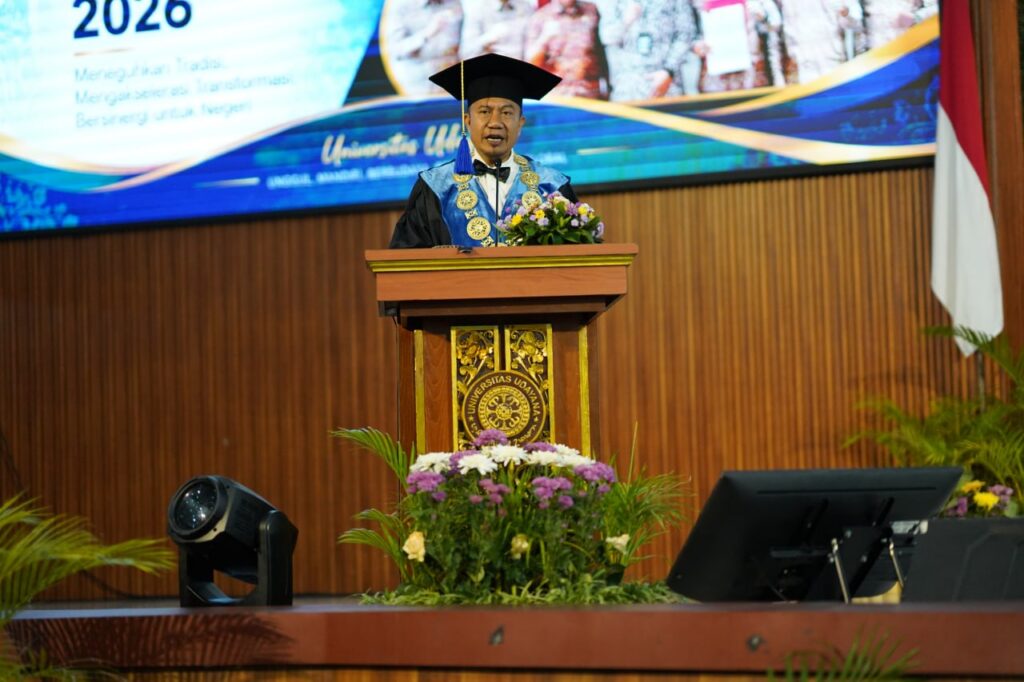
In his annual report, Udayana University Rector Prof. Ir. I Ketut Sudarsana, S.T., Ph.D., stated that the transition to PTN-BH status was the result of a long process pursued over approximately 15 years. This significant milestone was marked by the issuance of Government Regulation (PP) Number 35 of 2026 concerning Udayana University as a State University with Legal Entity Status on August 11, 2026. A copy of the regulation was subsequently officially handed over by the Director General of the Ministry of Higher Education, Science, and Technology on September 1, 2026.
Prof. Sudarsana explained that Unud is currently in a transition period extending until December 31, 2026. Full financial management under the PTN-BH (State University with Legal Entity Status) model will commence in early 2027. To strengthen institutional governance during this transition, Unud has drafted five “Super-Priority” Rector’s Regulations.
Currently, Udayana University manages 13 faculties and one Postgraduate School, comprising a total of 136 study programs. Sixty-four percent of these programs have achieved “Superior” (Unggul) accreditation, and 31 programs hold international accreditation. Unud is supported by a community of over 35,000 active students—including nearly 1,000 international students—along with 1,647 lecturers (15.2% of whom are Professors) and 1,522 administrative and support staff.
In terms of international rankings, Udayana University holds the 22nd position nationally and ranks first in Bali according to the QS Asia University Rankings 2026.
In line with this institutional transformation, Unud continues to promote programs that deliver tangible benefits to the community. For 2026, Unud is launching three strategic initiatives: an Electric Vehicle (EV) transport program as part of its “Green Campus” efforts; “Satu Data Unud” (Unud One Data) to support data integration and evidence-based decision-making; and the Unud Trauma Center at Unud Hospital, designed to strengthen integrated healthcare services for the public.
Unud Rector Prof. Ir. I Ketut Sudarsana, S.T., Ph.D., also emphasized that the autonomy gained through PTN-BH status would not result in an increase in the Single Tuition Fee (UKT).
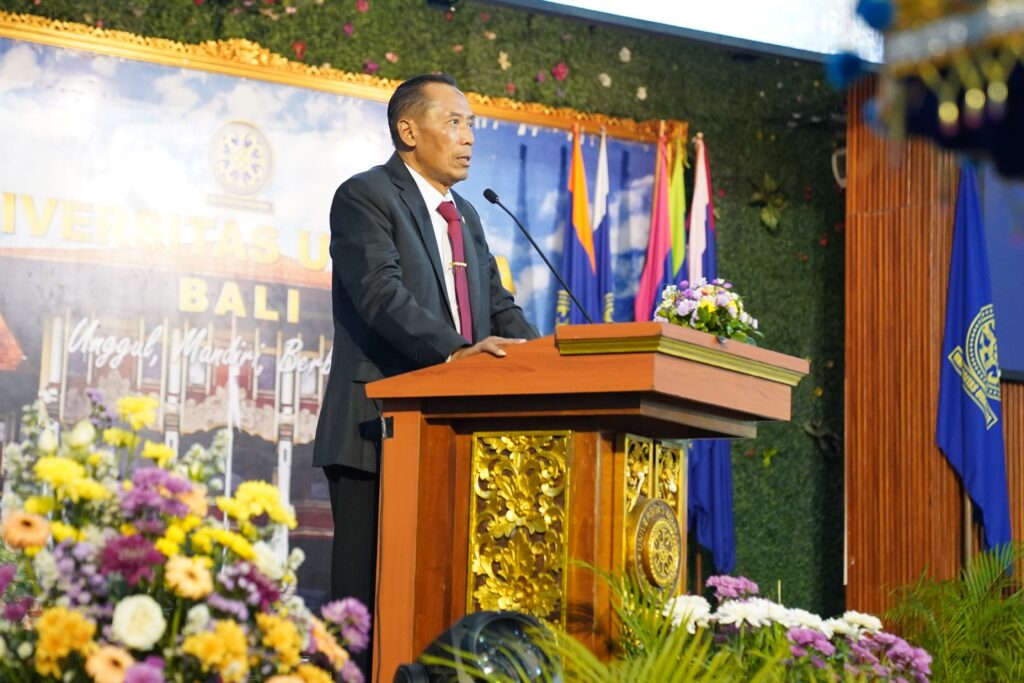
Meanwhile, the Deputy Minister of Higher Education, Science, and Technology of the Republic of Indonesia, Prof. Dr. In his scholarly address, Fauzan, M.Pd., expressed his appreciation for Udayana University’s journey in reaching its 64th anniversary and attaining the status of a State University with Legal Entity (PTN-BH) status. He noted that PTN-BH status is not an end in itself, but rather an instrument to accelerate the university’s contribution to addressing various societal issues.
Prof. Fauzan highlighted several challenges facing Indonesia—and Bali in particular—such as waste management issues at the Suwung landfill, the conversion of agricultural land and *subak* systems, the threat of flooding, and economic over-reliance on the tourism sector.
“Higher education institutions must not become distant, lofty ivory towers; instead, they must serve as reservoirs of knowledge. Knowledge must not stop at the library, research must not stop at the journal, and innovation must not stop at the laboratory.”
“Everything must flow down to the villages, schools, community health centers, and the communities in need,” asserted Prof. Fauzan.
In his address, the Deputy Minister entrusted three key points to Udayana University. First, to initiate actions based on actual issues rather than merely on programs, focusing the university’s contributions on pressing challenges in Bali—such as waste management, water issues, land-use conversion, and sustainable tourism.
Second, to position Udayana University as the hub of Bali’s development ecosystem by strengthening collaboration with other higher education institutions, local governments, traditional villages, and the industrial sector.
Third, to integrate the “Tridharma” (Three Pillars of Higher Education)—education, research, and community service—by utilizing Bali as a living laboratory, ensuring these activities operate within a unified cycle that delivers tangible impact.
Prof. Fauzan also encouraged holding academic events—such as professorial inaugurations—outside formal settings; on certain occasions, these could take place directly within the community, such as in subak areas, on beaches, or at community health centers.
Concluding his address, Prof. Fauzan emphasized that Udayana University’s future success should not be measured solely by the grandeur of ceremonies or ranking achievements, but by the extent of the university’s tangible contribution to addressing and resolving the various issues faced by the community.

The 64th Anniversary and the transition to PTN-BH (State University with Legal Entity) status mark a new milestone for Udayana University to further strengthen governance, enhance academic quality, and expand its contributions and collaborations in the development of both Bali and Indonesia. The peak of the celebration also featured the launch of “Unud Satu Data” (Integrated Data System), the Unud Trauma Center, and electric shuttle cars, alongside the presentation of the “Udayana Berdampak” (Udayana Making an Impact) awards.