
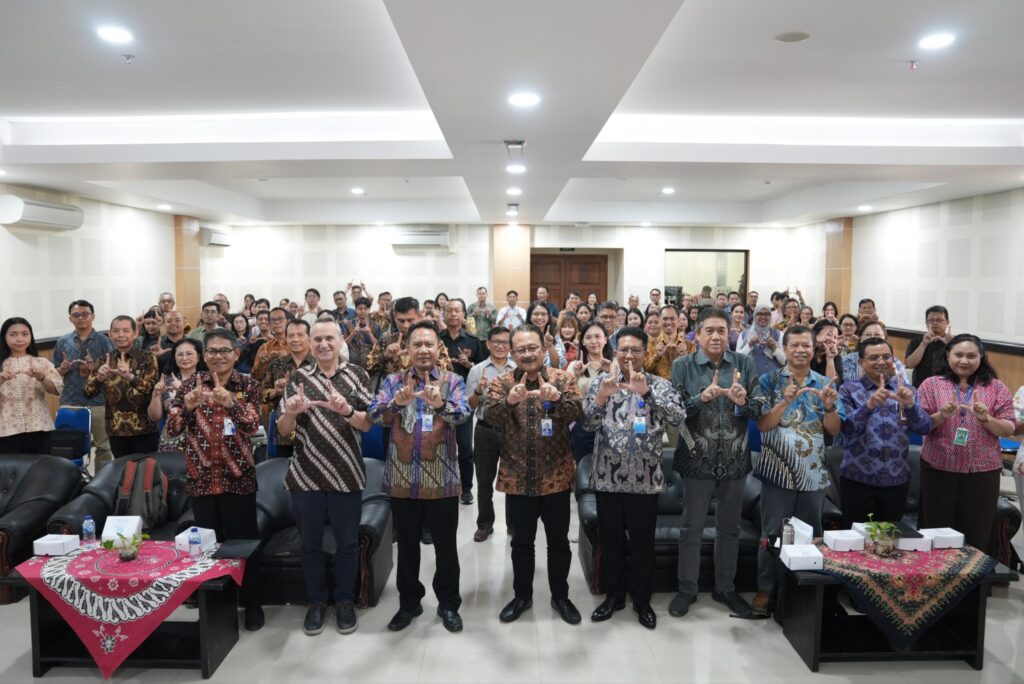
DENPASAR – Udayana University (Unud), through its Faculty of Social and Political Sciences (FISIP), held a workshop on Wednesday (October 28, 2026) to initiate research collaborations between Udayana University researchers and members of its International Advisory Board (IAB), focusing on the Humanities and Social Sciences cluster. The event, which took place in the FISIP Hall on the fourth floor of the FISIP building at the Sudirman Campus, Denpasar, aimed to strengthen international academic networks and foster the development of collaborative research that delivers a meaningful impact on society.
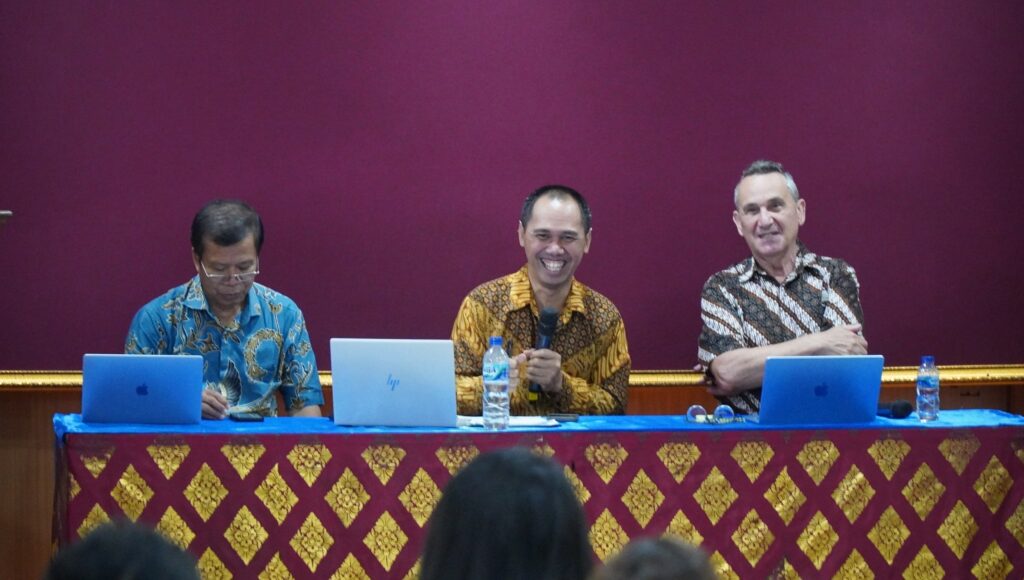
The workshop featured Adrian Vickers, BA (Hons), F.A.H.A., Ph.D.—Professor Emeritus at the Faculty of Arts and Social Sciences, The University of Sydney, Australia—and Dr. I Gede Hendrawan, S.Si., M.Si., Ph.D., Director of the Directorate of Research and Community Service at Udayana University. Additionally, Prof. Dr. I Nyoman Darma Putra, M.Litt., contributed further insights to enrich the discussion on developing research collaborations within the Humanities and Social Sciences cluster. The event was also attended by the Head of the Quality Assurance Unit (SPM), the Dean of FISIP, the Vice Dean for Academic and Student Affairs of FISIP, the IAB Secretariat team, the International Affairs Office (KUI) team, and 56 faculty members whose research interests fall within this cluster.
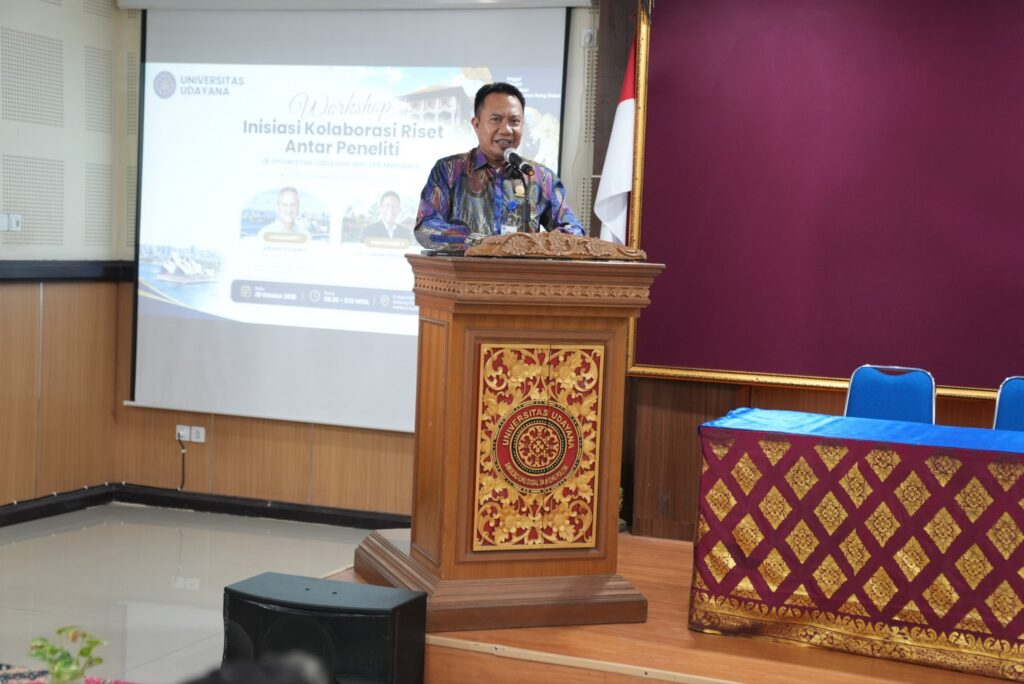
In his remarks, the Rector of Udayana University emphasized the importance of leveraging Bali’s cultural and tourism potential as a key academic strength for the university on the international stage. “Our strength lies in culture; our unique identity is defined by our culture and tourism. Are we truly strong in these areas? That is a question we must each ask ourselves,” the Rector asserted. He also encouraged researchers to strengthen cross-disciplinary collaboration and move away from fragmented working patterns to address various challenges—ranging from the development of sustainable tourism to social issues and public policy.
Meanwhile, Prof. Adrian Vickers shared his research experience, emphasizing the importance of building relationships as the foundation for academic collaboration. According to him, informal gatherings often serve as an effective means for researchers to discover shared interests, aligned perspectives, and opportunities for cooperation. Well-cultivated relationships can become a vital asset in developing robust research collaborations while simultaneously enhancing the quality of scholarly publications. In a similar vein, Dr. I Gede Hendrawan outlined the transformation of Udayana University’s (Unud) research ecosystem toward becoming an integrated, collaborative, and impact-oriented research university. This involves strengthening multidisciplinary consortia, increasing competitiveness for external funding, and fostering joint research and publications.
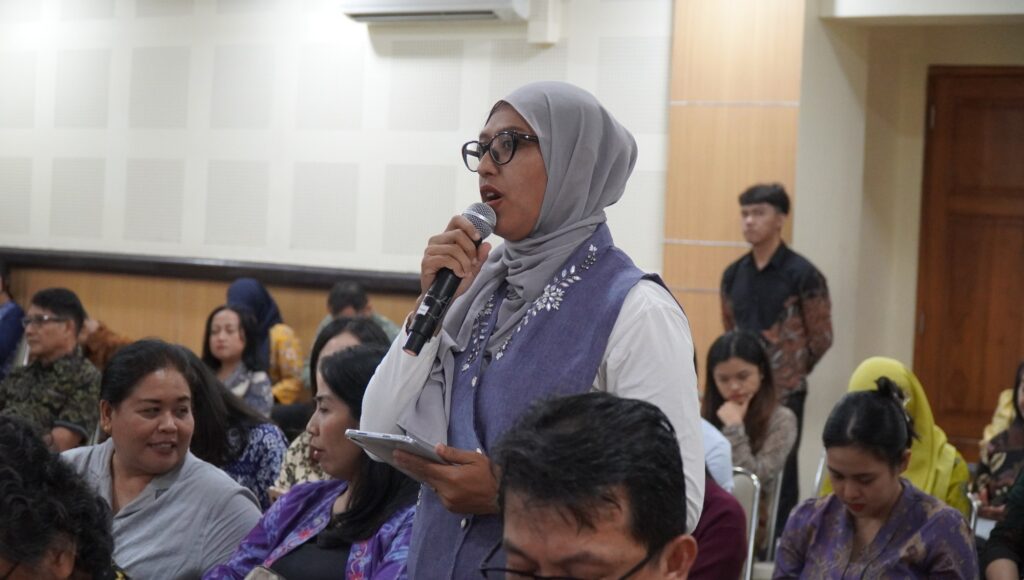
The workshop also identified five key themes for research collaboration within the Humanities and Social Sciences cluster: Cultural Heritage and Sustainable Tourism; Governance, Public Policy, and Sustainability; Community Resilience and Social Transformation; Digital Humanities and Cultural Innovation; and Indigenous Knowledge and Environmental Governance. These five themes serve as a basis for developing a joint research agenda between Unud researchers and members of the International Advisory Board (IAB), leveraging Bali’s local potential while addressing various global challenges.
Through this initiative, Udayana University aims to expand its international collaborative network, improve the quality and competitiveness of its research, and promote publications in reputable international journals. The synergy between Unud researchers and IAB members is expected to yield innovative and sustainable research, provide tangible contributions to society, and strengthen Udayana University’s position within the global academic network.