
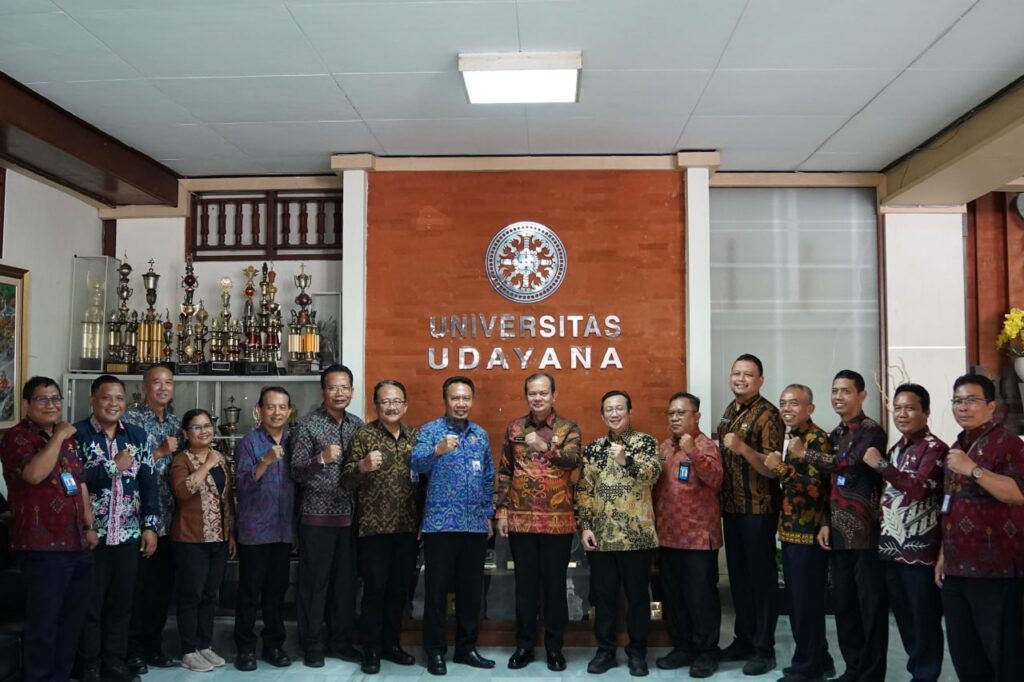
Jimbaran — Udayana University (Unud) hosted an audience with the Head of the Meteorology, Climatology, and Geophysics Agency (BMKG), Prof. Ir. Teuku Faisal Fathani, Ph.D., on Tuesday (October 13, 2026). The meeting aimed to strengthen institutional ties and explore opportunities for enhancing strategic cooperation in the fields of education, research, and human resource (HR) development.
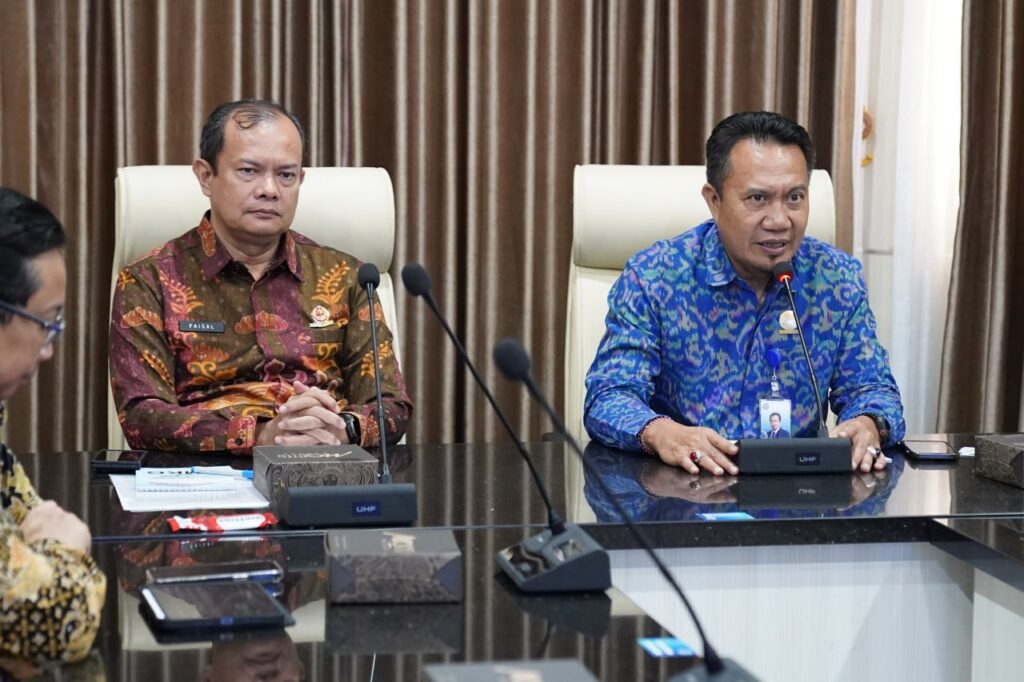
The meeting was attended by the Rector of Udayana University, Prof. Ir. I Ketut Sudarsana, S.T., Ph.D., along with the university’s leadership team. On this occasion, the Rector welcomed the potential for collaboration and expressed the university’s readiness to support such efforts through research initiatives and human resource capacity building.
“Udayana University welcomes the opportunity to collaborate with the BMKG, particularly in the areas of education, research, and human resource development. Through this partnership, we hope to optimize the academic potential and expertise of both institutions to produce research that is beneficial to society,” said the Rector of Udayana University.
Meanwhile, the Head of the BMKG, Prof. Ir. Teuku Faisal Fathani, Ph.D., expressed his appreciation for the existing partnership with Udayana University. He emphasized the importance of expanding research collaboration, including the evaluation of technologies for disaster mitigation infrastructure. One of the topics discussed was the facility for a Multi-Hazard Early Warning System at a BMKG center, which utilizes Seismic Base Isolation technology.
The Head of the BMKG opened the door for Udayana University students to participate in evaluating the effectiveness of the building’s design against various earthquake scenarios. “I hope our collaboration continues to expand, Rector. We had an extensive discussion earlier regarding a key facility for a Multi-Hazard Early Warning System, which incorporates Seismic Base Isolation technology. Perhaps the design could be shared with your students for evaluation—to assess its effectiveness against projected seismic events,” suggested Prof. Teuku Faisal Fathani.
Beyond research collaboration, the meeting explored opportunities for human resource development through master’s (S2) and doctoral (S3) programs for BMKG staff at Udayana University’s postgraduate school, specifically within the Environmental Science study program. The discussion also covered studies on climate change, shifting seasonal patterns, hydrometeorological disaster mitigation, and return-period analysis to support the planning of disaster-resilient infrastructure. Other topics addressed included internship opportunities for students, the involvement of BMKG experts as practitioner-lecturers, and the utilization of BMKG’s technical data for academic research.
The Head of BMKG emphasized that educational and human resource capacity building is a vital component in enhancing the quality of services provided to the public.
“The ultimate goal is to improve the services BMKG provides to the broader community. We need exceptional and well-rounded human resources. Being ‘well-rounded’ means more than just holding a degree; it encompasses devotion to God Almighty, a strong sense of dedication, and a global, inclusive perspective,” he asserted.
Through this meeting, Udayana University and BMKG aim to formalize various collaborative opportunities via a Memorandum of Understanding (MoU) and a Cooperation Agreement (PKS). This synergy between the two institutions is expected to strengthen education, research, human resource development, and innovation in the fields of disaster mitigation and public service.