
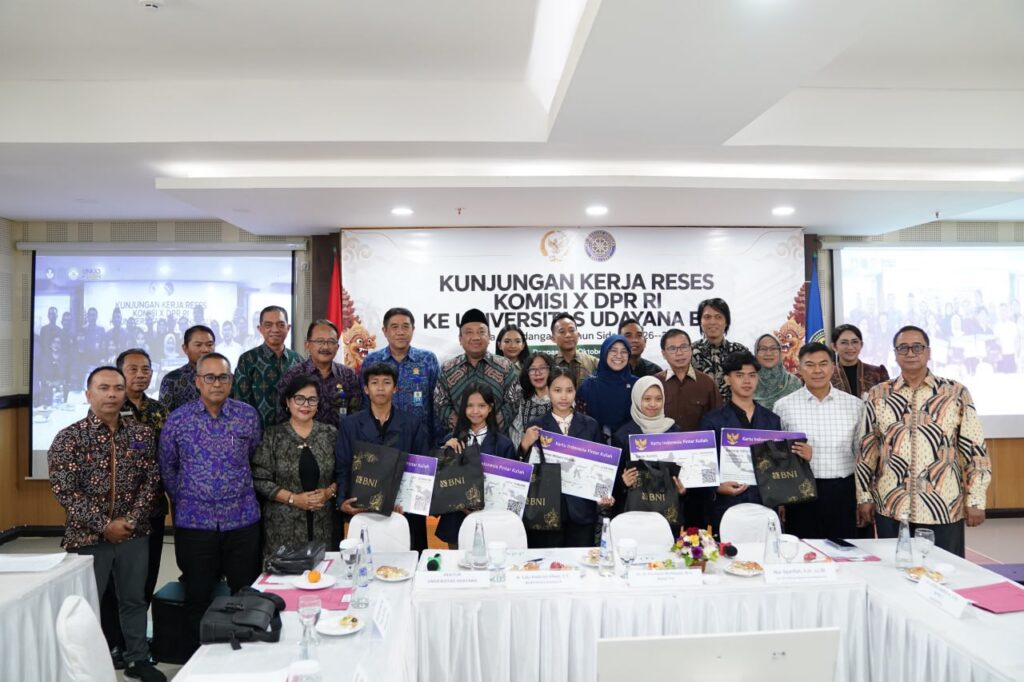
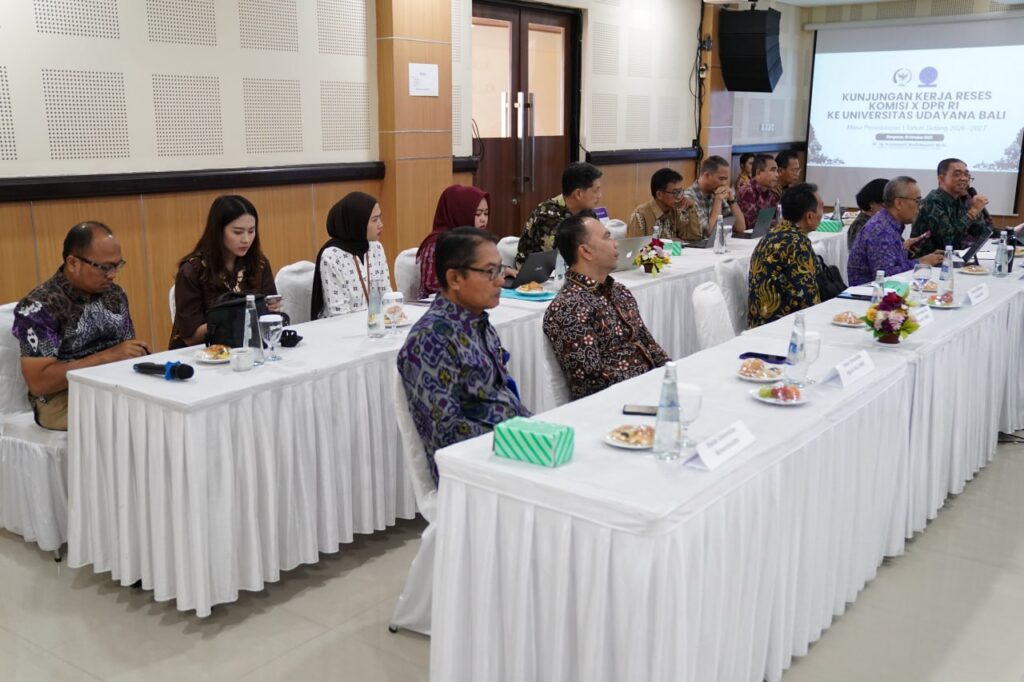
Denpasar – Udayana University (Unud) hosted a recess working visit by Commission X of the House of Representatives of the Republic of Indonesia (DPR RI) in Bali. The visit addressed various strategic higher education issues, ranging from strengthening university governance and funding sustainability to discussions on the Bill on the National Education System (RUU Sisdiknas). The meeting, which involved leaders from both public (PTN) and private (PTS) universities in Bali, served as a forum to gather input and strengthen synergy in supporting the improvement of higher education quality (October 10, 2026).
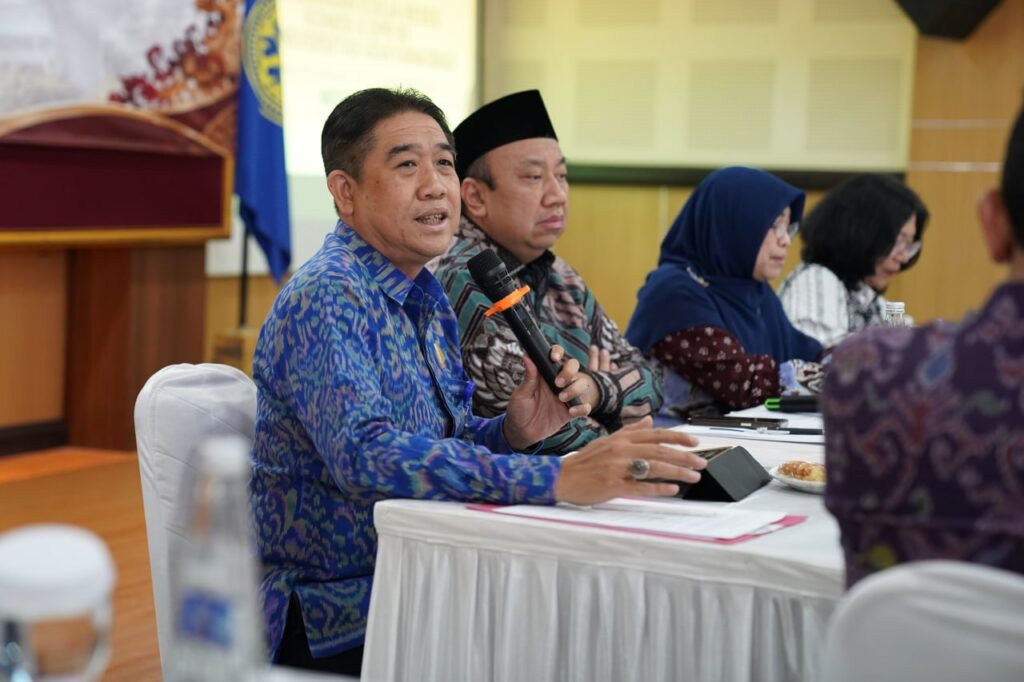
Representing the Rector of Udayana University, the Vice Rector for Planning and Partnerships, Prof. Dr. Eng. Ir. Made Sucipta, S.T., M.T., IPM., welcomed the Commission X delegation alongside officials from the Ministry of Higher Education, Science, and Technology (Kemdiktisaintek). On this occasion, he stated that Udayana University’s transformation into a State University with Legal Entity status (PTN-BH) requires appropriate policy support to strengthen governance and enhance the university’s contribution to national development.
“Unud’s transformation into a PTN-BH serves as a momentum to strengthen governance and increase the university’s contribution to national development. However, this transformation requires appropriate policy support in three key areas: sustainable higher education funding, the strengthening of research and innovation commercialization, and human resource development within universities,” said Prof. Made Sucipta.
He expressed hope that Commission X DPR RI would continue to act as a strategic partner in driving high-quality, inclusive, and sustainable higher education policies. According to him, synergy between public and private universities also needs to be strengthened so that higher education institutions can contribute optimally to meeting societal needs and supporting regional development. The Head of the Working Visit Team from Commission X of the House of Representatives (DPR RI), Dr. Hj. Kurniasih Mufidayati, M.Si., stated that the visit was part of an effort to gather input and hear firsthand about the dynamics of higher education implementation in the region.
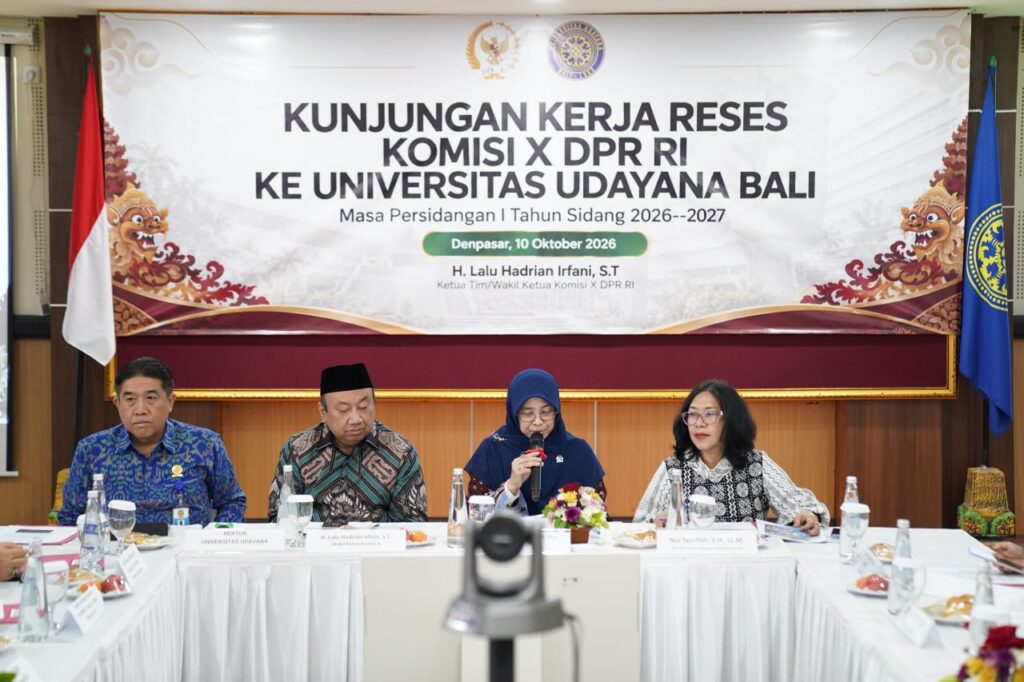
She explained that Commission X is currently deliberating the revision of the National Education System (Sisdiknas) Bill using a “codification-modification” approach, which encompasses the substance of the National Education System Law, the Higher Education Law, and the Law on Teachers and Lecturers.
“This forum serves as a vital platform for gathering input regarding the Sisdiknas Bill. Furthermore, we have just concluded the Working Committee (Panja) on the New Student Admission System to ensure that admission proportions at both public and private higher education institutions operate ideally in accordance with their respective quotas,” she explained.
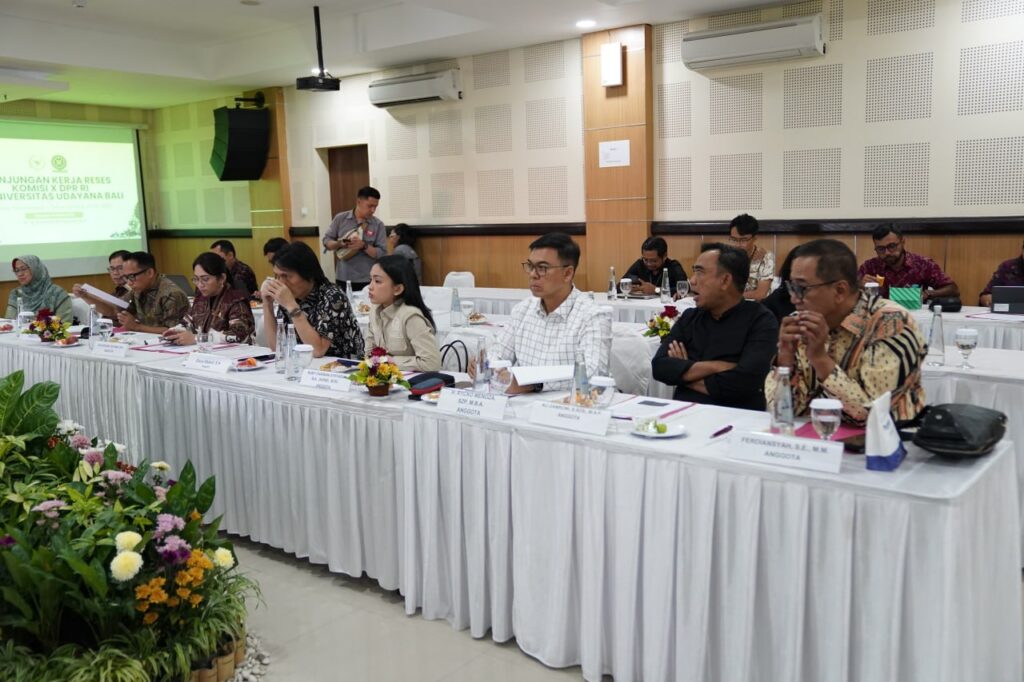
Responding to the aspirations of higher education leaders, Nur Syarifah, S.H., LL.M.—the Expert Staff for Regulation at the Ministry of Higher Education, Science, and Technology (Kemdiktisaintek)—emphasized that all policies are grounded in a solid legal framework. She noted that this input would guide the codification of the National Education System (Sisdiknas) Bill to ensure higher education institutions become more agile and adaptive.
Regarding the priority placed on STEM study programs, she clarified that this focus aims to catch up with the rest of ASEAN, without sidelining the fields of arts and culture.
“Our commitment to STEM institutions remains unchanged. The reason STEM is being prioritized is that our number of STEM study programs is the lowest among ASEAN nations; that is the gap we need to close. It does not mean that the arts are being abandoned,” Nur Syarifah asserted.
She also pledged to map out specialized local study programs that currently attract few applicants—such as traditional puppetry (*pedalangan*)—to prevent the extinction of Balinese culture, while also ensuring equitable career progression for lecturers in vocational and arts disciplines.
“For the arts and vocational sectors, promotion to the rank of professor does not have to be based solely on journal publications; it can also be based on performances and competitions, ensuring that vocational education grows alongside the academic stream,” she added.
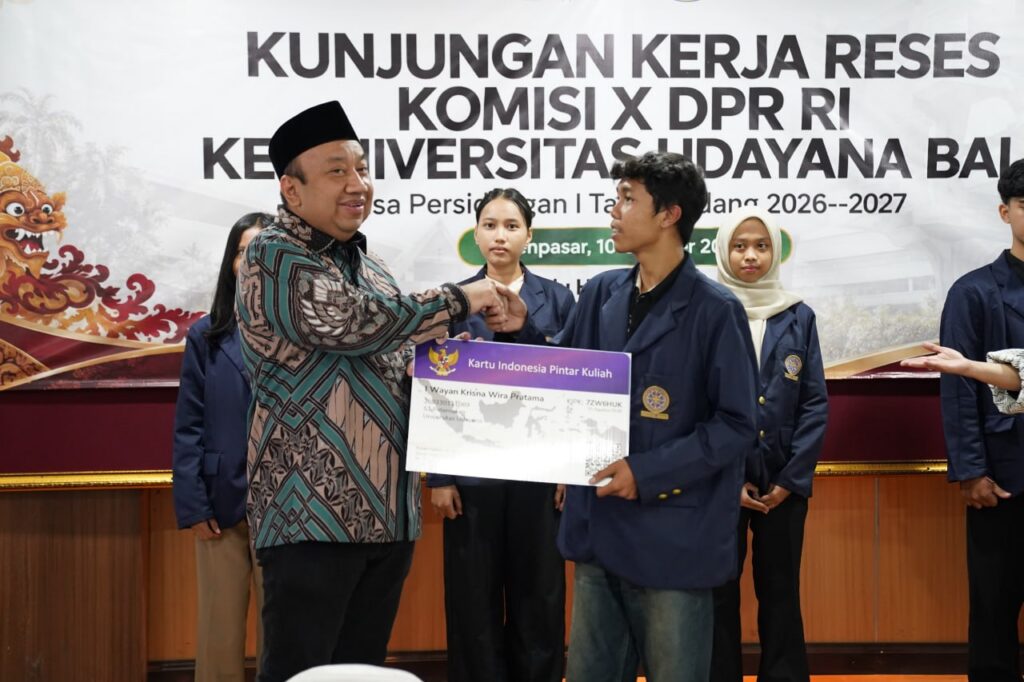
In addition to discussing the Sisdiknas Bill and the new student admission system, the meeting highlighted the implementation of priority education programs—including KIP Kuliah, the Garuda Scholarship, and the ADik Scholarship—designed to promote equitable access to higher education. During the event, KIP Kuliah scholarships were symbolically awarded to student representatives from Udayana University as a gesture of support for the continuity of their education.
The event was attended by members of Commission X of the House of Representatives (DPR RI), the Head of LLDikti Region VIII, the Ministry’s Expert Staff for Regulation, and leaders from several higher education institutions in Bali, including the Indonesian Institute of the Arts (ISI) Denpasar, Ganesha University of Education, Bali International University, Ngurah Rai University, Mahendradatta University, and the Bali Tourism Polytechnic. Through this working visit, Udayana University becomes part of a dialogue between higher education stakeholders and policymakers. The various aspirations expressed are expected to serve as input for the formulation of national education policy, including efforts to strengthen governance, funding, research, and human resource development within higher education institutions.