
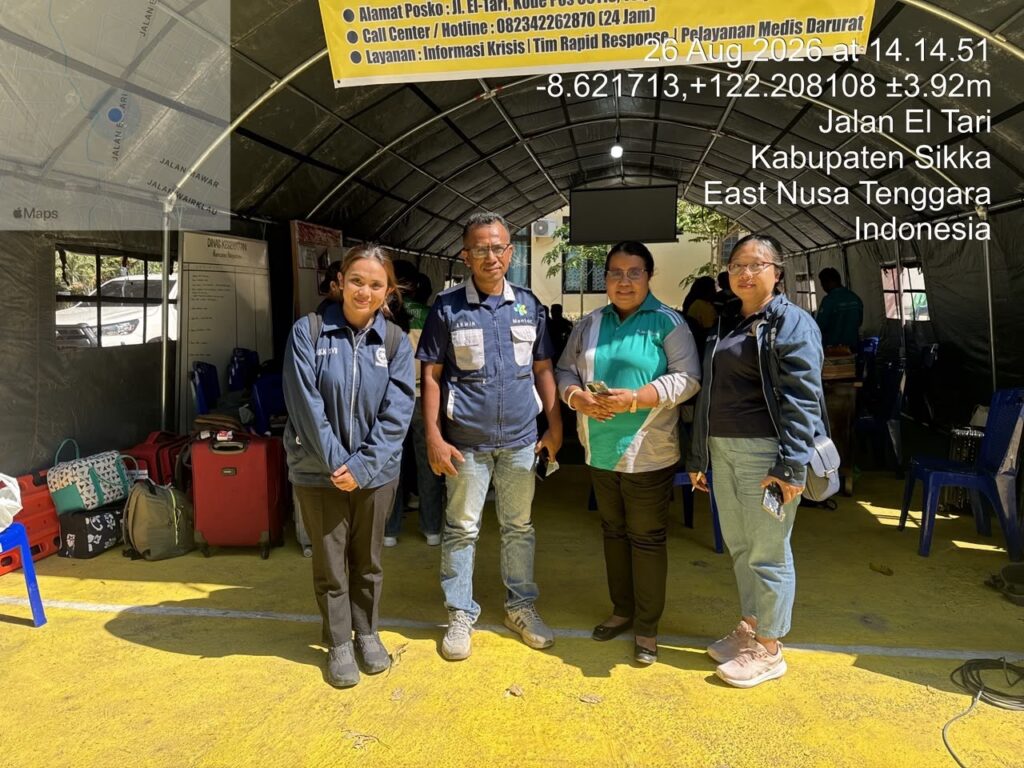
The Faculty of Medicine at Udayana University (FK Unud) has demonstrated its commitment to supporting disaster management and public health efforts by deploying the first batch of volunteers to earthquake-affected areas on Flores Island, East Nusa Tenggara (NTT).
For this initial deployment, two students from the Field Epidemiology concentration—part of the Field Epidemiology Training Program (FETP) within the Master of Public Health (MIKM) study program at FK Unud—Putu Dian Andryani and Nyoman Dian Pradnya Paramitha, were assigned as epidemiologists to support the health response in Sikka Regency, NTT.
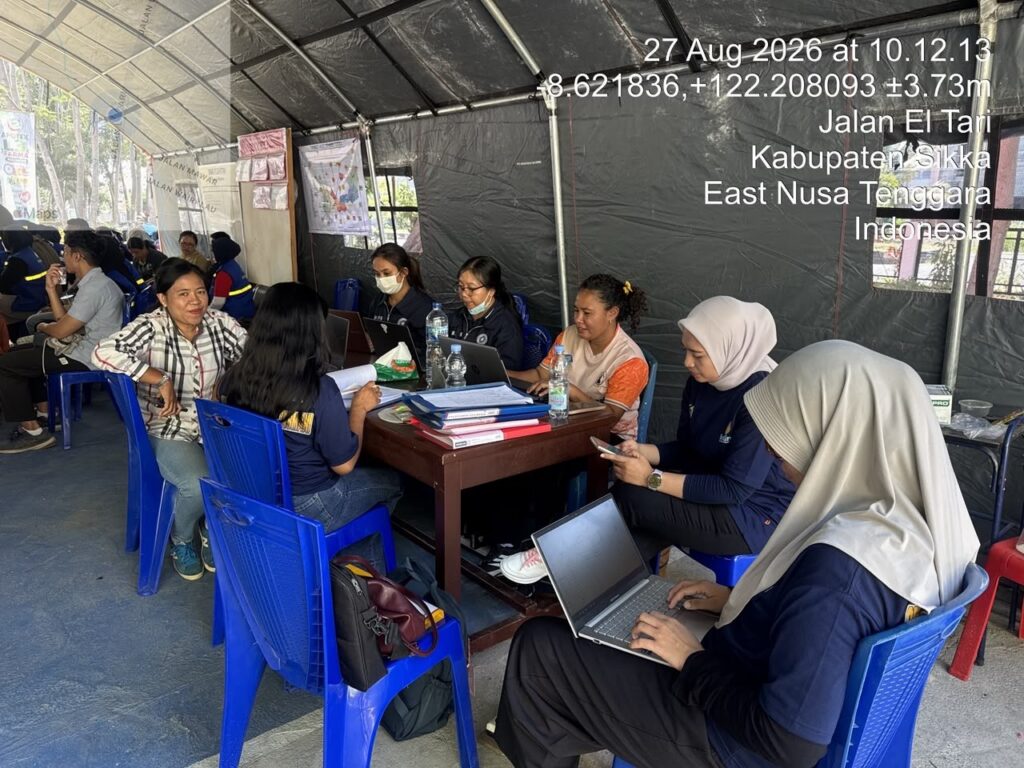
This assignment follows a request from the Ministry of Health of the Republic of Indonesia to strengthen epidemiological capacity in disaster-affected regions. The earthquake that occurred on August 15, 2026, triggered a health crisis and heightened the need for healthcare personnel, including epidemiologists. Health surveillance systems in several affected areas face various limitations; consequently, there is a critical need to strengthen health data collection, processing, analysis, and reporting to inform decision-making during the emergency response period.
While carrying out their duties in Sikka Regency, the two FETP students from FK Unud are working alongside mentors and staff from the Sikka Regency Health Office. Their activities include disaster epidemiology surveillance, health data collection and analysis, monitoring public health developments, and supporting the health emergency response system in the affected areas.
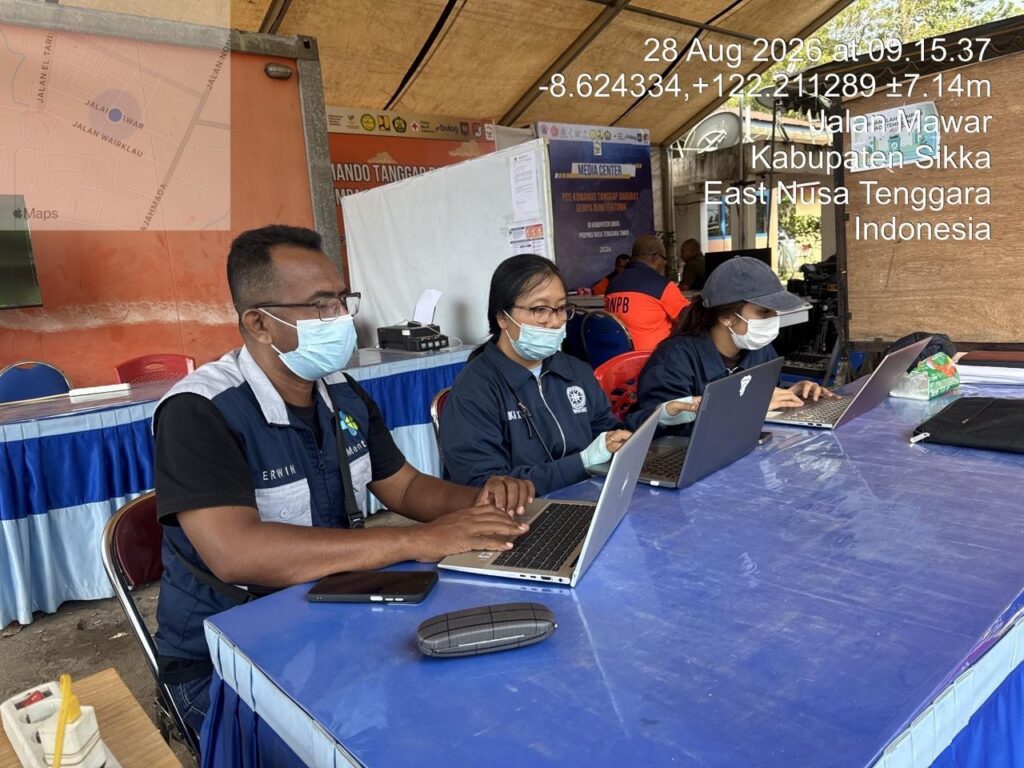
The magnitude of post-disaster health challenges is reflected in the situation data reported as of August 27, 2026. A total of 175,909 people were recorded as displaced, and 118 health service facilities sustained damage across seven affected regencies. In Sikka Regency alone, there were 7,557 displaced persons, making rapid and continuous monitoring of public health conditions a vital component of the disaster response. The involvement of FETP students in this response exemplifies the educational approach at the Faculty of Medicine, Udayana University (FK Unud), which integrates academic learning, community service, and practical responses to public health needs. Through direct fieldwork, students not only gain the opportunity to apply epidemiological competencies in emergency situations but also learn to operate within disaster management command and coordination systems, collaborate across sectors, and utilize epidemiological data to inform public health decision-making.
The deployment of this first batch of volunteers reflects FK Unud’s ongoing commitment to contributing to humanitarian responses and addressing public health challenges—particularly in disaster scenarios that require scientific expertise, professional personnel, and inter-institutional collaboration.