
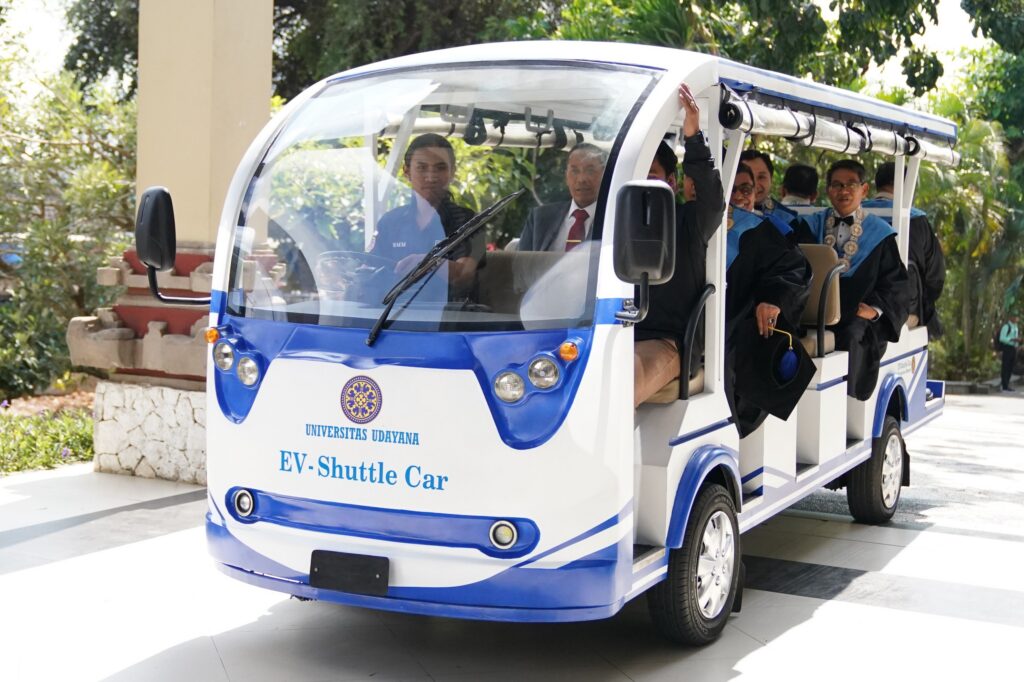
JIMBARAN – Coinciding with its 64th Anniversary celebration, Udayana University (Unud) launched an EV Shuttle Car. This innovation is an electric vehicle prototype resulting from the “Integrated Smart Green Campus” research project. The launch, held on Tuesday (September 29, 2026), marks a step in Unud’s implementation of green technology innovations to support eco-friendly, efficient, and sustainable campus mobility.
The EV Shuttle Car is an output of the Udayana Flagship Research Grant (PUU) under the “Integrated Smart Green Campus” project, developed by Dr. Ir. Wayan Nata Septiadi, S.T., M.T., at the Heat Pipe and Nanotechnology Laboratory, Faculty of Engineering, Udayana University. The vehicle utilizes a battery-based electric drive system, ensuring it produces no direct exhaust emissions during operation.
The EV Shuttle Car is designed to support the mobility of the academic community within the campus grounds, specifically serving as a mode of transport between buildings and across campus areas. This innovation also contributes to the implementation of Udayana University’s “green campus” concept through the use of more environmentally friendly transportation technology.
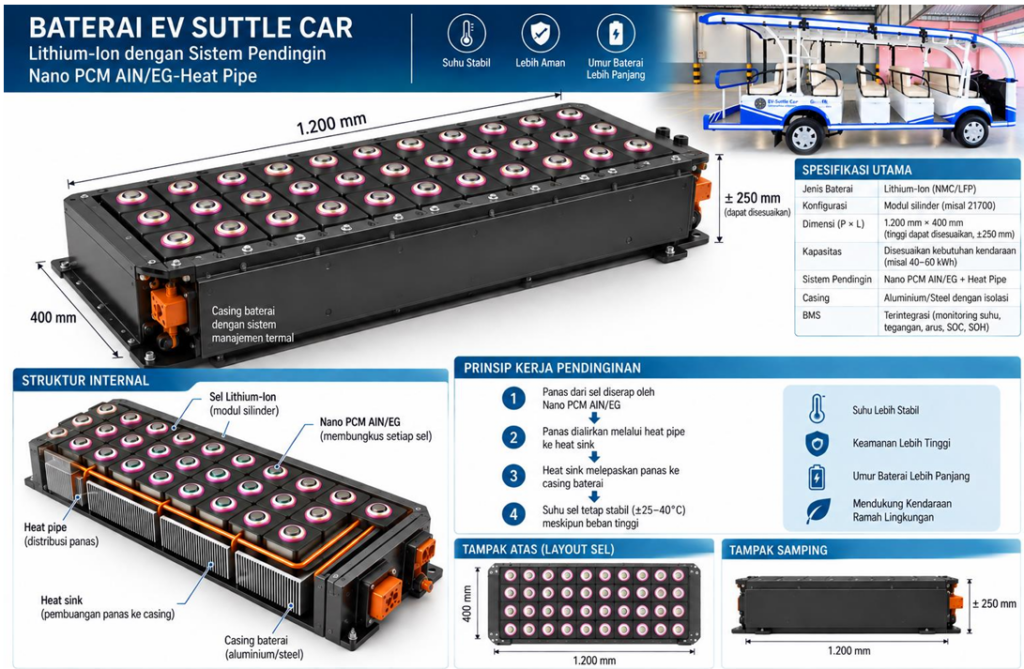
Nata Septiadi explained that a key innovation applied to this vehicle is the Battery Thermal Management System (BTMS) based on Nano Phase Change Material (Nano-PCM) AlN/EG–Heat Pipe technology. The system is designed to regulate battery temperature through more effective heat absorption and transfer mechanisms. The AlN/EG-based Nano-PCM acts as a heat-absorbing medium when the battery temperature rises, while the heat pipe facilitates the transfer of heat from the battery area to the heat dissipation section.
Battery temperature control is a critical aspect of electric vehicles, as excessive temperatures can impact efficiency, performance, lifespan, and safety. Consequently, the application of AlN/EG Nano-PCM and heat pipe technology in the EV shuttle car represents a key element in the development of smart energy and transportation technologies within the campus environment.
The EV shuttle car is part of the “Integrated Smart Green Campus” ecosystem, which combines three core components: electric transportation, energy storage technology, and energy and thermal management systems. This prototype is also intended to serve as a “living laboratory” for Udayana University, facilitating further research into electric vehicles, batteries, PCM materials, heat pipes, smart energy management, and renewable energy integration. The research underpinning the EV shuttle car’s development is a multidisciplinary collaboration spanning thermal management, nanomaterials, nanotechnology, energy, and engineering—an initiative that has been ongoing since 2019.
The development of the Integrated Smart Green Campus model is being advanced through Udayana’s Flagship Research Scheme (PUU). This initiative integrates renewable energy systems, electric mobility, and unified digital monitoring systems to enhance energy efficiency, reduce carbon emissions, and strengthen the implementation of a sustainable campus.
The research encompasses four primary activity packages: developing the campus electric mobility system; designing and integrating renewable energy systems based on solar power (PLTS) and smart grids; engineering Nano-PCM-based battery cooling module materials; and conducting social, ergonomic, and economic analyses—covering user comfort, financial feasibility, Life Cycle Assessment (LCA), carbon emission reduction, and the formulation of green campus policy models.
The Faculty of Engineering lecturer further explained that the research is distinguished by its comprehensive integration of green energy systems with campus mobility, alongside the innovation of a Nano-PCM-based EV battery cooling system.
The multidisciplinary consortium driving this development involves various study programs from several universities and the National Research and Innovation Agency (BRIN), as well as “pentahelix” partners—including three electric vehicle companies serving as industry partners. With the launch of the EV Shuttle Car during its 64th anniversary celebrations, Udayana University is showcasing the tangible implementation of research findings within the campus environment. This innovation is expected to further strengthen the university’s efforts to build a green, smart, low-emission, and sustainable campus ecosystem, while simultaneously paving the way for future research and green technology innovation.