
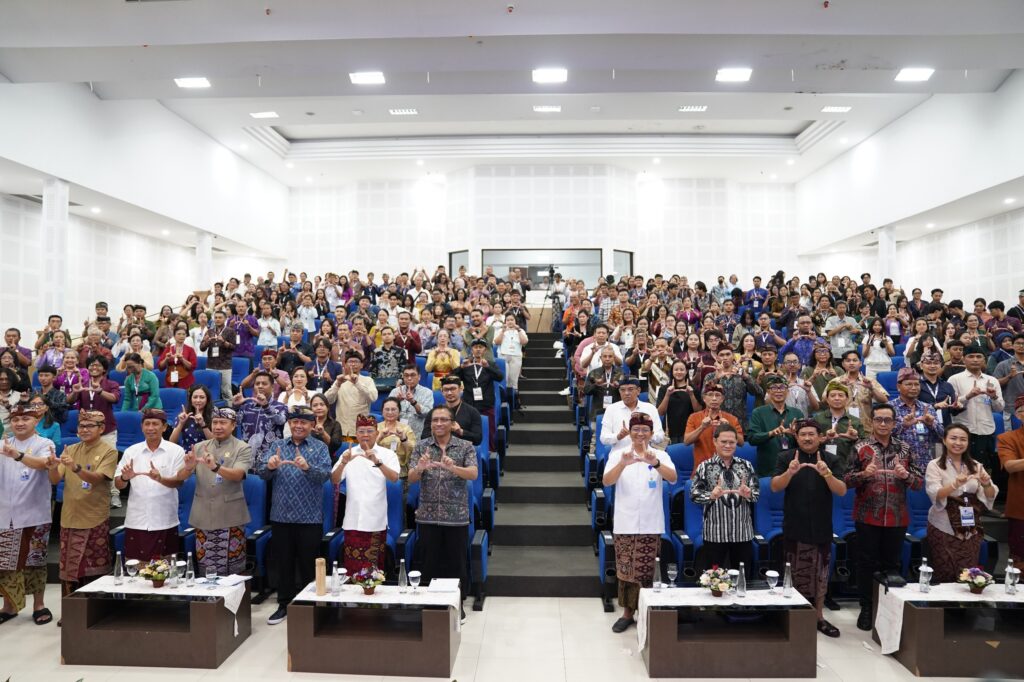
Udayana University (Unud) hosted the 13th National Seminar on Science and Technology (Senastek) in 2026, themed “From Research to Market: Technological Innovation for National Self-Reliance.” The event took place from November 19–20, 2026, at the Lecture Building on the Bukit Jimbaran campus, drawing 1,072 participants, including many from outside Udayana University.
The 13th Senastek featured a diverse agenda, ranging from seminars and presentations on research and community service projects to innovation expos, discussions with government and industry representatives, business pitching sessions, and clinics focused on research commercialization and intellectual property.
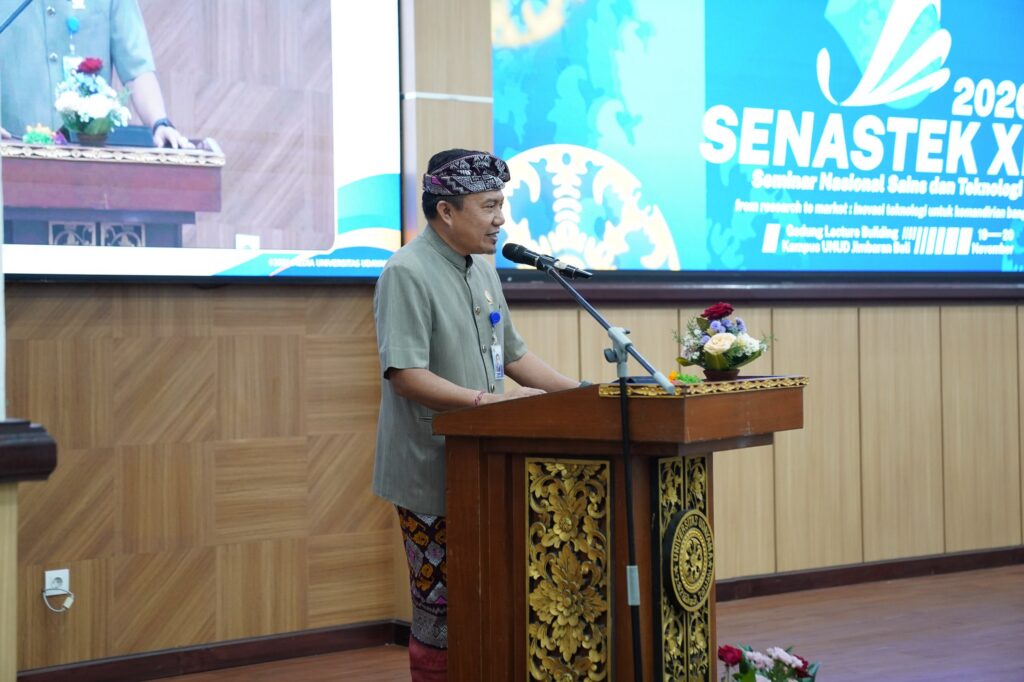
Udayana University Rector, Prof. Ir. I Ketut Sudarsana, S.T., Ph.D., emphasized that university research should not end with academic publication; rather, it must be developed into innovations, technologies, products, policy recommendations, and solutions that provide tangible benefits to society. He also encouraged stronger collaboration across disciplines, faculties, and institutions to address various development challenges.
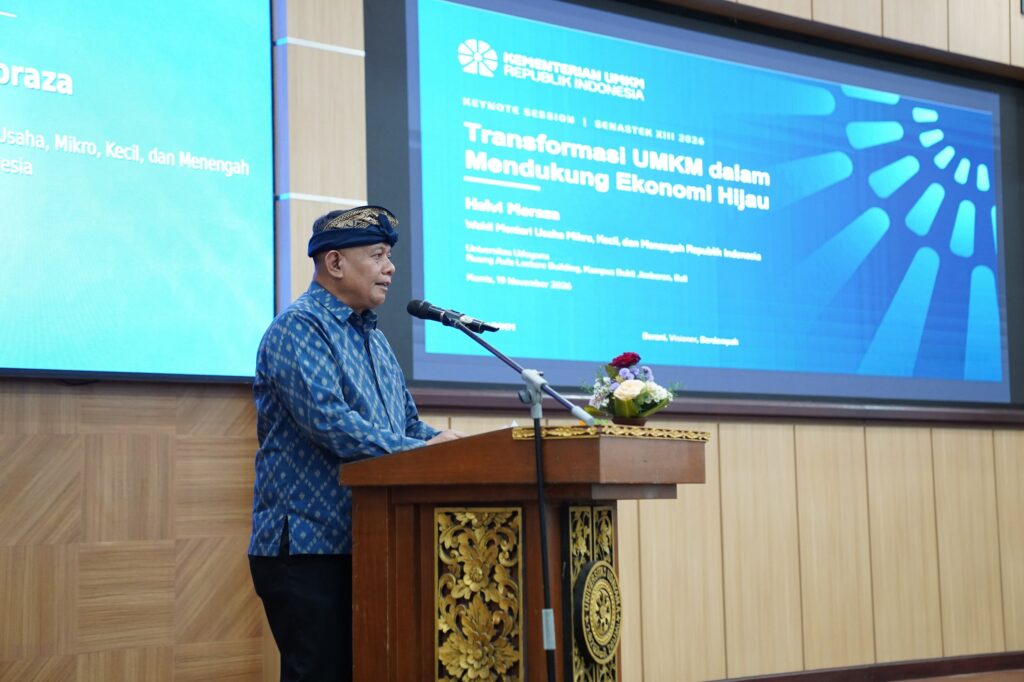
The Deputy Minister for Micro, Small, and Medium Enterprises (MSMEs) of the Republic of Indonesia, Helvi Moraza, attended as a keynote speaker. She noted that universities play a strategic role in enhancing the competitiveness of MSMEs through applied research, innovation, appropriate technology, and mentorship. According to her, synergy between universities, the government, the banking sector, and the business community is essential to strengthening the MSME ecosystem.
“The true measure of a research project’s greatness is not how many times it is cited, but how many MSMEs grow because of it,” she asserted.
Helvi highlighted that Bali has significant potential to develop green tourism and wellness-oriented sectors—such as restaurants utilizing local food ingredients and the development of cosmetics derived from natural materials. Other MSME sectors that can be developed include local food products, as well as crafts or fashion items created using natural dyes.
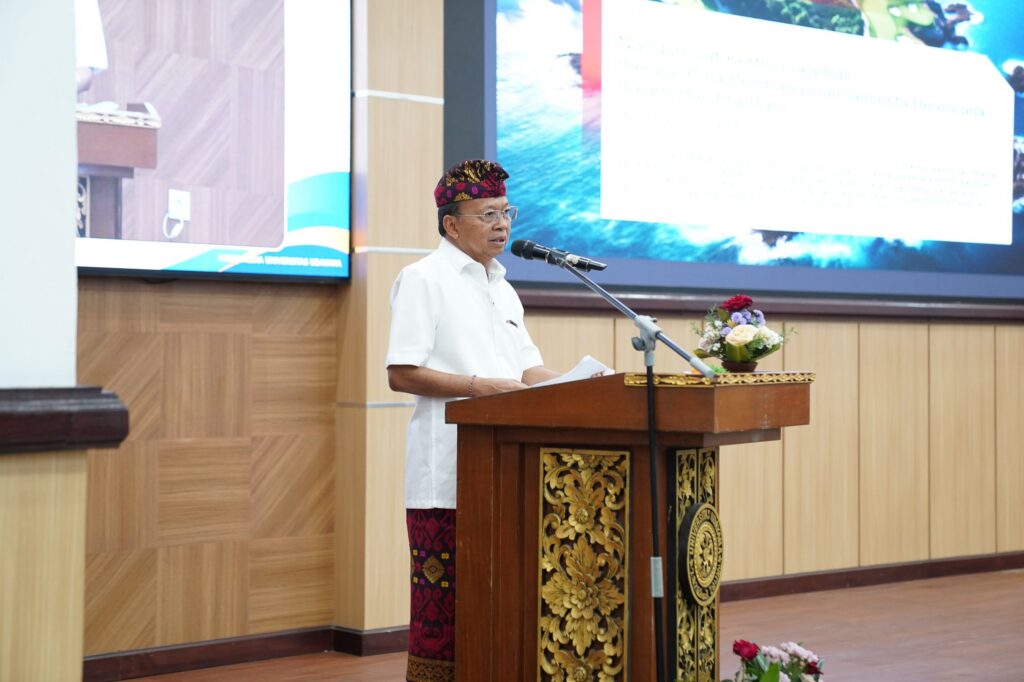
Meanwhile, the Governor of Bali, I Wayan Koster, emphasized that the development of the “Kerthi Bali” economy prioritizes economic activities that are harmonious with nature—green and environmentally friendly—while preserving local wisdom and utilizing local resources.
“Furthermore, the focus remains on quality, added value, resilience, competitiveness, and sustainability. I do not want Bali’s economy to be overly dependent on external sources,” Koster asserted.
On the same occasion, Udayana University (Unud) also launched a source-based waste management program utilizing “modern teba” (traditional Balinese waste-processing pits). A total of 52 such modern teba have been established across 13 faculties and the postgraduate school at the Bukit and Denpasar campuses. The event also included the handover of plastic waste processing equipment, provided by Bank Rakyat Indonesia (BRI) through its “BRI Peduli” corporate social and environmental responsibility (TJSL) program.
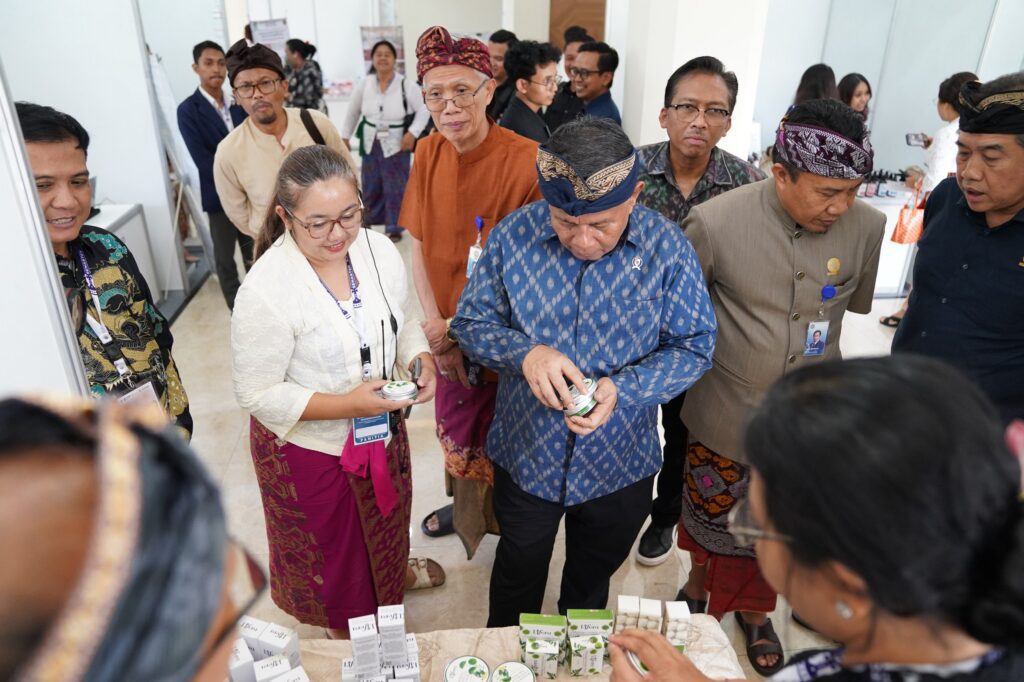
Through the 13th Senastek (National Seminar on Science and Technology), Udayana University aims to foster a more collaborative research and innovation ecosystem—one capable of driving the downstream application of research findings so that they deliver tangible benefits to society and the nation’s development.