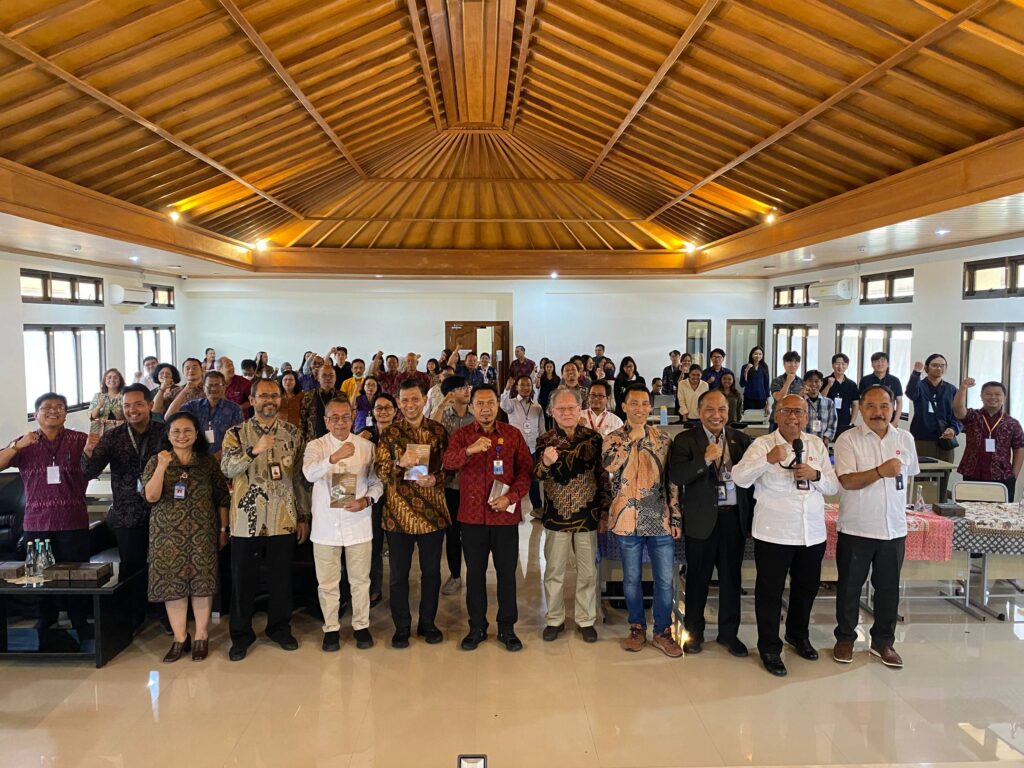
Denpasar, July 28, 2026 – The Rector of Udayana University officially opened the International PHITS Workshop and Tutorial 2026, held on Tuesday (July 28, 2026) at Udayana University. This international event is a collaboration between the Faculty of Mathematics and Natural Sciences (FMIPA) of Udayana University, the National Agency for Research and Innovation (BRIN), and the Japan Atomic Energy Agency (JAEA). The event featured academics, researchers, healthcare professionals, government representatives, industry, and students from various institutions and countries.
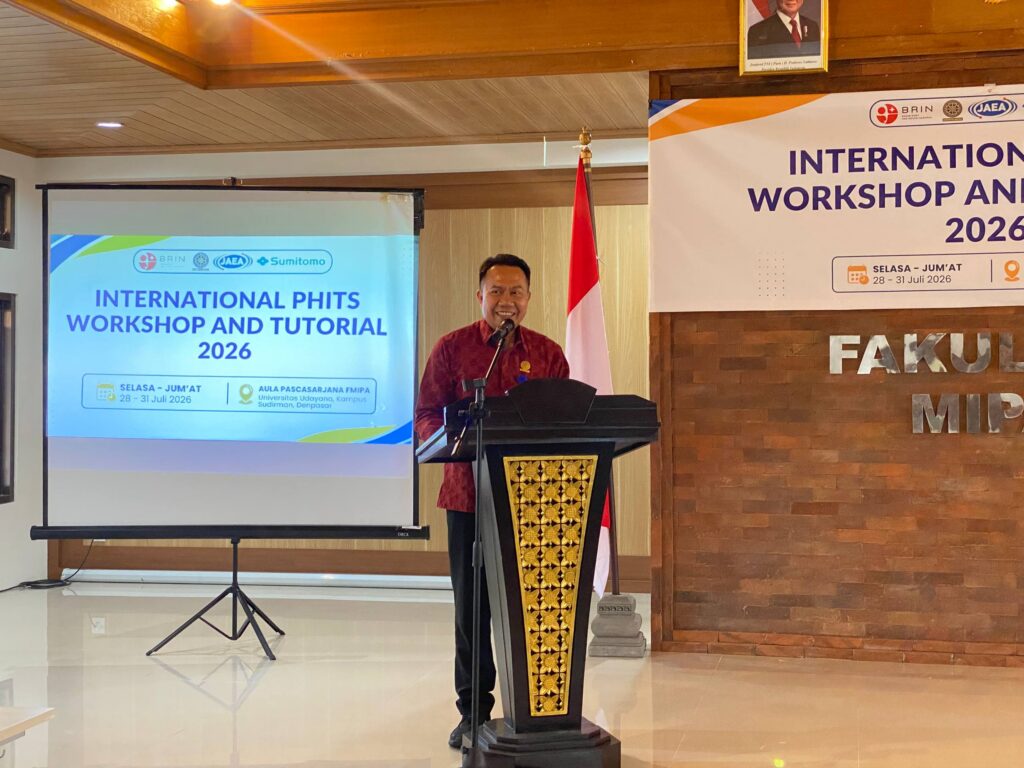
In his remarks, Udayana University Rector, Prof. Ir. I Ketut Sudarsana, ST., Ph.D., expressed his appreciation to FMIPA of Udayana University, BRIN, and JAEA for their commitment and collaboration in organizing this international workshop.
The Rector emphasized that the 2026 International PHITS Workshop and Tutorial is not merely a technical training course, but rather a platform for scientific collaboration, bringing together various institutions, disciplines, and countries to address global challenges in the health sector, particularly cancer treatment. He stated that developments in radiation physics, computational modeling, and particle transport simulation now play a crucial role in supporting safer, more accurate, and more effective medical technology.
He explained that the Particle and Heavy Ion Transport Code System (PHITS) is one of the world’s leading radiation transport and dosimetry simulation software. PHITS applications have been widely utilized in the fields of medical physics, radiation protection, nuclear engineering, and particle therapy to support evidence-based research and healthcare innovation.
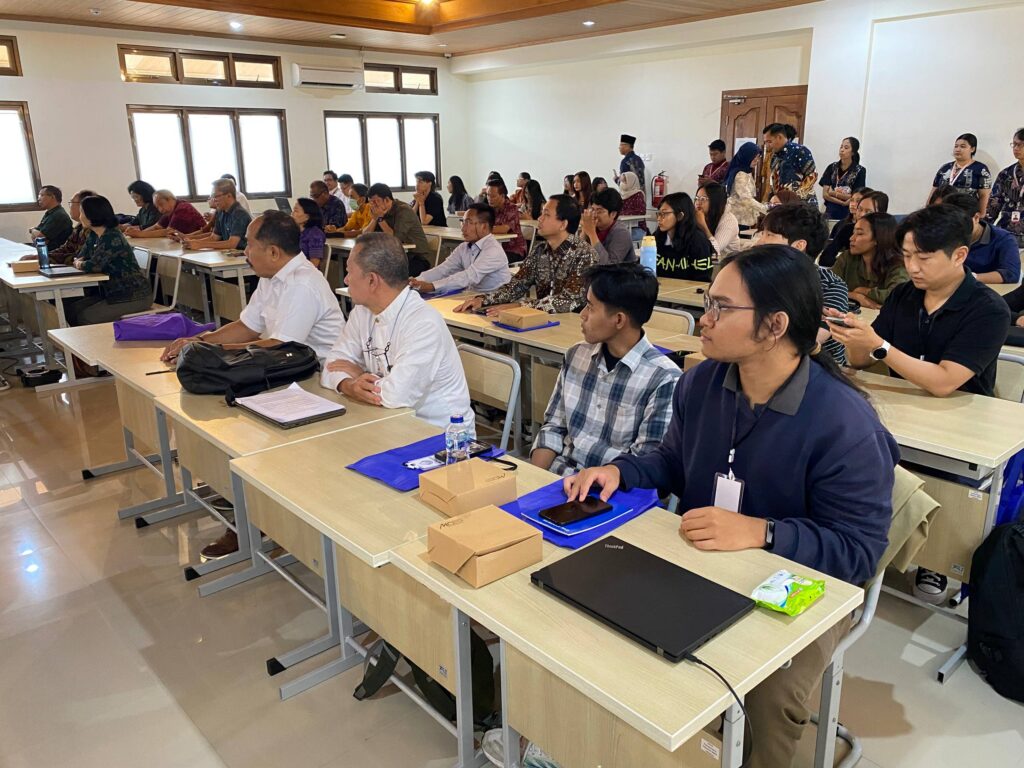
Through this four-day workshop, participants are expected to not only improve their technical competency in using PHITS but also broaden their understanding of the contribution of computational science to the development of healthcare technology. Furthermore, this activity provides an opportunity to strengthen academic networks, open opportunities for research collaboration, foster researcher mobility, and encourage the development of new innovations that benefit society.
The Rector also emphasized that this workshop aligns with Udayana University’s vision to become a globally recognized university through education, research, innovation, and international partnerships. He emphasized that scientific excellence cannot develop independently but must be built through openness, interdisciplinary collaboration, and sustainable synergy between universities, research institutions, the government, hospitals, and the industrial sector.
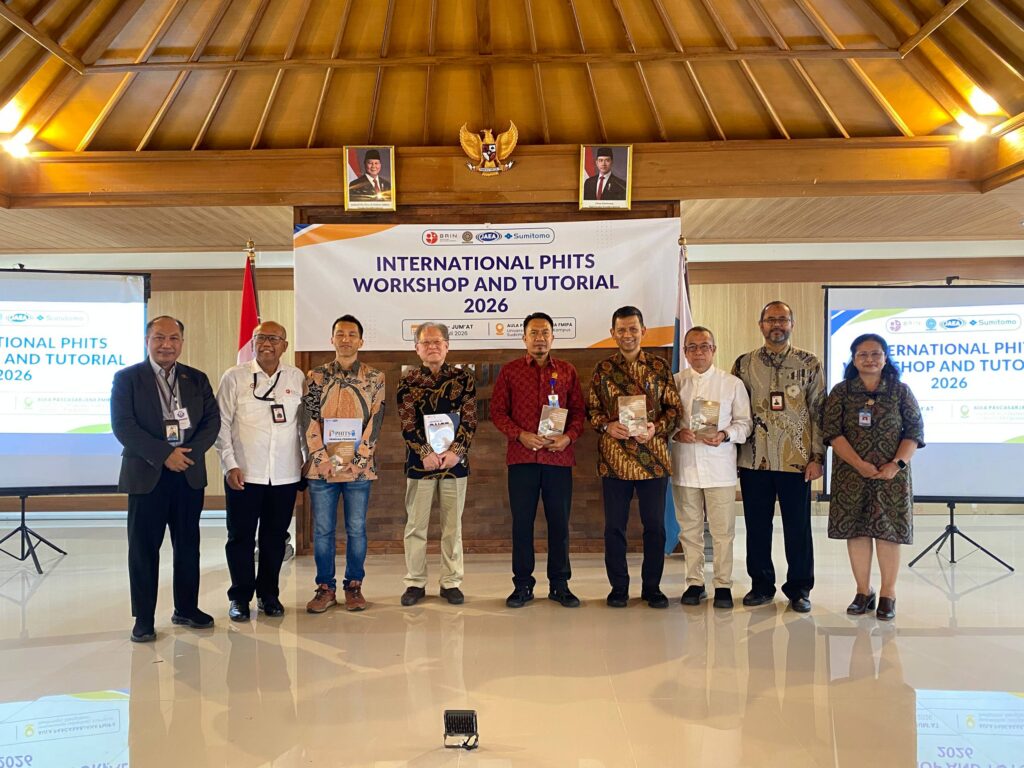
The Rector encouraged all participants to make the most of this opportunity by actively discussing, exchanging ideas, building professional networks, and exploring opportunities for future collaboration. The knowledge gained during the workshop is expected to be a catalyst for new research, strengthening inter-institutional partnerships, and innovations that can improve the quality of life.
Concluding his remarks, the Rector emphasized that the highest goal of science is to benefit humanity. Every advancement in research, technological innovation, and scientific collaboration is expected to contribute to the creation of a healthier society, sustainable development, and a more prosperous future.