
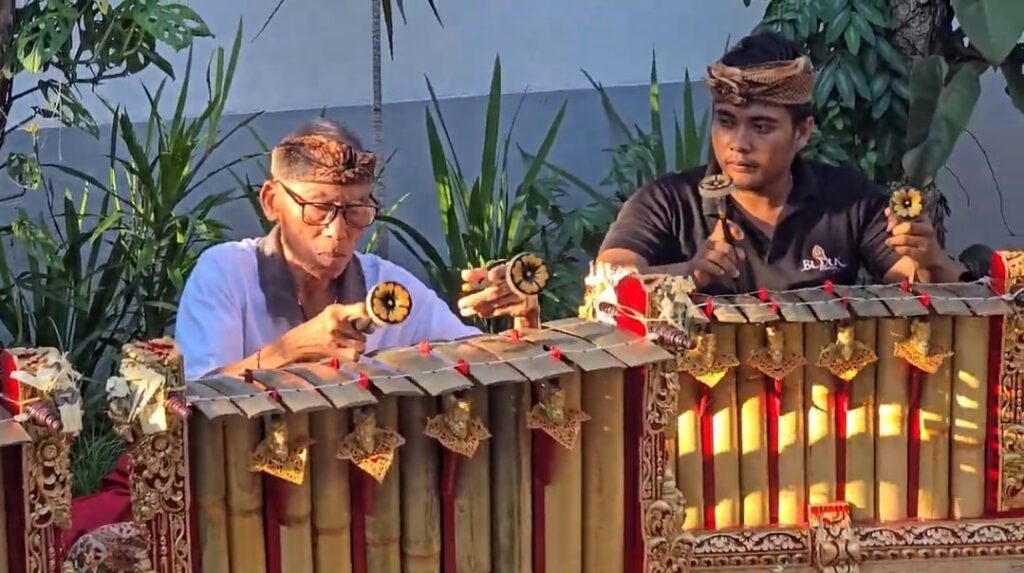
Badung – Udayana University’s commitment to being an Impactful Campus has once again been demonstrated through concrete student action within the community. Through the 2026 Buduk Village Development Program, students from the Faculty of Cultural Sciences (FIB) of Udayana University conducted an inventory and audiovisual documentation of Gender Wayang Buduk art as an effort to preserve local cultural heritage based on digital technology (May 31, 2026).
The fame of Buduk wayang puppeteers has resonated since the 1950s. This was followed by the popularity of Gender Wayang Buduk chants, which accompany wayang performances with their distinctive style. The existence of these two closely related arts has become an icon for Buduk Village. I Wayan Renduh, one of the prominent Gender Wayang Buduk artists, explained that, broadly speaking, the Gender Wayang Buduk accompaniment plays the same songs as other Gender Wayang accompaniments. Renduh, who is also the owner of the Sekaa Batel Dwi Tunggal (Gender Wayang arts group) studio, explained that the difference lies in the improvisation of several notes. In the Buduk style, artists add distinctive Buduk influences through additional strokes or notes to the songs they play, creating a Buduk-style Gender Wayang.
Furthermore, Renduh, who is still actively involved in the world of Gender Wayang in Buduk, explained that Gender Wayang in Buduk was pioneered by I Wayan Kenak, an artist from the Bernasi hamlet in Buduk village. Together with Wayan Kenak and several other figures, Renduh trained and performed Gender Wayang in the 1990s. The existence of Gender Wayang continues to this day through the involvement of subsequent generations who carry on the legacy.
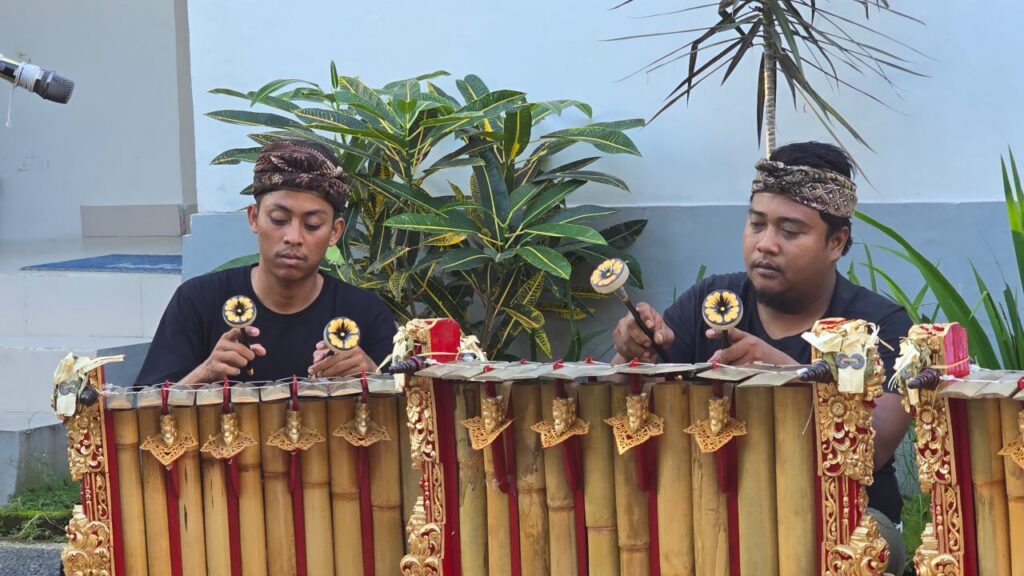
However, according to Renduh, adequate documentation of Gender Wayang in Buduk remains limited. “The plan was to record it, but there wasn’t time (there hadn’t been time to conduct audiovisual documentation of the Gender Wayang art form in Buduk—ed.),” Renduh said in an interview on May 25, 2026. Based on this situation, the Buduk Village Development Team initiated an inventory as a first step to preserve the legacy of Gender Wayang art for future generations through digital media. The recording took place at Wayan Renduh’s residence, which also serves as the location of the Sekaa Batel Dwi Tunggal (Batel Dwi Tunggal) group.
The inventory coordinator, I Gusti Agung Ayu Putri Pradnyaparamita, explained that documentation or digital footprints of Gender Wayang were not yet fully optimized. In this regard, this inventory process was undertaken as a preservation effort by utilizing digital technology as a cultural archive and learning resource for future generations. “Mr. Renduh said that documentation had not yet been implemented, while this heritage is in the form of sound and requires a medium or platform to ensure it is not lost over time.” “Therefore, this recording process was carried out to preserve this cultural asset and create a digital footprint that can be easily accessed by future generations,” said Putri.
The plan for audiovisual documentation was welcomed by Renduh, who remains active in the Gender Wayang art form. The documentation process began with recording the sequence of songs that accompanied the wayang performance. Next, Wayan Renduh, along with three other Gender Wayang artists from Sekaa Batel Dwi Tunggal (Batel Dwi Tunggal), namely I Gede Ryan Gunawan, Kadek Eddy Suardinata, and Komang Eddo Surya Dinata, played various pieces of music used in the Buduk wayang performance. The entire performance process was recorded in audiovisual format for documentation and archiving of Buduk Village’s arts. In the recording process, the list of songs played were songs that generally accompany the flow or stages of a wayang performance. Starting with the tabuh pategak (opening accompaniment), namely Sekar Jepun and Palegongan, then continuing with Pamungkah Gedog, Pengrangrang, Tulang Lindung, Alas Harum, Penyahcah Parwa, Bebaturan, Gending Angkat-angkatan, Penasar Delem, Bendu Semara, Mesem, until the closing beat.
The event was also witnessed by the Head of the Buduk Village Government Section, I Gede Sumiastika. He emphasized the importance of preserving local cultural heritage, which has been poorly documented. “These songs are truly unwritten, undocumented. So, whether we like it or not, as the next generation, we want to take inventory,” said Sumiastika. Until now, the preservation of Gender Wayang Buduk has relied solely on oral methods passed down from generation to generation. The lack of written records and documentation poses a serious threat in the modern era. Therefore, through this inventory process, which involves audio-visual recording, the village government hopes to preserve local cultural heritage.
In documenting Gender Wayang, the Creative Media (Medkref) team faced several technical challenges, particularly in the audio recording process. Limited knowledge of traditional music recording techniques and limited equipment availability hampered the documentation process. To address this, the team implemented several recording methods, such as using microphones connected directly to laptops, placing multiple mobile phones at different points, and recording with an audio camera. “Limited knowledge of audio recording techniques, particularly in arranging the sound of traditional music, presented a challenge during the documentation process,” said Adinda Abigael Rehulina Bukit, coordinator of the Creative Media Division of the Buduk Village Development Team.
Despite this, various stages of the documentation have been completed. Currently, the documentation has progressed through the audio and video editing stages and is being prepared for publication on various social media platforms for wider public access. “The progress can be said to have passed the editing stage and is moving towards publication,” Adinda added.
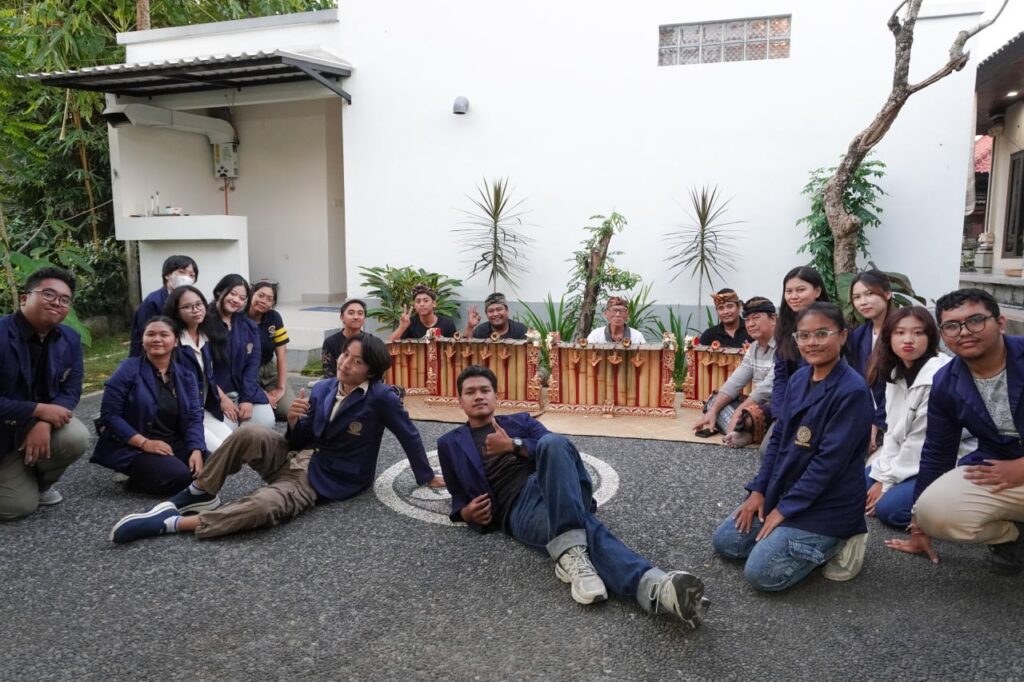
Concluding the series of activities, the Head of the Buduk Village Development Team, Gusti Ayu Putu Dian Oktamaharani, expressed her hope that the inventory and documentation of Gender Wayang would be the first step in building an audiovisual archive of Buduk Village’s traditional arts. She believes that such documentation is crucial as a learning tool and an effort to preserve culture for future generations. “The distinctive characteristics of the Gender Wayang songs from Buduk Village should be introduced and documented, so that they remain preserved and have a future for future generations,” said Dian. Sumiastika expressed a similar hope while attending the Gender Wayang recording ceremony. She hopes that through this initiative, the younger generation will not only learn about but also understand and preserve the essence of Gender Wayang Buduk, ensuring it remains intact.