
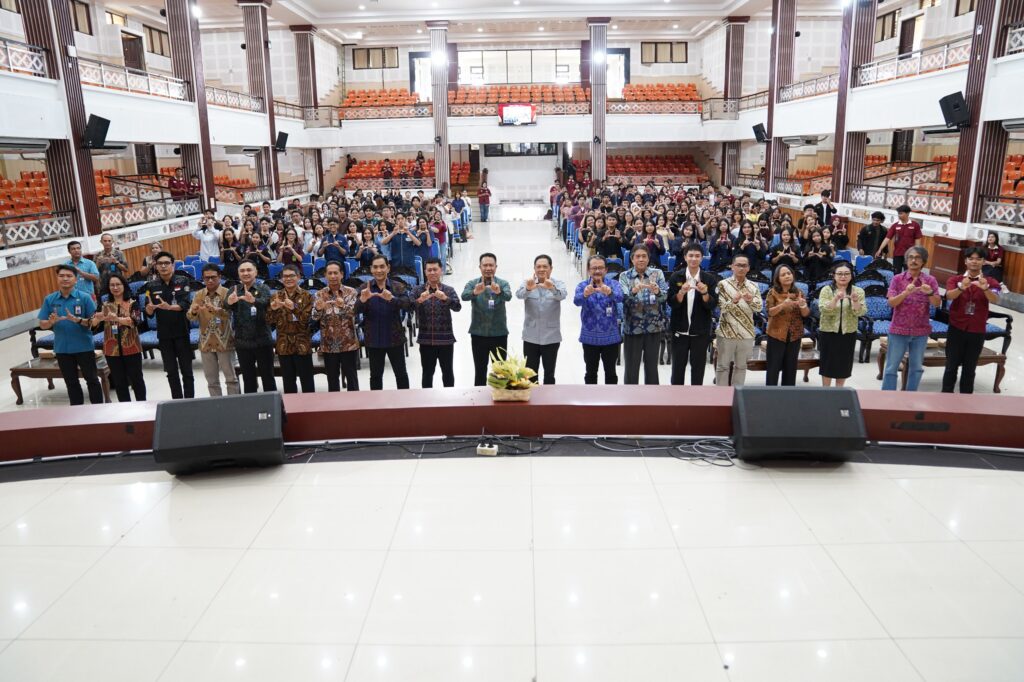
JIMBARAN – The Student Executive Board (BEM-PM) of Udayana University held a “Regional Public Advocacy Discussion Forum” at the Widya Sabha Auditorium, Udayana University’s Jimbaran Campus, on Wednesday (November 25, 2026). Centered on the theme “Restoring Hopes for Education: Demanding Equality and Well-being,” the forum brought together students and policymakers to examine disparities in educational facilities and quality across the Province of Bali.

The event was officially opened by the Rector of Udayana University, Prof. Ir. I Ketut Sudarsana, S.T., Ph.D. Also in attendance were Dr. Ida Bagus Rai Dharmawijaya Mantra, S.E., M.Si.—a member of the Regional Representative Council (DPD RI) and General Chair of the Udayana Alumni Association (IKAYANA)—I Nyoman Suwirta, S.Pd., M.M., Chair of Commission IV of the Bali Provincial Regional House of Representatives (DPRD), and Ida Bagus Gde Wesnawa Punia, S.T., M.Si., Head of the Bali Provincial Education, Youth, and Sports Agency.

In his remarks, the Rector of Udayana University commended the students for their courage in creating a space for public dialogue regarding fundamental societal issues. He noted that regional progress should not merely exist on paper while children still struggle to access decent educational facilities. He further advised students to nurture their idealism through academic knowledge and robust data.
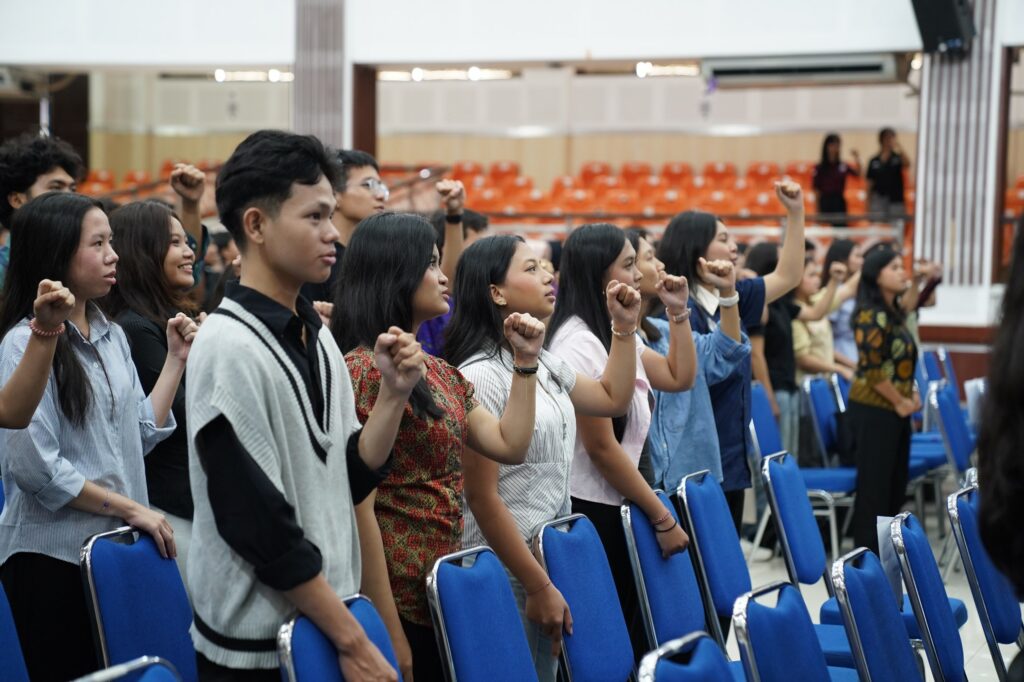
“Effective criticism is not defined by the loudest voice, but by the strength of the underlying arguments and evidence,” the Rector stated. He emphasized that student advocacy must evolve beyond simple grievances toward providing targeted recommendations that can deliver tangible improvements to education in Bali. In line with this message, the Chair of the 2026 Regional People’s Advocacy Committee, I Gede Kesyawan Nata Negara, explained that this forum stems from field research and a comprehensive study conducted by the committee across schools in nine regencies/cities in Bali, including Nusa Penida.

Field findings reveal a stark disparity in educational facilities between urban areas—such as Denpasar and South Badung (the Sarbagita region)—and areas outside of this zone, such as Jembrana and Buleleng. While schools in urban areas feature comfortable, air-conditioned classrooms, the committee encountered schools in other regions with dilapidated structures—some lacking roofs or even walls—and instances where students must bring water from home for sanitation and restroom use. Beyond infrastructure, other major concerns include a shortage of teaching staff, which forces educators to teach multiple subjects, as well as a lower average number of years of schooling in areas outside the Sarbagita region.
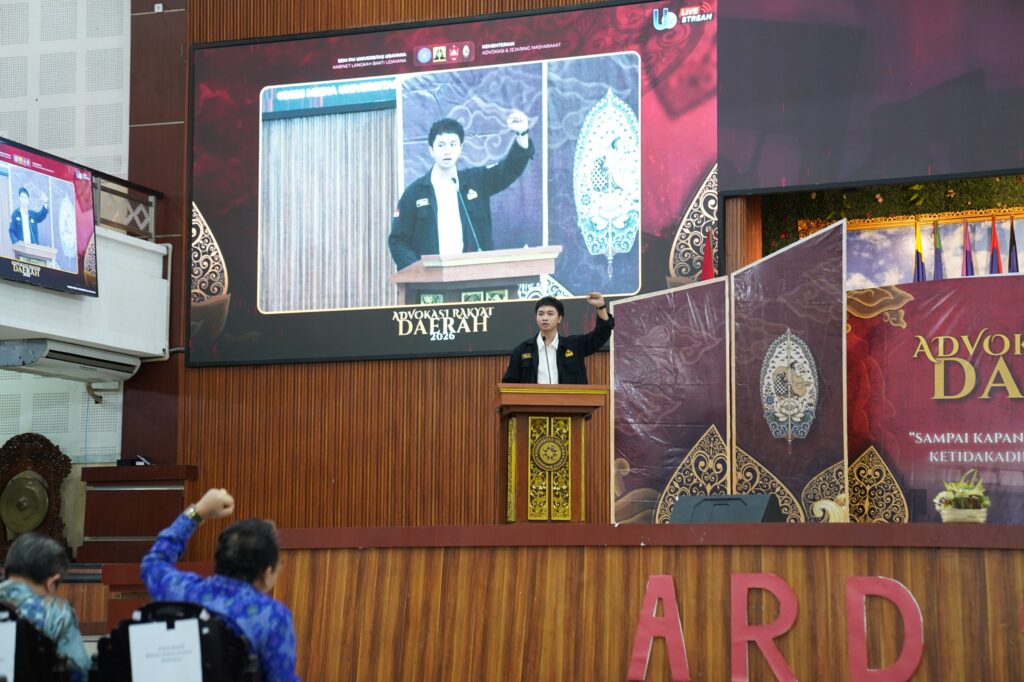
Meanwhile, the Student Body President (BEM-PM) of Udayana University, I Gusti Agung Ngurah Oka Paramahamsa, emphasized that this forum is not intended as a venue for assigning blame or pointing fingers regarding the current state of education. Instead, it serves as a space for dialectical exchange, aimed at formulating concrete solutions in collaboration with relevant stakeholders.
“We want to bring together some of Bali’s brightest minds to discuss the state of education in the province and develop effective solutions—ensuring that the people of Bali can exercise the rights guaranteed to them under the 1945 Constitution,” asserted Oka Paramahamsa.
Through open dialogue among students, academics, legislators, and executive officials, this forum aims to produce policy recommendations that will foster equitable educational quality and well-being across the entire island of Bali.