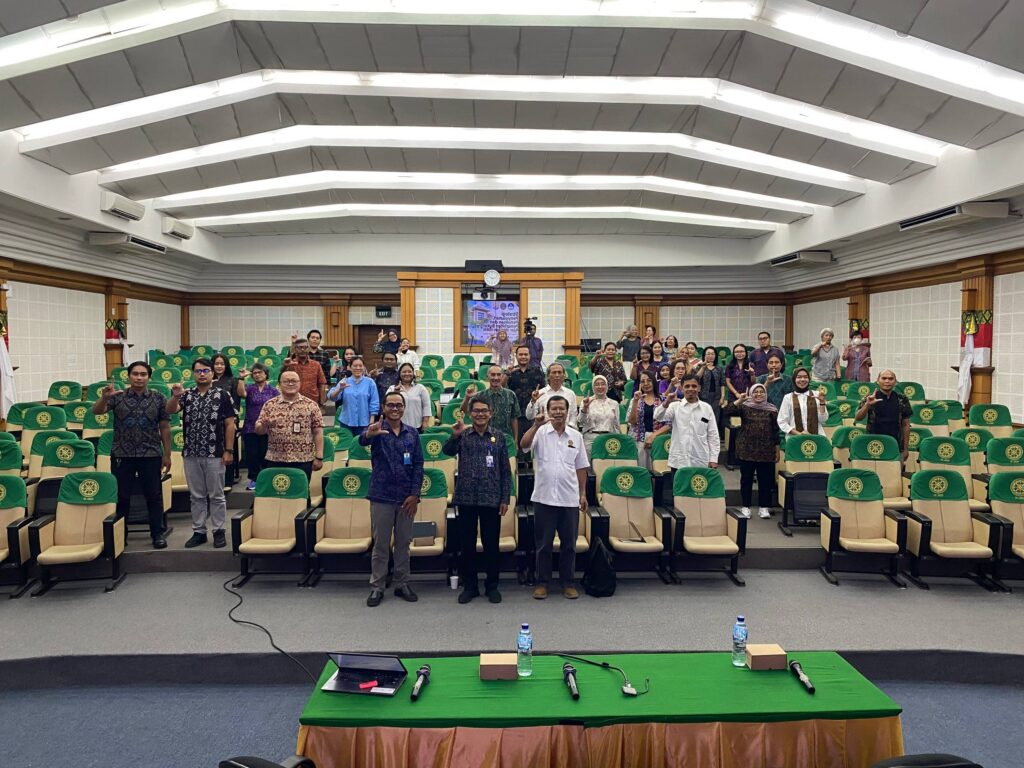
Denpasar – The Udayana University Library held a training session on strategies for compiling, writing, and publishing ISBN-registered textbooks on Tuesday, November 17, 2026, at the A.A. Jelantik Theater Room, Faculty of Medicine, Udayana University (Sudirman Campus). The event aimed to enhance the capacity of faculty members to develop and publish textbooks, while fostering a culture of literacy and academic publication within Udayana University.
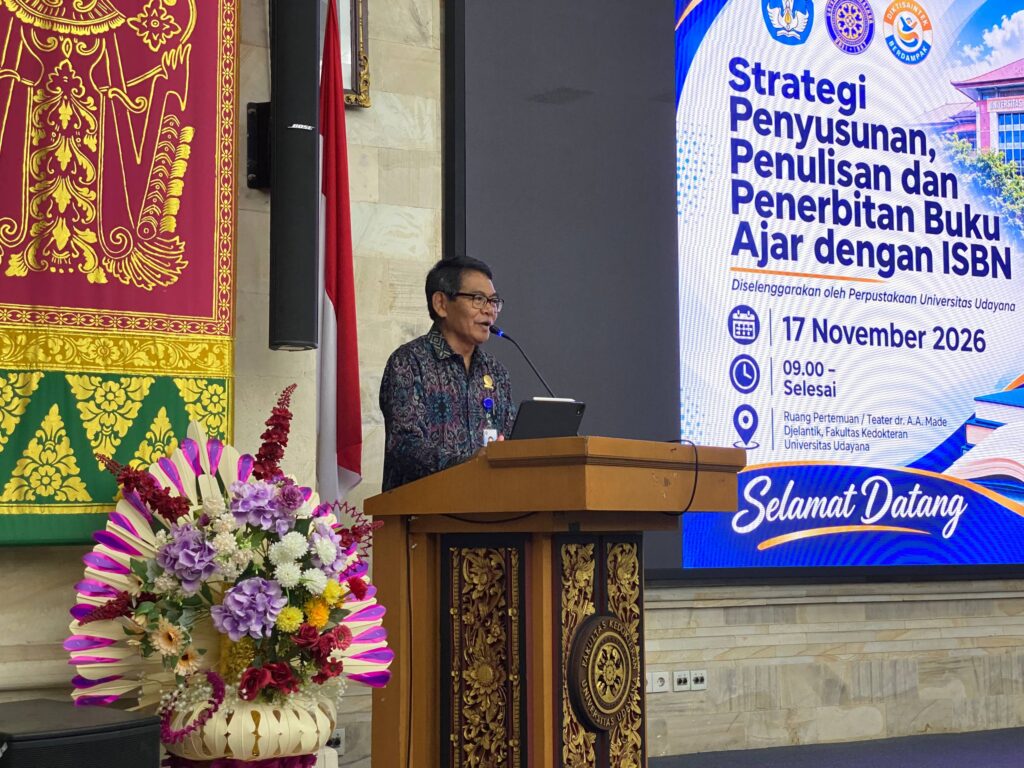
The event was opened by the Vice Rector for Academic and Student Affairs at Udayana University, Prof. Ir. I Nengah Sujaya, M.Agr.Sc., Ph.D. In his remarks, he emphasized that books play a vital role as a medium for recording, developing, and disseminating the ideas and intellectual contributions of the academic community. He noted that a university serves not only as a venue for education and instruction but also as a space for the birth and evolution of scientific thought—ideas that can be passed down to future generations. Textbooks authored by Udayana University faculty hold strategic value, as they encapsulate specialized knowledge, critical insights, academic experience, and scientific advancements relevant to the needs of society and the challenges of the times.
Furthermore, the Vice Rector for Academic Affairs explained that textbooks, reference books, and monographs serve as essential instruments in supporting the learning process. Books authored by faculty members also provide students with the opportunity to study and delve into the ideas of Udayana University’s own academics, thereby fostering a closer intellectual connection between faculty—as developers of knowledge—and students, who represent the next generation of scholars.
In his address, he also highlighted how advancements in information technology have created broader opportunities for faculty members to publish their work in both print and digital formats. Although technology has simplified the processes of publishing and distribution, the quality of the content, the scholarly foundation, the systematic structure, and the overall credibility of a work must remain the primary focus. It was emphasized that all faculty members at Udayana University should cultivate a spirit and culture of writing; authoring a book is not merely an academic obligation, but an intellectual responsibility for an educator—a way to document and pass on knowledge.
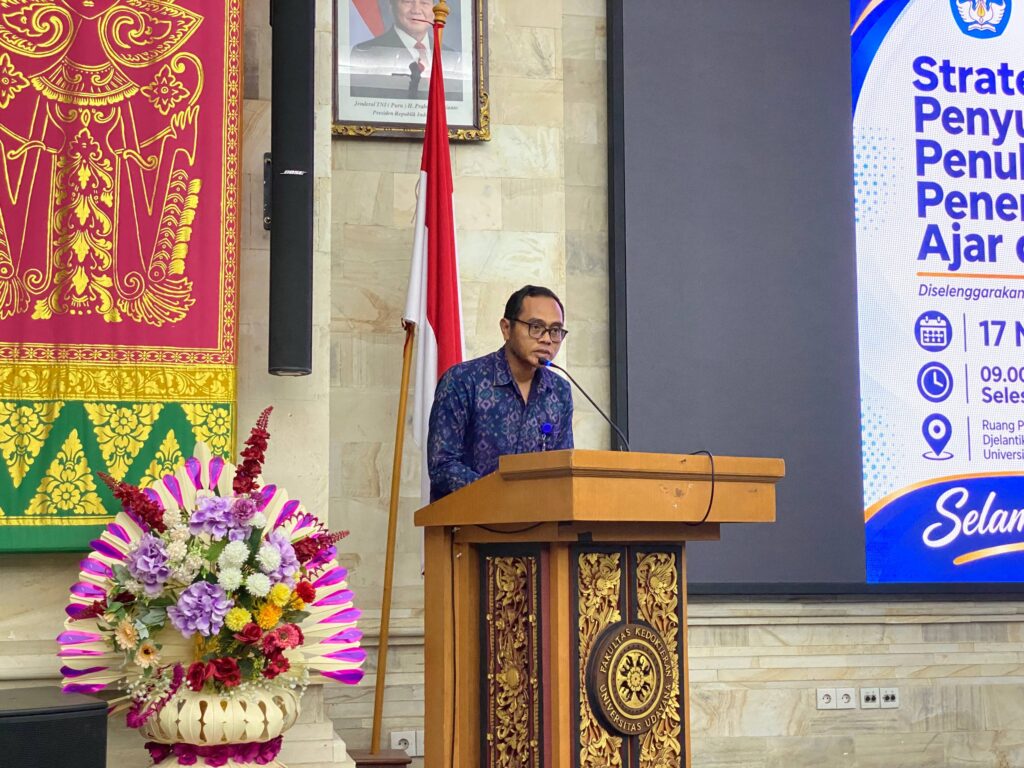
In his remarks, the Head of the Udayana University Library, Gede Arda, S.TP., M.Sc., Ph.D., highlighted the importance of enhancing the capacity of lecturers and researchers to produce high-quality written work and to understand book-publishing strategies. Through this initiative, participants are expected to gain the ability to distinguish between high-quality scholarly references and journals and those lacking credibility, while also learning how to effectively involve students in research activities and the development of academic work.
The event featured two speakers: Prof. Dr. I Nyoman Darma Putra, M.Litt., a professor at Udayana University, and Erwin Surawan, S.S.I., a librarian at the National Library of the Republic of Indonesia. The topics covered included strategies for structuring and writing books, identifying high-quality scholarly references and journals, and the practical steps required to publish a book—including meeting the criteria for obtaining an ISBN. Furthermore, the discussion addressed the value of engaging students in research and the development of academic work by leveraging their specific skills.
Through this initiative, the Udayana University Library aims to further strengthen its role as a hub for literacy and learning, while simultaneously encouraging an increase in both the quantity and quality of books authored by faculty members. The event also serves as a catalyst for fostering collaboration among the library, faculty members, academic departments, and other units, helping to build a productive academic literacy ecosystem. As noted in the opening remarks, a book represents a form of intellectual legacy—ensuring that an academic’s ideas endure, continue to be studied and developed, and provide lasting benefits to society.