
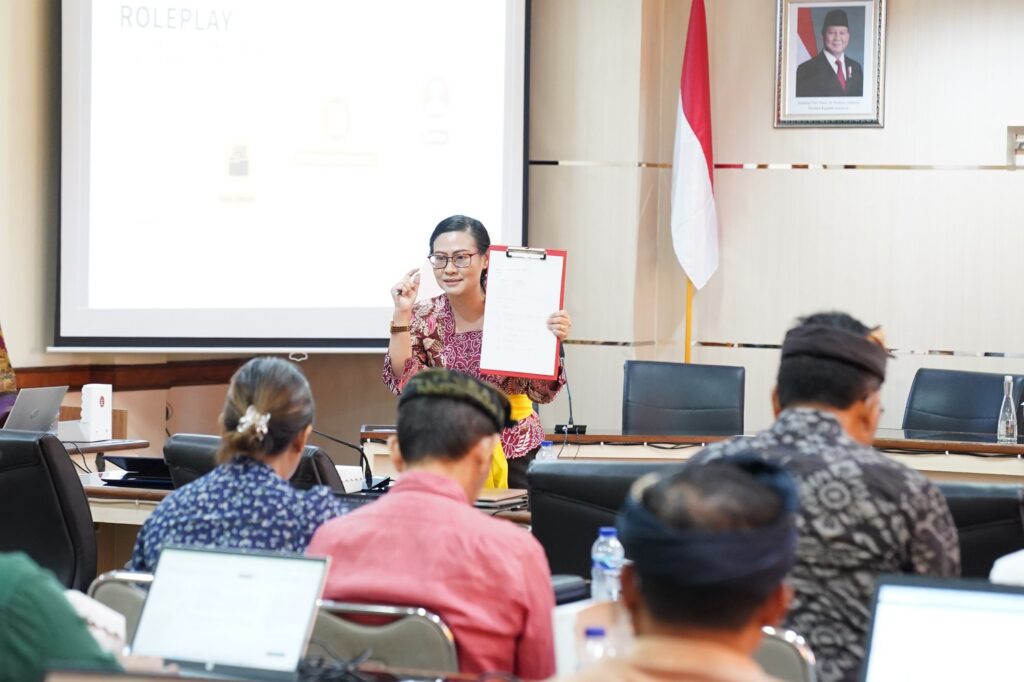
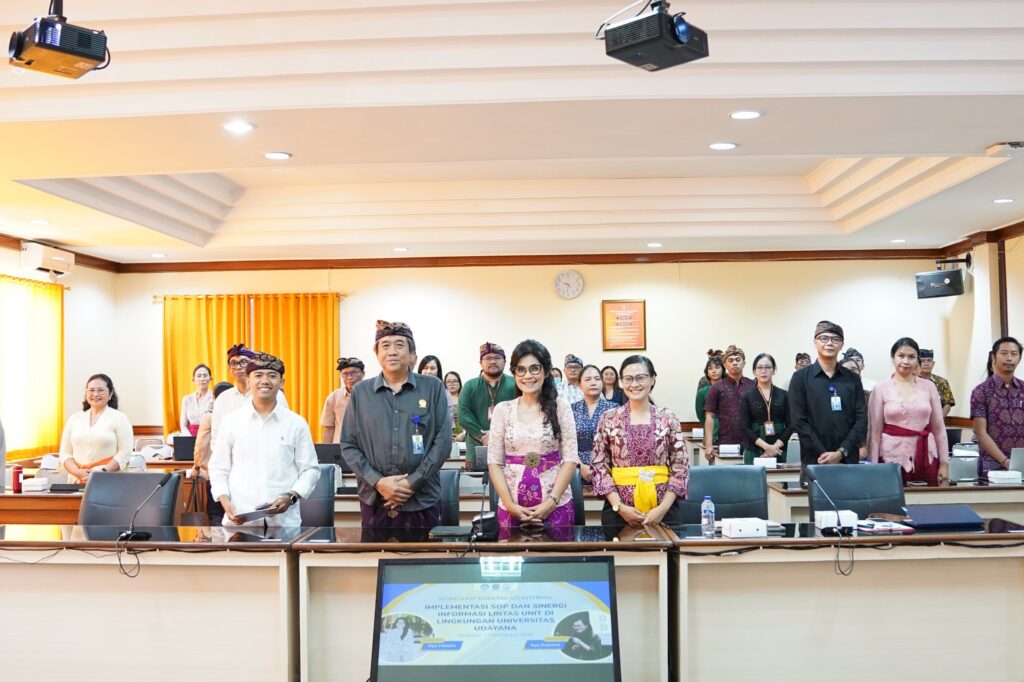
Denpasar – Udayana University (Unud) is driving the strengthening of integrated governance through a workshop on implementing effective Standard Operating Procedures (SOPs) for internal communication. This initiative is part of Unud’s preparations to transition into a State University with Legal Entity status (PTN-BH) and aims to ensure that work processes between units are clear, measurable, and accountable. The workshop was held on Thursday, September 17, 2026, in the Meeting Room of the MM Building (3rd Floor), Faculty of Economics and Business, at the Unud Denpasar Campus. Attendees included members of the university leadership and representatives from the Information and Cooperation Management Units (UPIKS) across Udayana University.
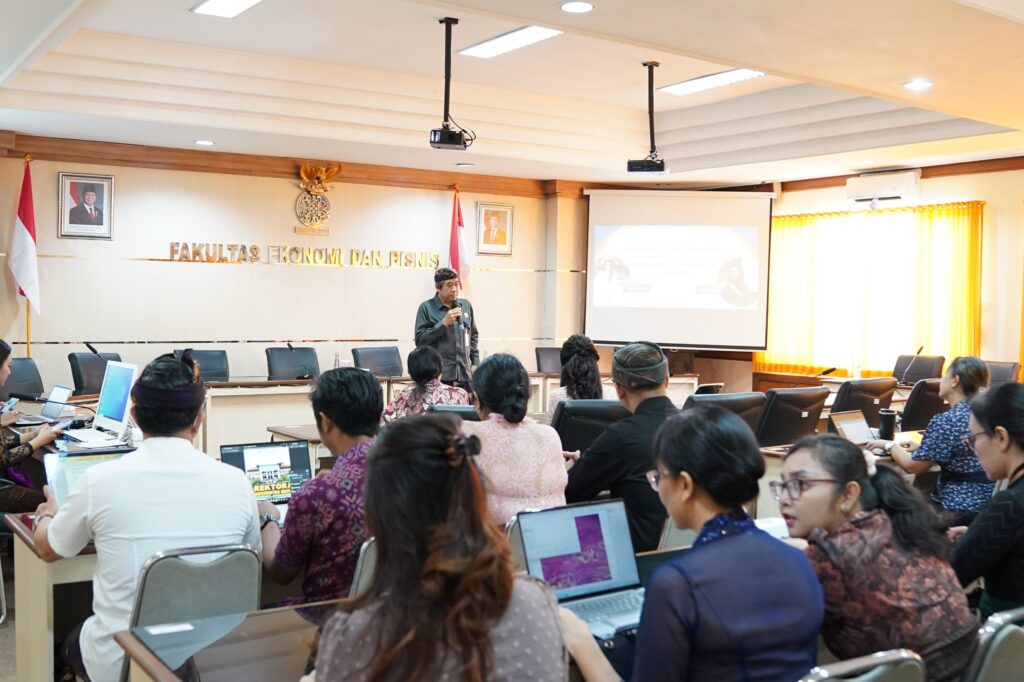
The workshop was opened by the Vice Rector for Planning, Cooperation, and Information, Prof. Dr. Eng. Ir. Made Sucipta, S.T., M.T., IPM. In his remarks, Prof. Made Sucipta emphasized that governance and information are two crucial pillars that must be strengthened during the transition to PTN-BH status.
“There are two key pillars: governance and information. Governance must be built upon a clear system—specifically through standardized SOPs—so that everyone understands their duties, functions, responsibilities, and workflow,” stated Prof. Made Sucipta.
He explained that SOPs must provide clarity regarding the Person in Charge (PIC), work stages, completion timelines, and expected outputs. Consequently, SOPs should not merely serve as administrative documents but act as operational guidelines that also facilitate performance measurement.
“SOPs must not remain just documents; they must be genuinely applied in daily work. Under the PTN-BH model, this system will be linked to performance measurement, so we must complete the drafting and implementation processes together,” he asserted.
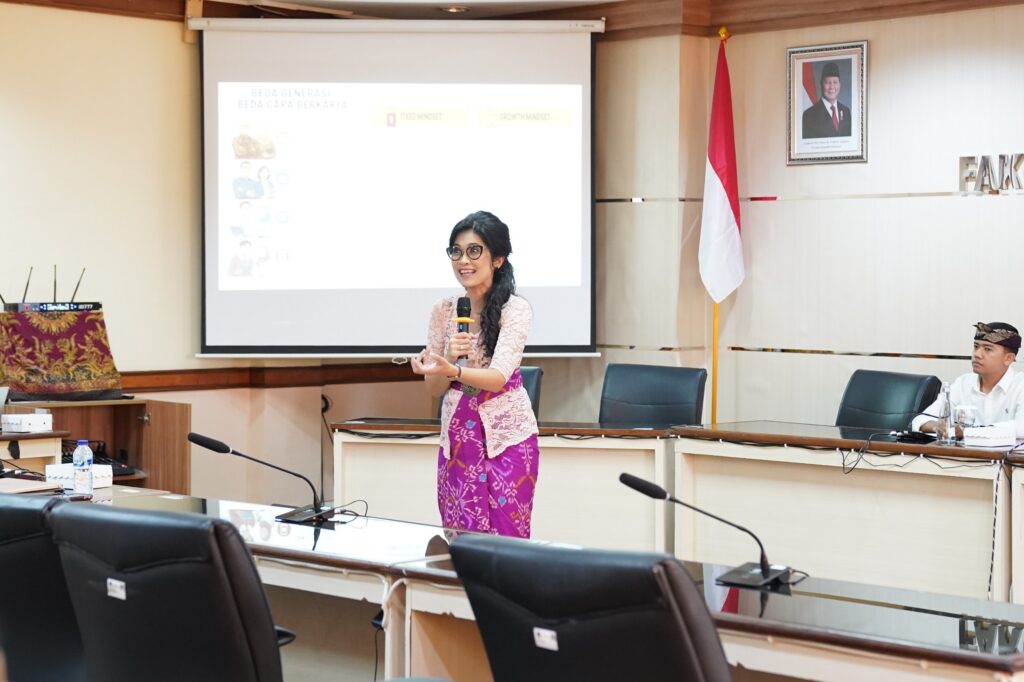
The workshop featured two speakers from the Association of Indonesian Public Relations Companies (APPRI): Dr. Ni Made Ayu Helena Cornellia and Ayu Kusumaningtyas, B.A. In her presentation titled “Effective Internal Communication Strategies,” Ni Made Ayu Helena Cornellia addressed various organizational communication challenges, such as unclear instructions, information delays, and siloed working patterns between divisions. She emphasized the importance of establishing structured communication workflows—ranging from stakeholder mapping, message formulation, and the designation of persons-in-charge (PICs) to final evaluation.
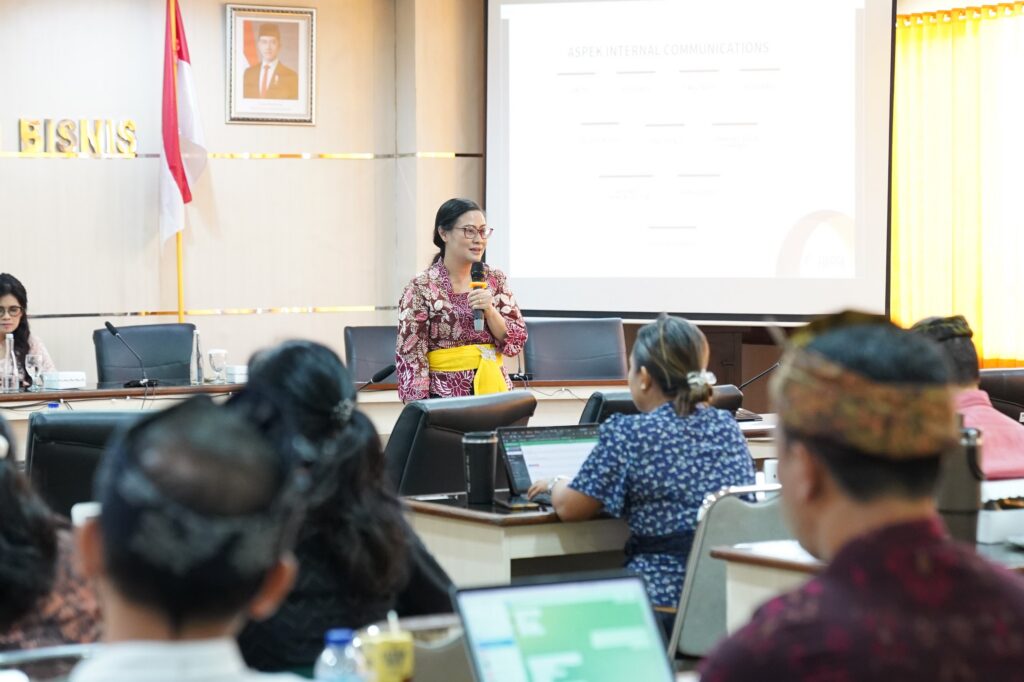
Meanwhile, Ayu Kusumaningtyas, B.A., presented a session titled “Beyond the Lectern: Building Fast, Clear, and Transparent Internal Campus Communication.” Her presentation highlighted the importance of effective internal communication achieved through the optimization of information technology and digital portals, the strengthening of the UPIKS role, and the implementation of top-down, bottom-up, and horizontal coordination patterns.
Through this initiative, Unud aims to foster a shared understanding and commitment regarding the implementation of Standard Operating Procedures (SOPs) and to strengthen cross-unit communication. This enhanced governance is expected to become an integral part of a professional, transparent, accountable, and integrated work culture that supports performance at Udayana University.