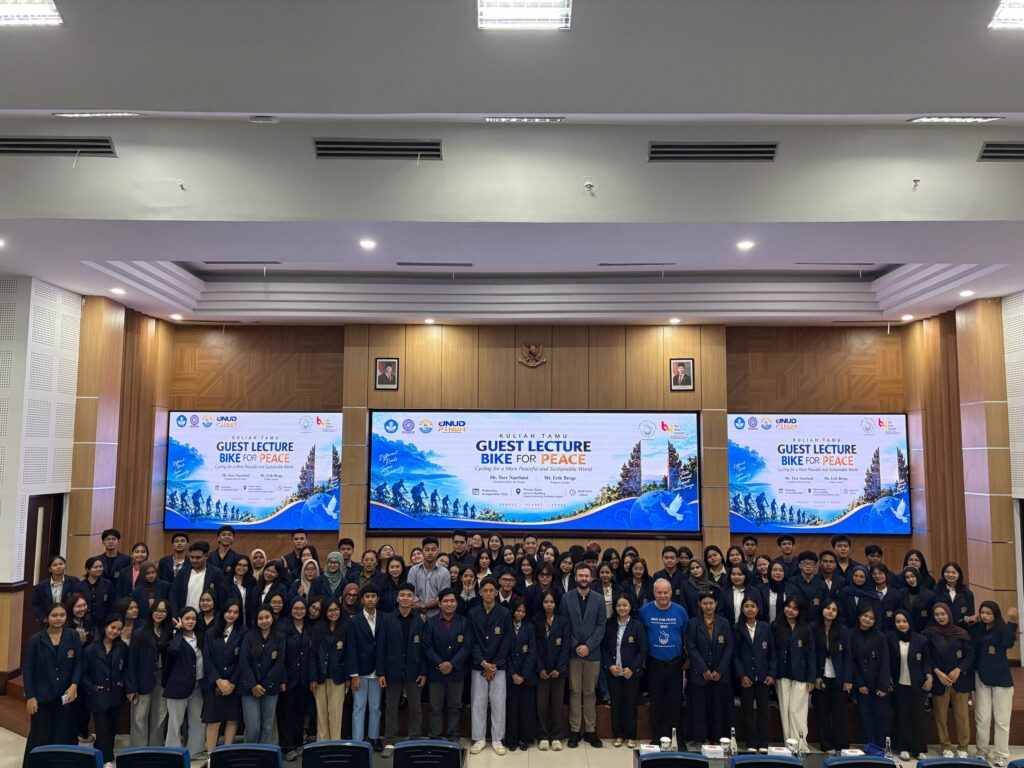
Jimbaran – Udayana University (Unud) served as a stop on the global journey of “Bike for Peace,” an initiative marking the 50th anniversary of the Norwegian peace organization. The visit featured a guest lecture titled “Pedalling for Peace: Fifty Years of Dialogue, People to People,” held at the Lecture Building Theater Room on the Jimbaran Campus on Wednesday (September 16, 2026).
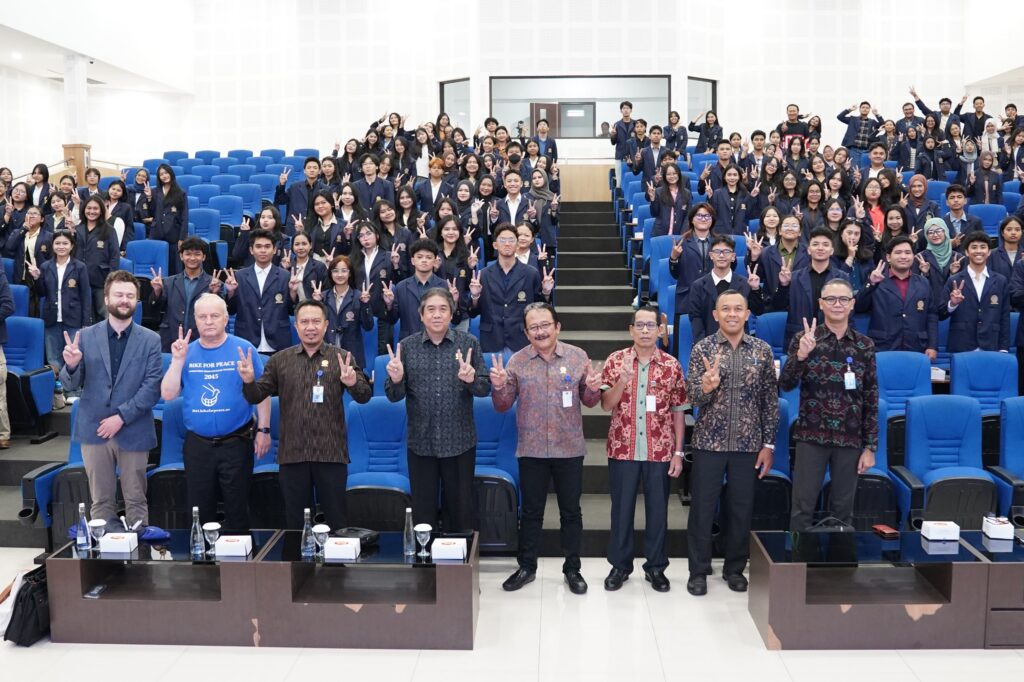
The event featured Bike for Peace President Tore Nærland alongside Project Leader Erik Berge. The lecture was attended by Udayana University Rector Prof. Ir. I Ketut Sudarsana, S.T., Ph.D., as well as vice-rectors, faculty and institutional leaders, lecturers, and students.
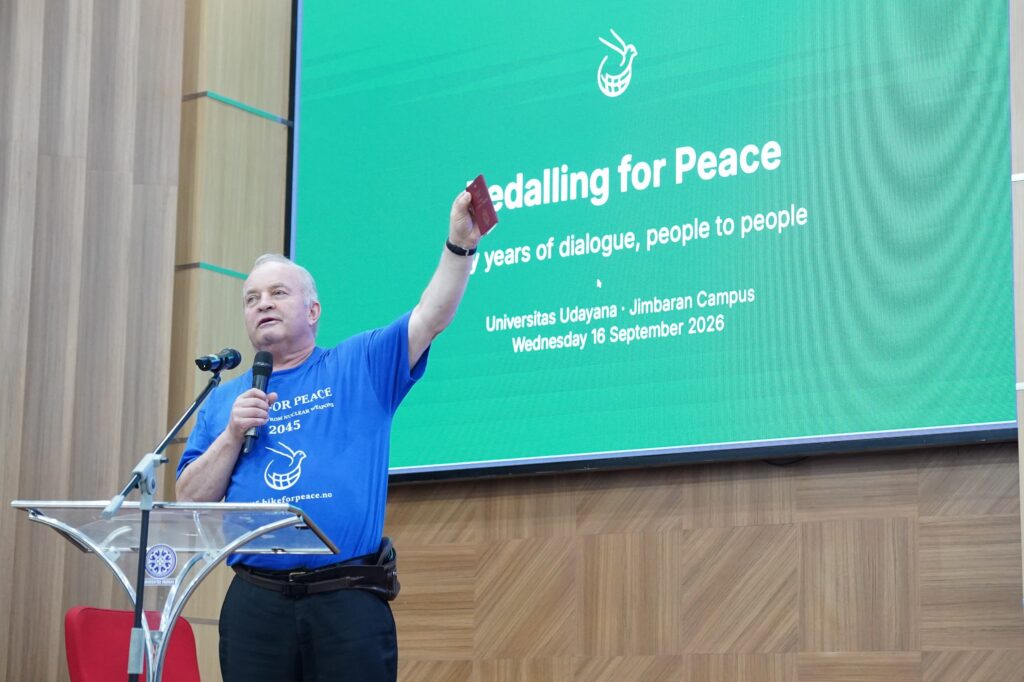
During the event, Bike for Peace presented the history of the organization, which was founded by Tore Nærland in Norway in 1976. As a humanitarian peace organization, Bike for Peace represents neither governments nor specific sides in conflicts. Since its first international journey in Northern Ireland in 1978, the organization has undertaken hundreds of peace journeys across more than 125 countries.
Bike for Peace’s approach centers on people-to-people dialogue as a key instrument for building peace. The organization visits conflict-affected regions, meets with people from various sides of a conflict, and supports those actively working toward peace.
The tandem bicycle serves as the primary symbol of this approach. Two people share a single bicycle and move in the same direction, each playing a complementary role. This philosophy illustrates the importance of trust and human cooperation in moving together toward a shared goal.
The five-decade journey of Bike for Peace encompasses several significant moments in the history of global peace. Its first international journey took place in Northern Ireland in 1978. In 1979, experiences in Hiroshima prompted the organization to expand its movement to address the issue of nuclear disarmament. Meanwhile, in 1983, citizens of the United States and the Soviet Union rode tandem bicycles from Moscow to Washington amidst Cold War tensions.
Bike for Peace also fosters an approach known as citizen diplomacy—or “track-two diplomacy”—which opens channels of communication between peoples when official state-to-state relations are constrained. This approach has been central to the organization’s mission of maintaining dialogue and bringing together people from diverse backgrounds.
Indonesia is one of the countries highlighted during this year’s Bike for Peace journey. The initiative showcases Indonesia’s experience in peacebuilding and international cooperation, including the 1955 Asian-African Conference in Bandung, the establishment of a nuclear-weapon-free zone in Southeast Asia via the Bangkok Treaty, and the country’s signing and ratification of the Treaty on the Prohibition of Nuclear Weapons.
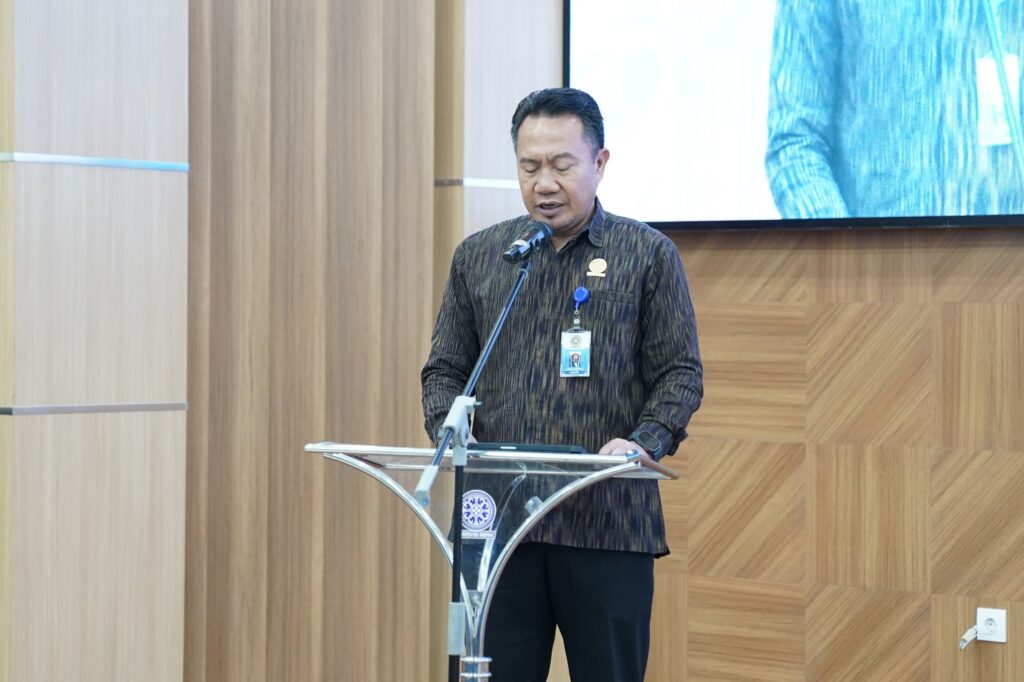
Udayana University Rector Prof. Ir. I Ketut Sudarsana, S.T., Ph.D., expressed his appreciation for the selection of Udayana University (Unud) as a stop on the Bike for Peace global tour, which marks the organization’s 50th anniversary.
According to the Rector, Bike for Peace’s commitment to promoting peace, dialogue, mutual understanding, and a nuclear-weapon-free world aligns closely with the role of universities as spaces for the exchange of ideas and the shaping of future generations.
“A university is not merely an institution of higher education; it is a space for exchanging ideas, respecting differences, and molding future leaders capable of building a better world,” said Prof. Ir. I Ketut Sudarsana, S.T., Ph.D.
Furthermore, the Rector emphasized that peace should not be defined merely as the absence of conflict. Peace is built through education, cross-cultural dialogue, scientific collaboration, mutual respect, and a shared responsibility toward humanity. These values also align with Indonesia’s diversity and the *Tri Hita Karana* philosophy, which emphasizes harmony among people, nature, and God.
This event also serves as a significant milestone for Udayana University as it enters a new chapter as a State University with Legal Entity status (PTN-BH). This transformation strengthens the university’s commitment to becoming an institution increasingly integrated into global networks—not only through education, research, and innovation but also through international partnerships and public engagement in addressing various global challenges.
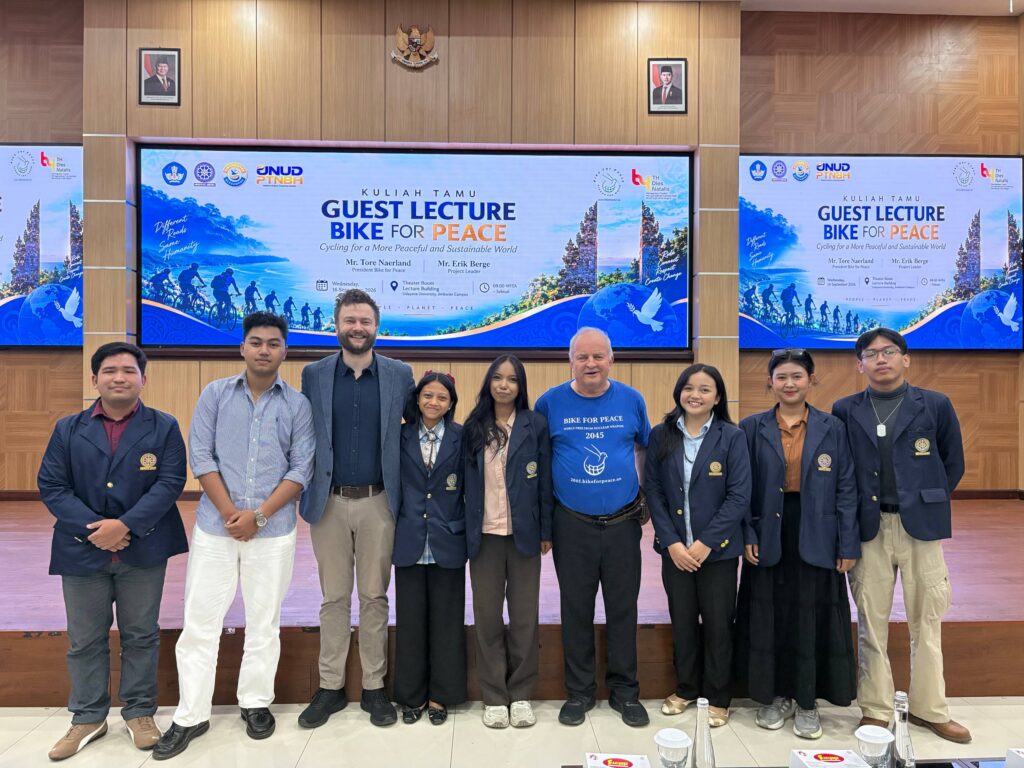
Through this guest lecture, Prof. Ir. I Ketut Sudarsana, S.T., Ph.D., encouraged students to make the most of the opportunity by listening attentively, asking questions, and actively engaging in dialogue with the *Bike for Peace* delegates. He noted that the effort to build peace is not solely the responsibility of governments or international organizations but also that of every individual—particularly the younger generation, who will shape our shared future.
The 2026 *Bike for Peace* journey takes place from September 1 to October 31, covering 12 cities across nine countries and four continents. Denpasar was one of the stops on the itinerary before the journey continued to cities in Asia, the Pacific, and the United States, ultimately concluding at the United Nations (UN) headquarters in New York at the end of October. Throughout the journey, *Bike for Peace* has championed the call for a nuclear-weapon-free world by 2045.
The *Bike for Peace* visit to Udayana University is expected to mark the beginning of an ongoing relationship and collaboration between the university and the Norwegian peace organization. The meeting in Bali is envisioned not only as a forum for academic discussion but also as a bridge of friendship between Indonesia and Norway, reinforcing a shared commitment to building a peaceful, inclusive, and sustainable world for future generations.