
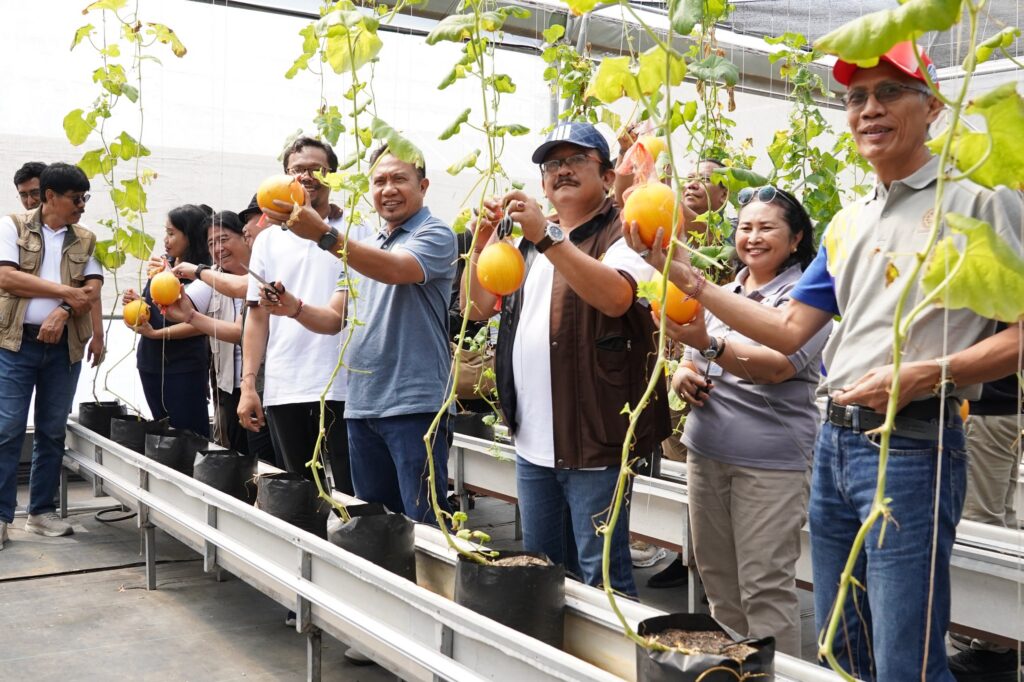
DENPASAR – The Faculty of Agriculture at Udayana University (Unud) has once again demonstrated its tangible commitment to supporting food self-sufficiency and strengthening the university’s “Tridharma” (Three Pillars of Higher Education) through the “Udayana Memanen” (Udayana Harvests) event. Held at the Faculty of Agriculture’s Experimental Garden in Pegok, Sesetan, on Friday (September 11, 2026), the event was attended by Udayana University leadership, the academic community, and strategic partners. The occasion featured joint planting and harvesting activities, as well as a tour of an exhibition showcasing agricultural product innovations.

In his remarks, the Dean of the Faculty of Agriculture, I Putu Sudiarta, S.P., M.Si., Ph.D., outlined the faculty’s various strategic achievements, including its full commitment to supporting the university’s status as a State University with Legal Entity (PTNBH) status. Beyond academic aspects, the faculty has also recorded positive performance in partnerships and has expanded its international network through student internship programs involving participants from various countries.
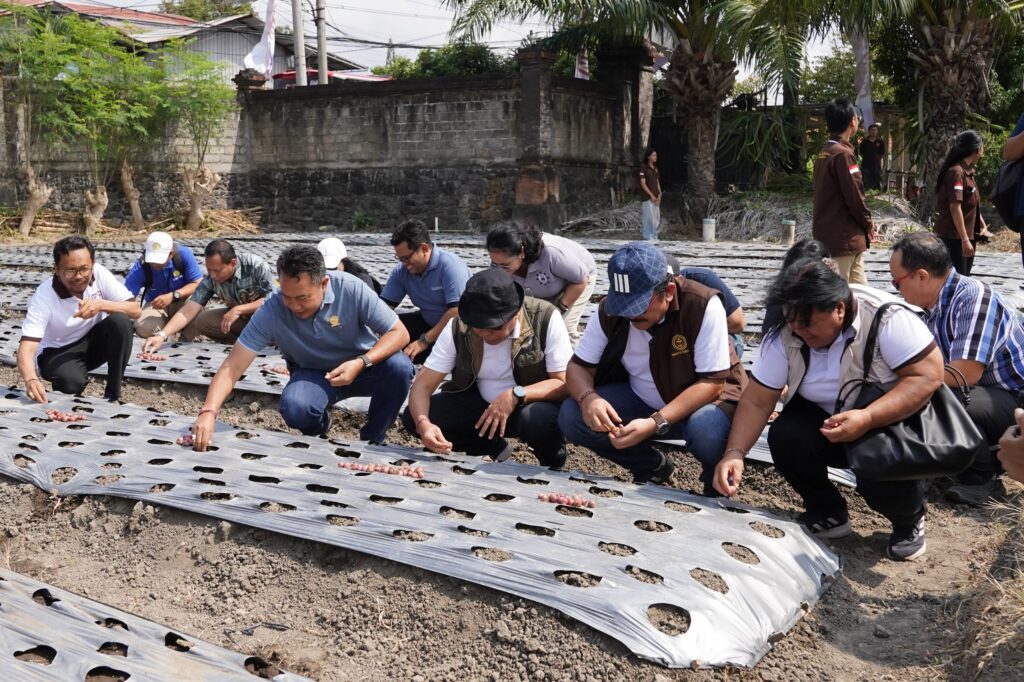
The Faculty of Agriculture focuses on the downstream processing of agricultural products, including the development of derivative products such as *jebag*, fertilizers, horticultural biopesticides, and lemongrass oil. Other strategic initiatives include plans to construct a “plant hospital” facility and a School Garden at the Pegok Experimental Garden to serve as educational resources for students. Efforts to strengthen synergy with strategic partners—including the provision of superior seeds for crops like garlic and chili—are being intensified to help address seed availability challenges in Bali.

Meanwhile, the Rector of Udayana University, Prof. Ir. I Ketut Sudarsana, ST., Ph.D., expressed his hope that the Faculty of Agriculture would continue to grow and provide solutions to various issues facing the community, particularly in the fields of agriculture, food, the environment, and climate change. The Rector also emphasized the vital role of the Faculty of Agriculture in supporting Udayana University’s transformation from a Public Service Agency (BLU) state university into a State University with Legal Entity status (PTN-BH). According to him, this shift represents more than just a change in status; it entails a transformation in governance that grants the university greater flexibility to respond swiftly and effectively to the needs of society and the industrial sector. The Rector highlighted the importance of institutionally documenting and managing research outcomes and innovations. Udayana University is expected to become a “Center of Knowledge”—a hub serving as a reference point for the public, the government, and the business sector whenever they require information or scientific solutions.
Through the “Udayana Memanen” (Udayana Harvests) initiative, the Faculty of Agriculture at Udayana University reaffirms its commitment to sowing ideas, nurturing innovation, strengthening collaboration, and producing work that delivers tangible benefits to society.