
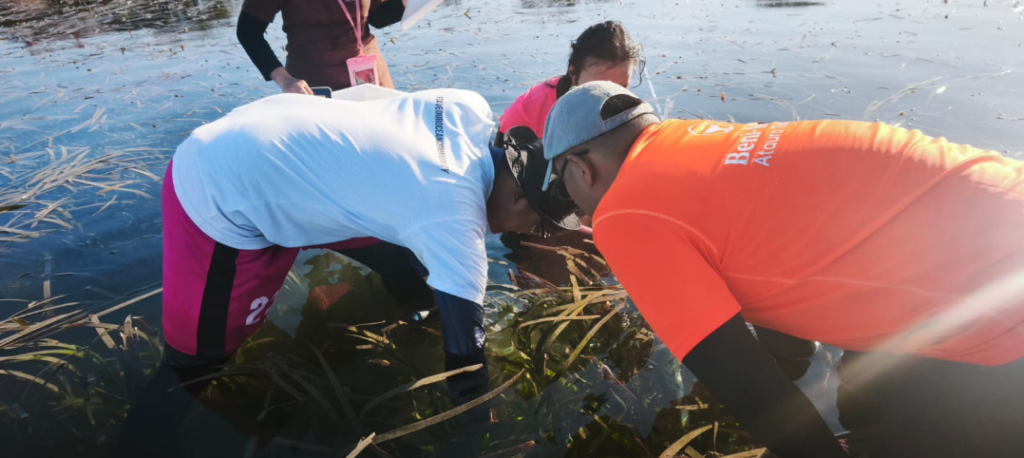
DENPASAR, August 31, 2026 – In an effort to strengthen Indonesia’s position in the global climate change mitigation agenda, a research team from Udayana University (Unud) is currently conducting a strategic study titled “Blue Carbon Projections for Mangrove-Seagrass Ecosystems in Benoa Bay and Surrounding Areas, and Economic Valuation to Support the Carbon Trading Agenda.” Funded through Unud’s Institutional Strategic Research (RSI) scheme, the project is led by Abd Rahman As’syakur, Ph.D., an academic and expert in coastal remote sensing from the Faculty of Marine Science and Fisheries (FKP).
The ongoing research aims to project blue carbon stocks and sequestration rates in the mangrove and seagrass ecosystems of Benoa Bay. This is being achieved through remote sensing-based spatial modeling and field verification, which are then integrated with economic valuation analysis to establish a baseline price for the carbon market.
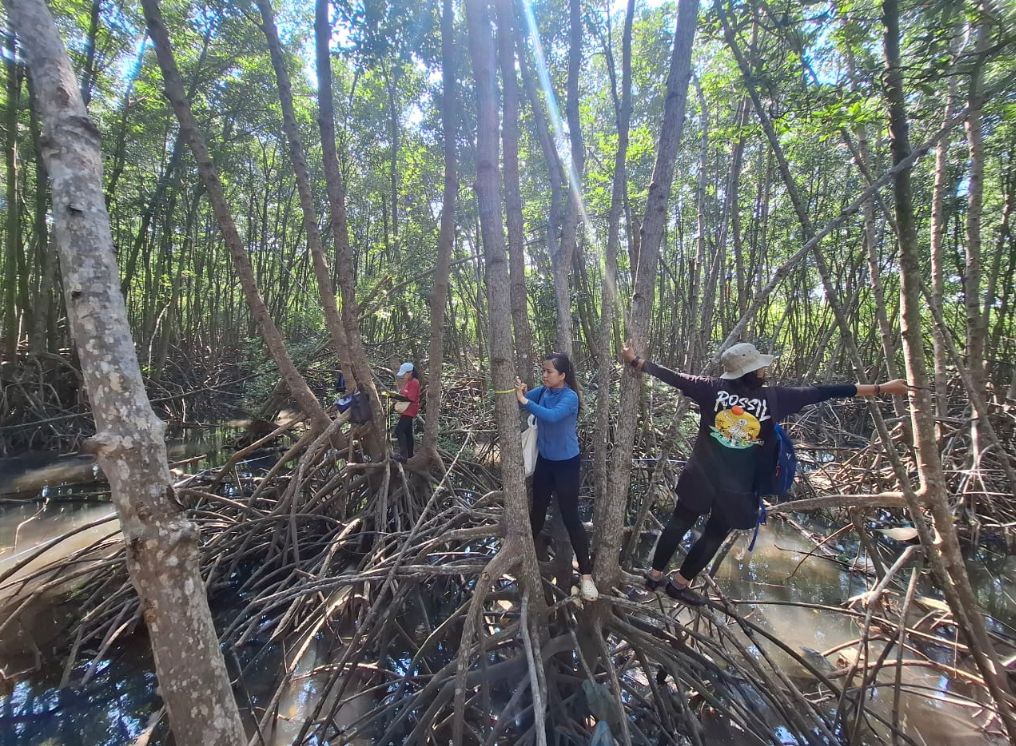
Lead Researcher Abd Rahman As’syakur, Ph.D., emphasized the importance of precision data in measuring these coastal carbon stocks. “Our team is currently conducting intensive field measurements and spatial modeling to calculate carbon content, ranging from vegetation to soil sediments. We aim to present transparent, measurable, and scientifically grounded data that meets the Measurement, Reporting, and Verification (MRV) standards required for carbon trading transactions,” said As’syakur.
He added that the Benoa Bay ecosystem possesses environmental dynamics that are crucial for Bali. “Through this ongoing research, we are not only measuring current conditions but also projecting future carbon sequestration potential to formulate an inclusive and sustainable carbon credit scheme,” he added. This research has a comprehensive impact across three key levels. For Indonesia, the findings provide an integrated scientific database to support the national carbon trading scheme, strengthen the commitment to achieving Nationally Determined Contributions (NDCs), and accelerate the 2060 Net Zero Emission agenda.
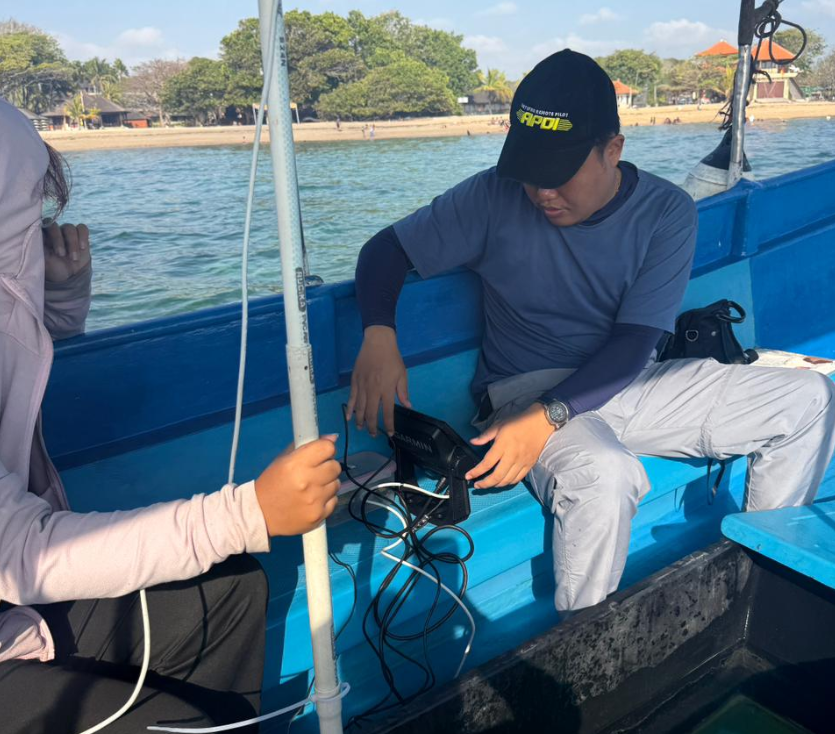
It reinforces Udayana University’s (Unud) commitment as a center of excellence for interdisciplinary research focused on marine and tropical coastal environments at both national and international levels. Furthermore, for the Faculty of Marine Science and Fisheries (FKP), it enhances the faculty’s academic capacity and research reputation while demonstrating its tangible role in generating science-based policy recommendations for both local and central governments.
Through the continuation of this research, Udayana University hopes that the Benoa Bay area can be optimized into a national model for managing blue carbon ecosystems—one that holds ecological value while simultaneously delivering sustainable economic benefits.