
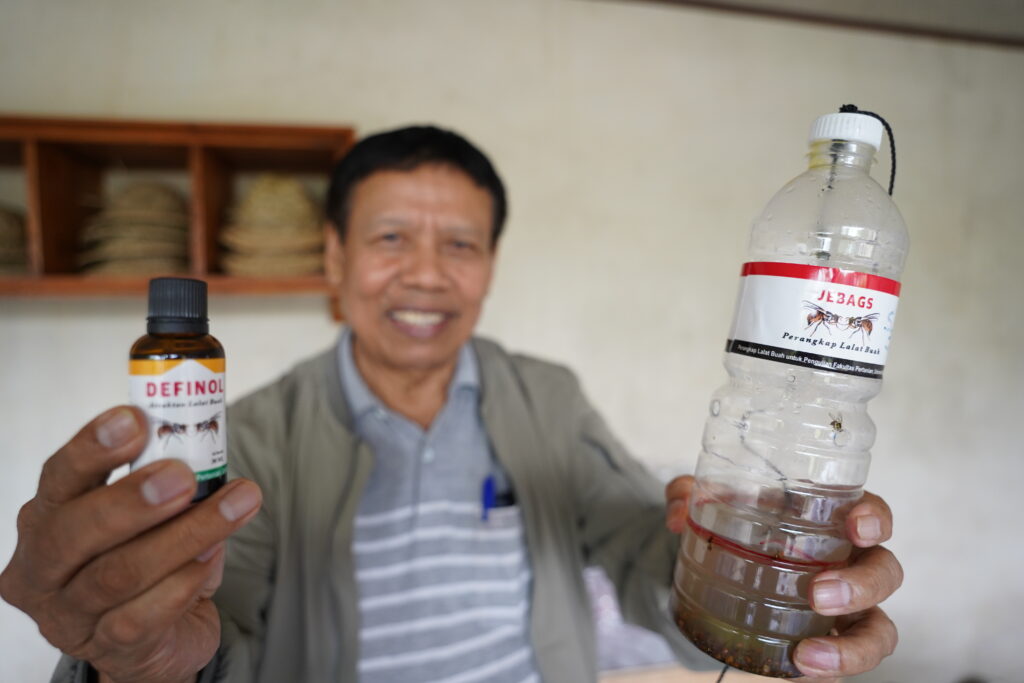
BANGLI – Udayana University continues to strengthen its commitment to being an “Impactful Campus” through research and innovation that addresses real-world community issues. One such initiative is the implementation of a fruit fly pest control technology—utilizing natural attractants and traps—in Belancan Village, Kintamani District, Bangli, on Saturday (August 8, 2026).
The technology, developed by a research team from the Udayana University Faculty of Agriculture, offers a pest control alternative that is more effective, economical, and environmentally friendly than the use of synthetic chemical insecticides. This activity is part of Udayana University’s Institutional Strategic Research (RSI) program, funded by the university to ensure research outcomes provide direct benefits to the community.
The research team leader, Prof. Dr. Ir. Dewa Ngurah Suprapta, M.Sc., explained that fruit flies are a major pest damaging various types of fruit and pose a challenge for farmers, particularly in producing horticultural goods that meet export market requirements.
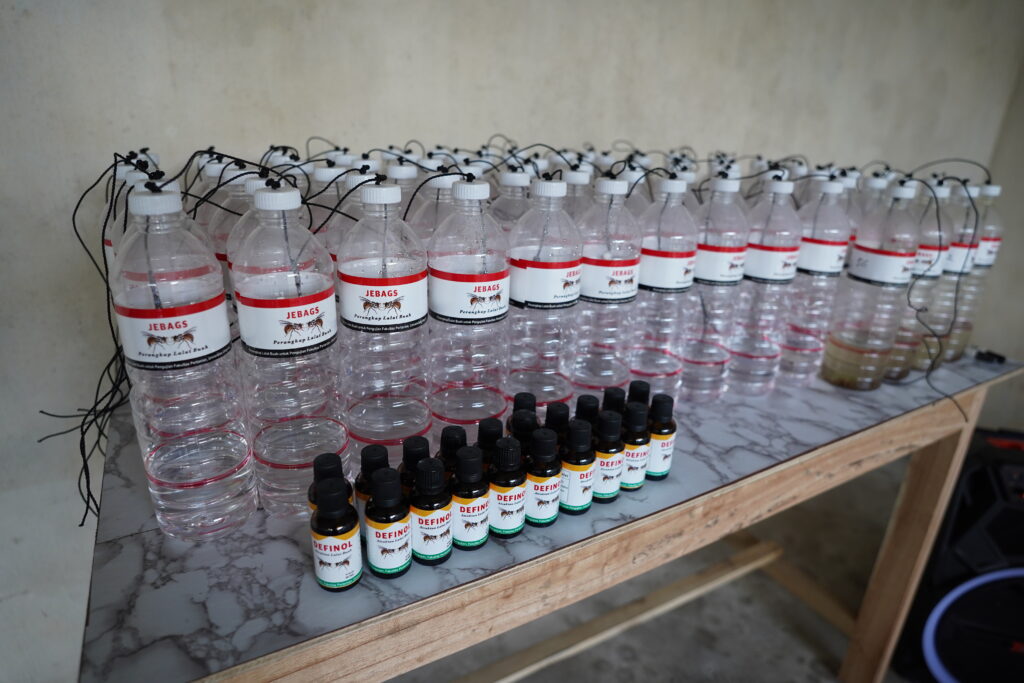
To address this issue, the team developed a combination of the natural attractant “Definol” and the “Jebags” trap. Definol utilizes a formulation of clove oil and nutmeg oil capable of attracting fruit flies from a distance of approximately 2.5 kilometers while simultaneously incapacitating them. The incapacitated flies then fall into the water within the Jebags trap. Both products have been registered for patents.
This technology is capable of capturing up to approximately 1,000 fruit flies per week in areas with high pest populations. Implementation costs around IDR 500,000 per hectare, a figure far lower than the cost of using chemical insecticides, which can reach approximately IDR 3 million per hectare.
The technology was implemented across citrus orchards covering approximately 15–18 hectares in Belancan Village and an equal area in Kerta Village, Payangan District, Gianyar, with the involvement of Udayana University students participating in the Community Service Program (KKN). Student involvement embodies the spirit of an “Impactful Campus,” directly linking academic knowledge with community needs.
Prof. Dewa Suprapta added that fruit fly control would be more effective if implemented on a large scale using the “wide aerial management” concept, covering a minimum of 200 hectares. Consequently, developing this technology requires collaboration with the government and various stakeholders to enable its widespread implementation across Bali.
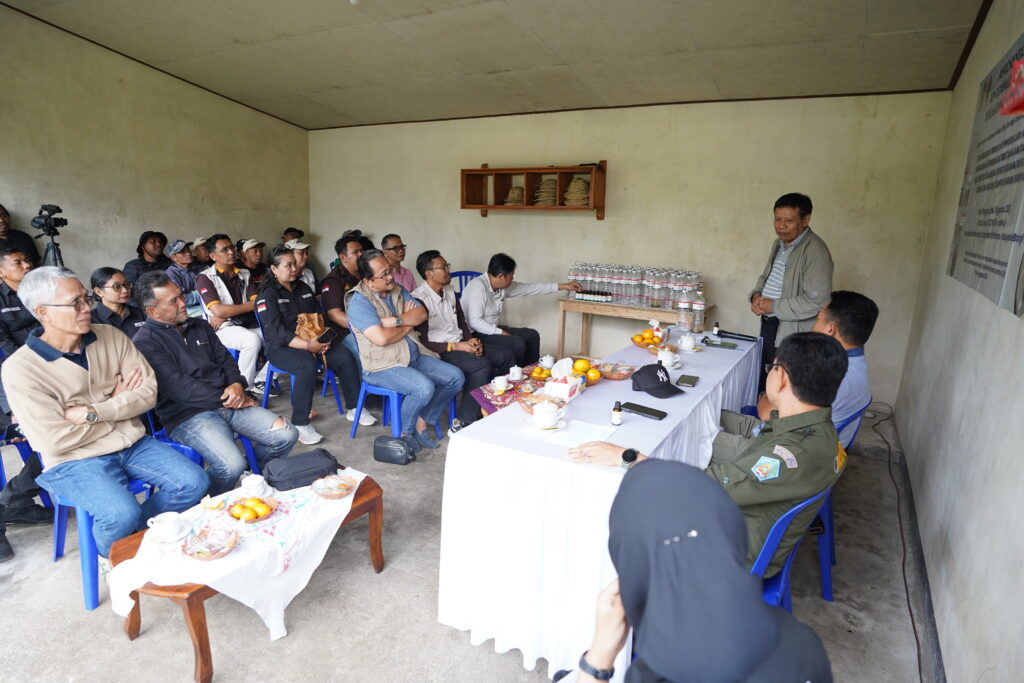
Udayana University Rector Prof. Ir. I Ketut Sudarsana, S.T., Ph.D., emphasized that the university’s research and innovation must be grounded in community issues rather than remaining confined to laboratories or academic publications.
“We hope that the research and innovations undertaken are truly based on the problems faced by the community—ensuring they do not stop at the laboratory bench or in publications, but instead create real impact and foster community well-being,” he stated.
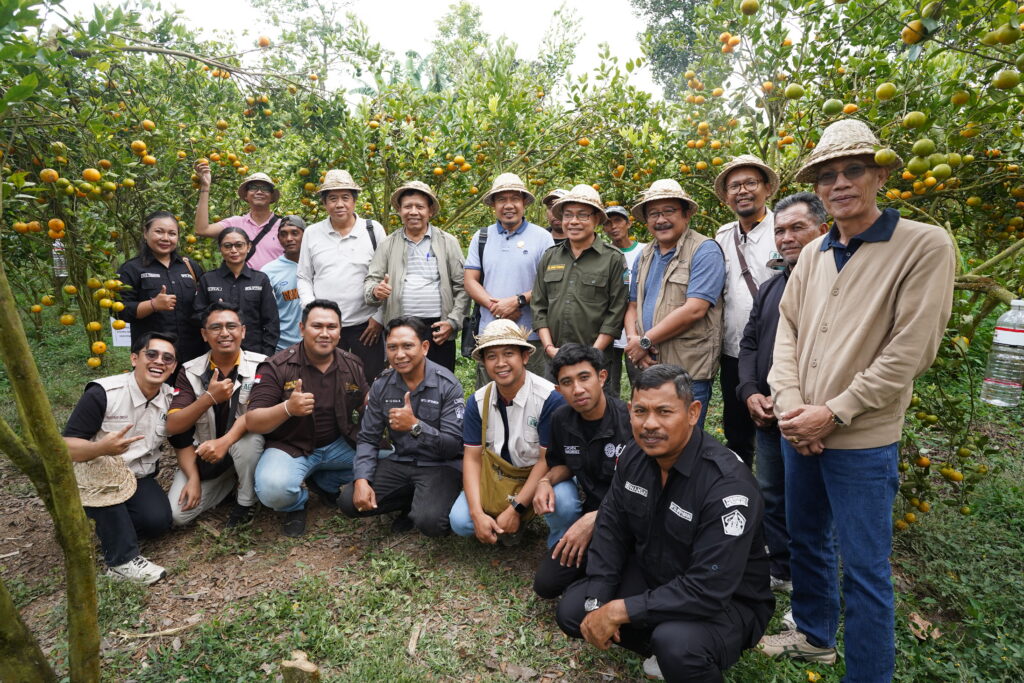
Dr. I Wayan Sunada, S.P., M.Agb., Head of the Bali Province Agriculture and Food Security Agency, welcomed the innovation, noting its alignment with food safety and environmental sustainability goals. The Bali Provincial Government also encourages continued collaboration with Udayana University on other pest control initiatives.
Through this innovation, Udayana University demonstrates that being an “Impactful Campus” goes beyond merely producing research; it involves ensuring that knowledge, technology, and student engagement serve as solutions that directly benefit the community and can be developed sustainably.