
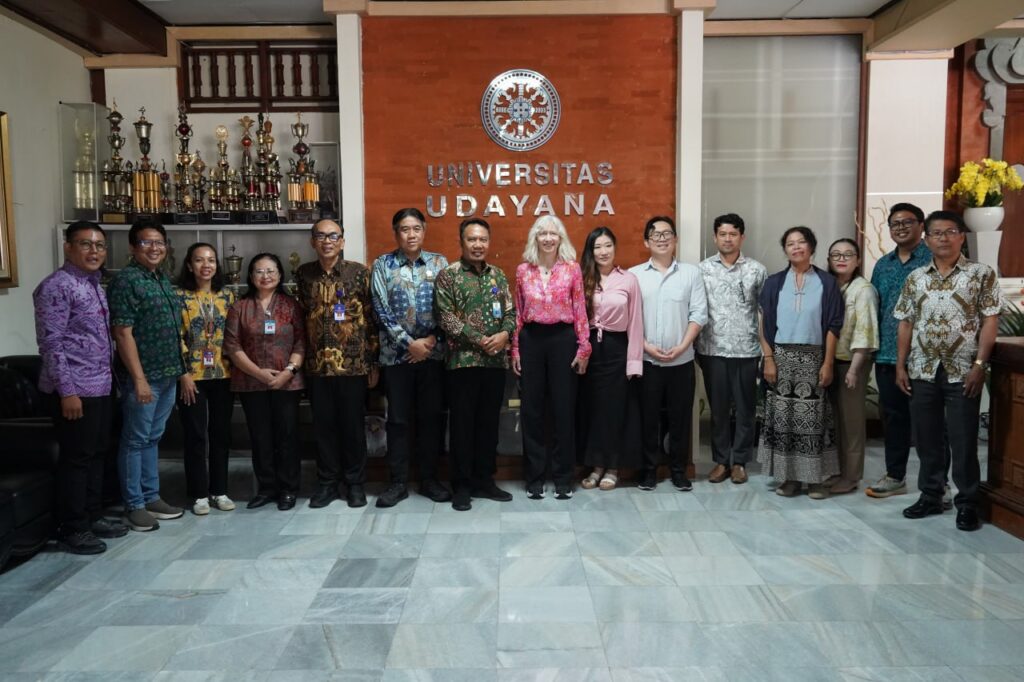
Jimbaran – Udayana University hosted a delegation from the Natural Capital Alliance, Stanford University, and the School of Government and Public Policy (SGPP) Indonesia, in the Language Room, 2nd Floor of the Rectorate Building, Jimbaran Campus, on Wednesday (July 8, 2026). This meeting marked the first step in exploring strategic collaboration in the fields of mangrove conservation, environmental science, and sustainable development. The event then continued with a field visit to the Simbar Segara Mangrove area.
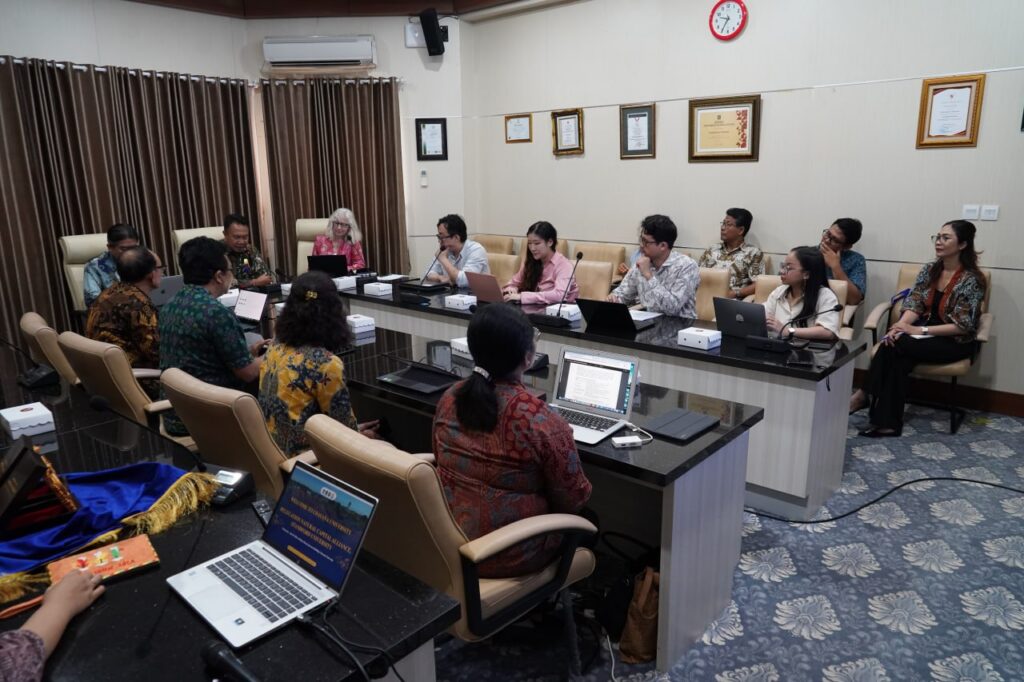
The Stanford University delegation was led by Prof. Gretchen Daily, Co-Founder and Faculty Director of the Natural Capital Alliance, accompanied by Dr. Tong Wu, Dr. Mengye Zhu, and Dr. Fakhrizal Nashr from the School of Government and Public Policy (SGPP) Indonesia.
Also present at the meeting were Udayana University Rector Prof. Ir. I Ketut Sudarsana, S.T., Ph.D., Vice Rector for Planning, Cooperation, and Information, Dean of the Faculty of Mathematics and Natural Sciences, Dean of the Faculty of Marine Affairs and Fisheries, Secretary of the Institute for Research and Community Service, Vice Dean of the Faculty of Agriculture, Head of the SDGs Center at Udayana University, Coordinator of Cooperation and Public Relations at Udayana University, along with relevant researchers and lecturers.
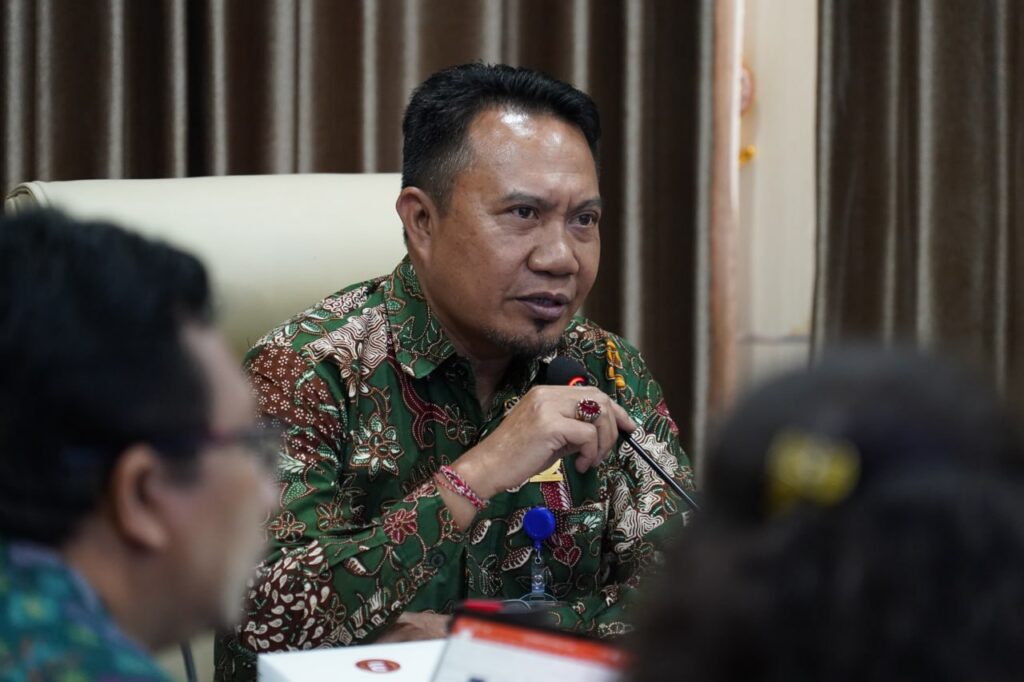
In his remarks, Udayana University Rector, Prof. Ir. I Ketut Sudarsana, S.T., Ph.D., expressed his appreciation for the visit by Stanford University academics and researchers, which he considered an important opportunity to strengthen international collaboration networks.
“We are honored to host these scientists and experts who have made significant contributions in the fields of environmental science, natural capital, and sustainable development. We hope this meeting will be the beginning of a stronger collaboration between Udayana University and Stanford University,” said the Rector.
The Rector explained that as a comprehensive university, Udayana University is committed to addressing various national and global challenges through interdisciplinary research and international collaboration. Various research has been developed in the fields of mangrove conservation, coastal ecosystem restoration, climate resilience, sustainable tourism, and marine resource management.
He stated that Bali currently faces various environmental challenges as a result of increased tourism activity, ranging from waste management and infrastructure development to coastal and mangrove conservation. Therefore, Udayana University continues to strive to provide science-based solutions that can support the policies of the Bali Provincial Government.
The Rector also stated that Udayana University is actively conducting research on mangrove area mapping and calculating carbon sequestration potential as part of its support for the development of the International Mangrove Center in the Ngurah Rai Nature Reserve. Furthermore, the academic community regularly carries out community service activities through mangrove seedling planting and clean-up activities around the campus.
Furthermore, the Rector emphasized that all academic activities at Udayana University are based on the Tri Hita Karana philosophy, which emphasizes the harmony of human relationships with God, fellow human beings, and the environment. These values align with the implementation of the Sustainable Development Goals (SDGs), which are part of the university’s commitment to achieving sustainable development.
The Rector also hoped that this meeting would open up opportunities for broader collaboration, not only in research but also in student and faculty mobility, human resource capacity development, and various other academic programs.
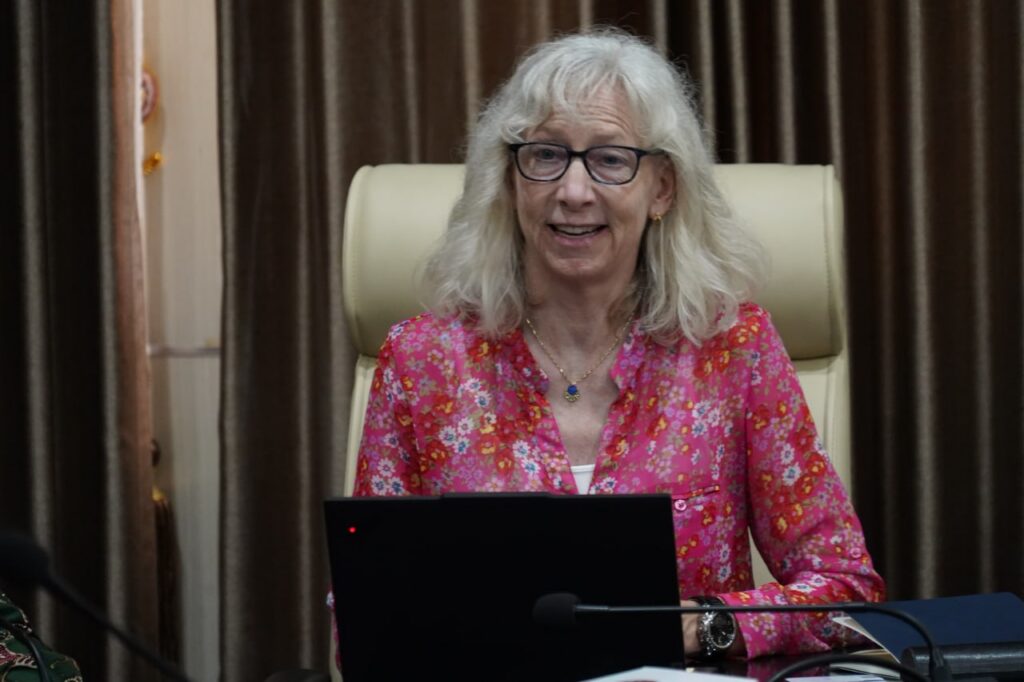
Meanwhile, Prof. Gretchen Daily stated that global challenges such as climate change, biodiversity loss, and environmental degradation cannot be solved by a single institution or discipline alone.
According to him, collaboration is key to delivering innovations that can have a real impact on nature conservation while improving public welfare.
In his presentation, Prof. Daily introduced the concept of Natural Capital, an approach that integrates environmental, social, and economic data into the decision-making process. Through this approach, development policies are expected to maintain a balance between economic growth, nature conservation, and public welfare.
He also outlined various implementations of this approach that have been implemented in more than 75 countries, including the development of spatial mapping tools to support mangrove conservation, coastal protection, water resource management, food security, and improving public health.
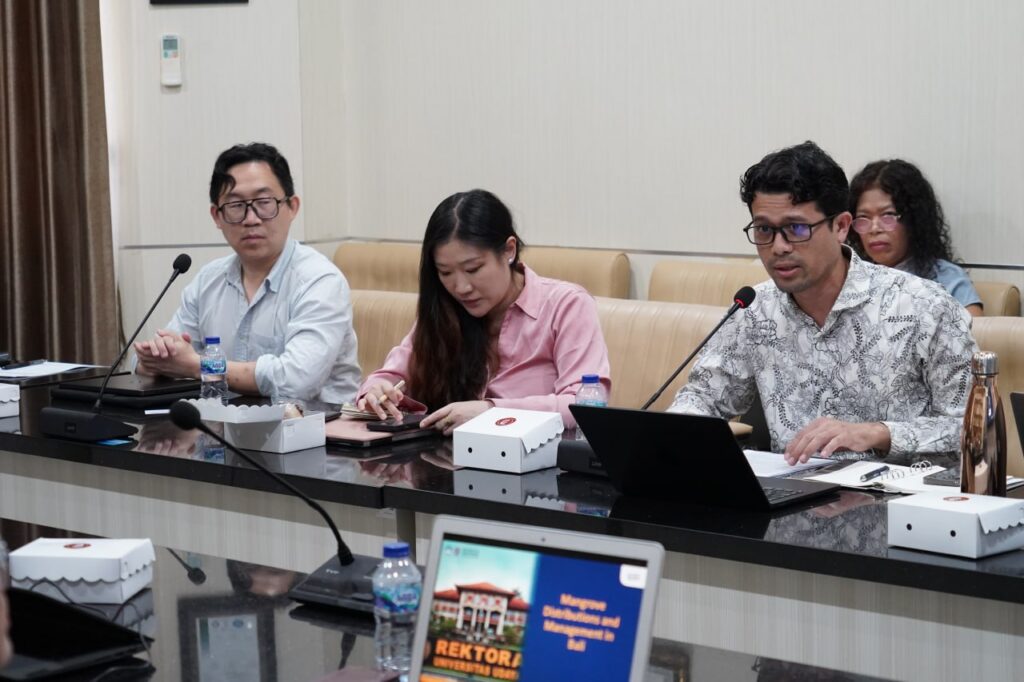
This meeting marked the first step in building synergy between Udayana University and Stanford University to develop collaborative research, academic exchanges, and science-based policy development to support mangrove conservation and sustainable development in Bali, Indonesia, and globally.