
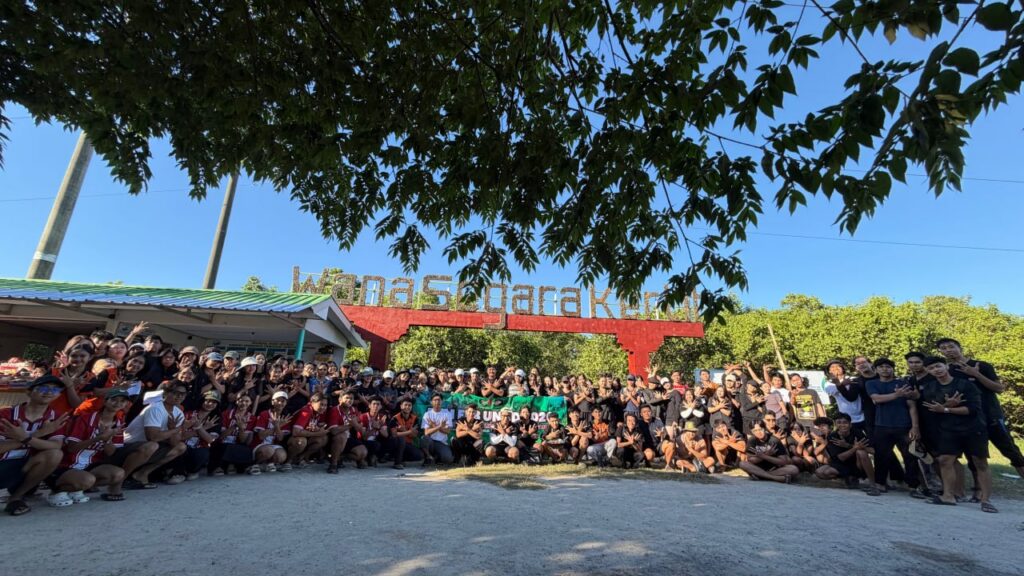
Badung – Students of the Faculty of Economics and Business (FEB) at Udayana University (Udayana University) have once again demonstrated their enthusiasm for creating an Impactful Campus through the Mangrove Fostering 2026 program, organized by the FEB Unud Student Executive Board (BEM) in the Wana Segara Kertih conservation area in Kedonganan, Saturday (May 30, 2026). This activity demonstrates the students’ concrete contribution to supporting environmental preservation while strengthening the role of higher education institutions in addressing sustainability challenges.
The program, under the auspices of Division III of Community Service, BEM FEB Unud, involved 183 FEB Unud students from the classes of 2022, 2023, and 2024 and received support from lecturers. The program was implemented in collaboration with the Mangrove Ranger Community and the management of the Wana Segara Kertih Eco Mangrove as partners who assisted throughout the entire activity.
The Head of the Student Executive Board (BEM) of the Faculty of Economics and Business (FEB) of Udayana University, I Dewa Dwika Dewantara Putra, in his remarks stated that this activity was a student effort to directly contribute to environmental sustainability while raising awareness among the younger generation about the importance of mangrove ecosystems for the lives of coastal communities.
Meanwhile, a representative of the Mangrove Ranger Community, Ir. Nyoman Sweet Juniartini, S.Hut., M.Si., and the Manager of the Wana Segara Kertih Mangrove, I Nyoman Sunarta, emphasized the importance of mangroves as a natural barrier in coastal areas, playing a role in preventing abrasion, maintaining ecosystem balance, and supporting biodiversity. In addition to their ecological benefits, mangrove ecosystems also have significant economic value through the development of ecotourism, which can open business opportunities, improve community welfare, and encourage sustainable local economic growth.
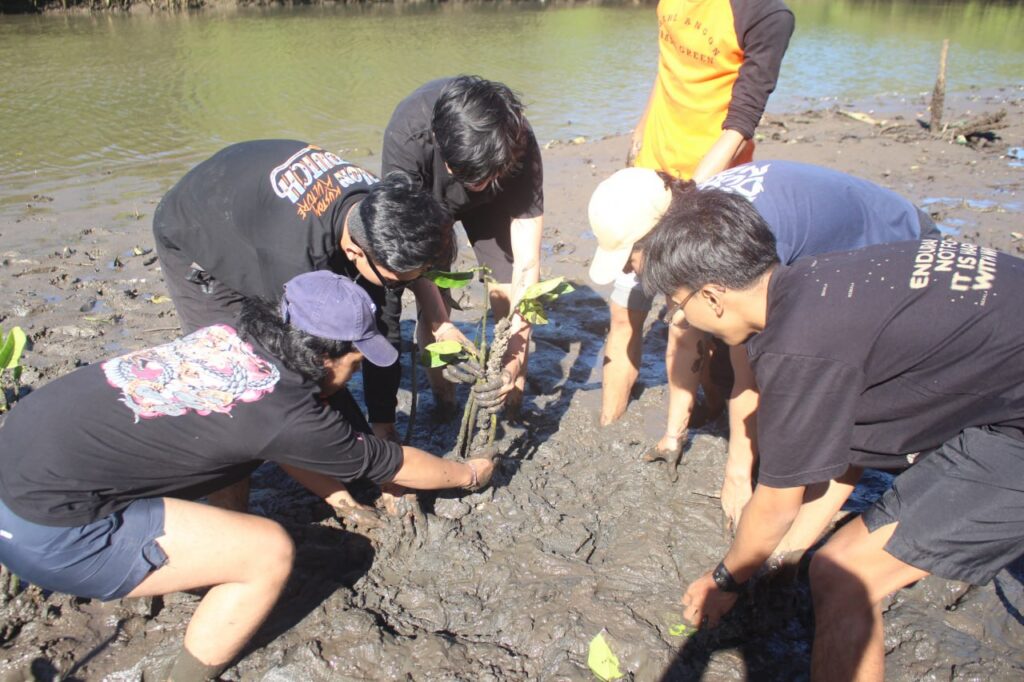
As a concrete action, participants planted 200 mangrove seedlings in a designated conservation area. This activity was carried out with assistance from partners to ensure the planting process followed proper conservation procedures and provided long-term benefits to the coastal environment.
In addition to planting, participants also participated in mangrove cleanup activities by collecting trash in the conservation area. Through this activity, students were encouraged to understand that environmental conservation is not just about planting trees, but also about maintaining the cleanliness and sustainability of existing ecosystems.
Through Mangrove Fostering 2026, Udayana University Faculty of Economics and Business students demonstrated that the campus is not only a center for education and scientific development, but also an agent of change that has a real impact on society and the environment. This activity also reinforced Udayana University’s commitment to supporting sustainable development through collaboration, dedication, and concrete actions that involve the younger generation as drivers of change.