
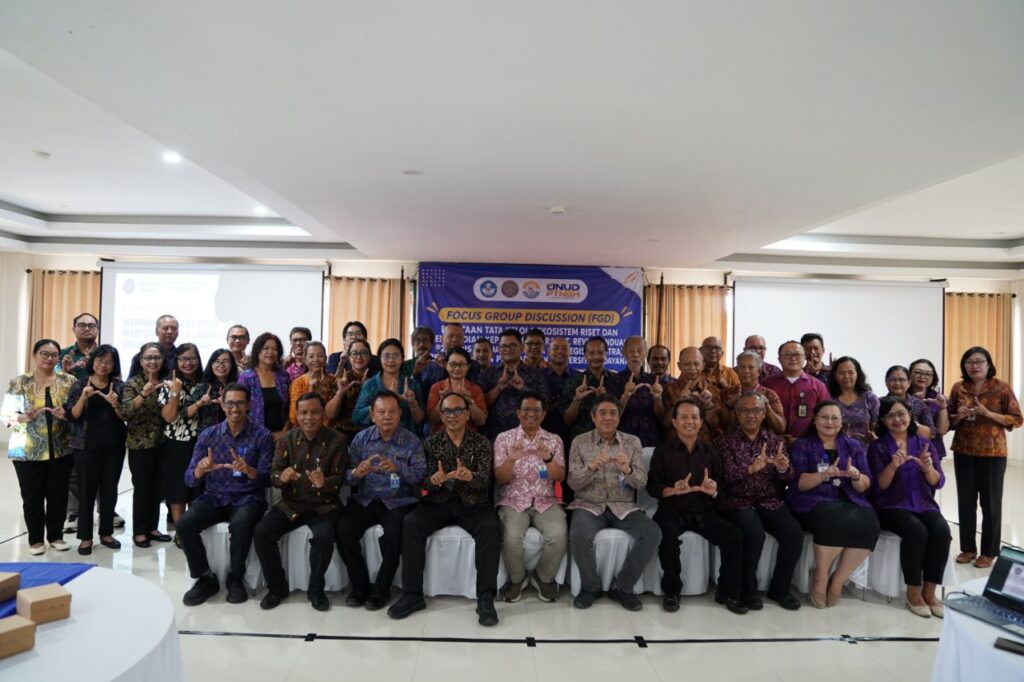
Udayana University (Unud) is strengthening the governance of its research and community service ecosystem as a strategic step toward its institutional transformation into a State University with Legal Entity status (PTN-BH). These efforts were addressed during a Focus Group Discussion (FGD) centered on restructuring the research and community service ecosystem, revising the 11th edition of the Research and Community Service (P2M) guidelines, and drafting a Strategic Plan (Renstra) for research and community service. The event took place over two days, November 10–11, 2026, at the Faculty of Marine Sciences and Fisheries, Jimbaran Campus.
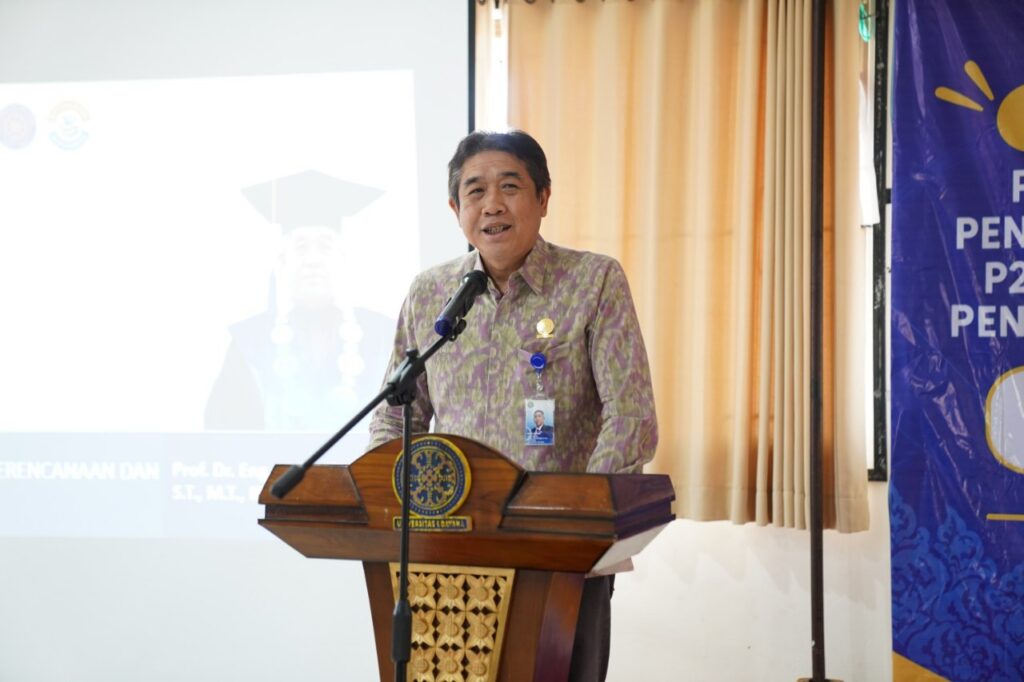
Udayana University’s Vice Rector for Planning and Partnerships, Prof. Dr. Eng. Ir. Made Sucipta, S.T., M.T., IPM., emphasized that the transition of Unud’s status from a Public Service Agency (BLU) university to a PTN-BH—in accordance with Government Regulation Number 35 of 2026—should serve as a catalyst for building a more robust, integrated research and community service ecosystem, one that is focused on tangible results and real-world impact.
He noted that this institutional transformation—which includes the transition of the Institute for Research and Community Service (LPPM) into the Directorate of Research and Community Service (DPPM), pursuant to Rector Regulation Number 14 of 2026—is not merely an organizational restructuring; it is also an opportunity to refine the university’s research management system.
“This transformation is an opportunity to build a research management system that is more integrated, collaborative, productive, and oriented toward real-world impact,” he stated.
He further encouraged academics to shift away from an individualistic research paradigm, advocating instead for interdisciplinary collaboration, the formation of consortia, and the strengthening of the university’s key strategic research themes. Consequently, the research produced is expected to possess greater competitiveness while simultaneously addressing various societal challenges.
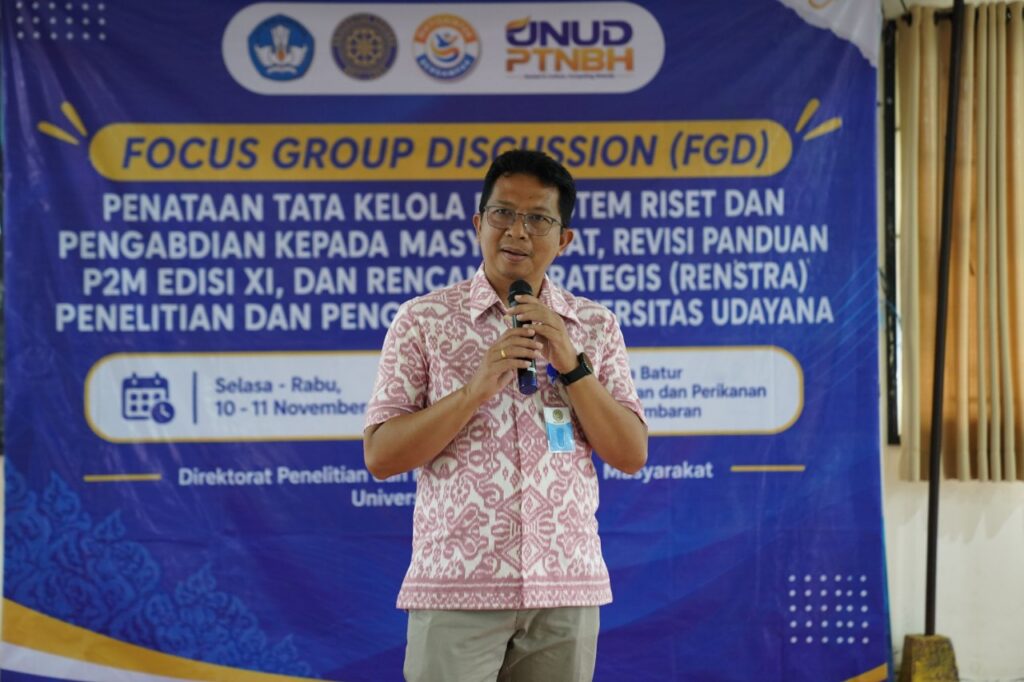
The Director of the Institute for Research and Community Service (DPPM) at Udayana University, I Gede Hendrawan, S.Si., M.Si., Ph.D., emphasized the importance of synergy among all academic stakeholders in developing a research framework that is adaptive to institutional changes. Coinciding with Heroes’ Day on November 10, he expressed his hope that this occasion would serve as an inspiration for Udayana University researchers to continue innovating and propel the university toward higher achievements.
This Focus Group Discussion (FGD) addressed three primary agendas: the structuring of the research and community service ecosystem, the revision of the 11th Edition of the Research and Community Service (P2M) Guidelines, and the development of a five-year strategic plan for research and community service. Regarding governance, discussions focused on strengthening research centers, optimizing laboratory facilities, integrating Expert Group Fields (KBK), and enhancing inter-faculty collaboration. These efforts are intended to foster multidisciplinary research collaborations and improve the university’s capacity to secure research grants at both national and international levels.
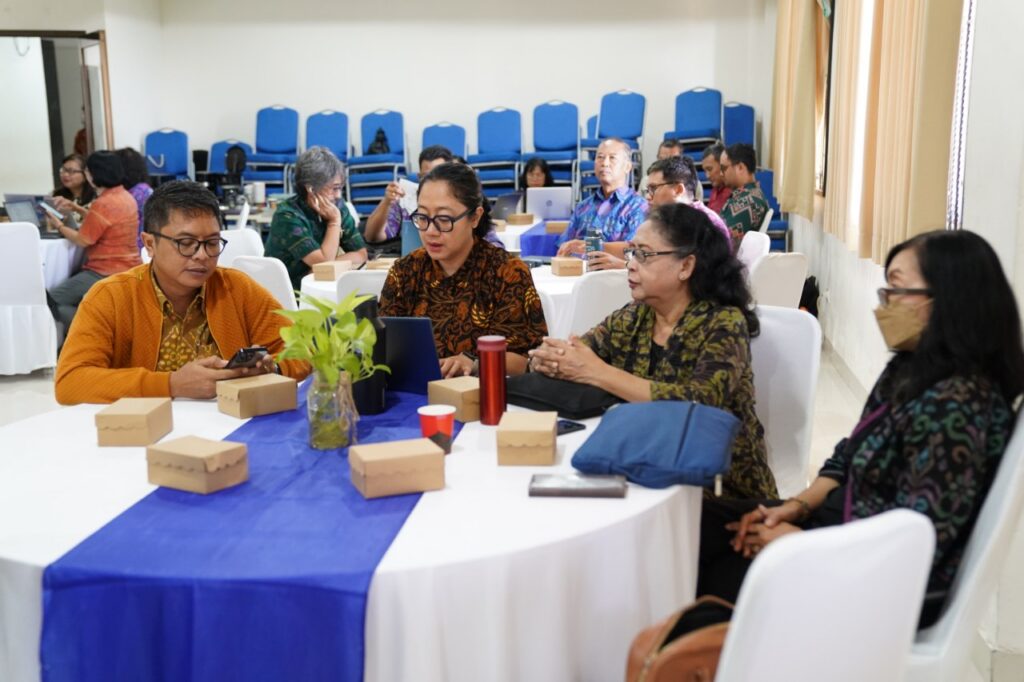
Meanwhile, the revision of the 11th Edition of the P2M Guidelines aims to refine internal funding schemes for the 2026/2027 period, making them more strategic and effective as a catalyst for improving research quality. Internal funding is intended not only to yield scholarly publications but also to encourage faculty members to secure external grants and enhance the practical application of research outcomes.
During the session, Prof. Sucipta also highlighted the importance of increasing the impact of research as a key indicator of the university’s international competitiveness—with a particular focus on boosting citation rates for scholarly work. Moving forward, research incentive schemes are expected to consider not only the number of international publications but also citation rates as an indicator of the utility and influence of research findings on the advancement of science. Furthermore, strengthening international partnerships and collaborations is also a key focus.