
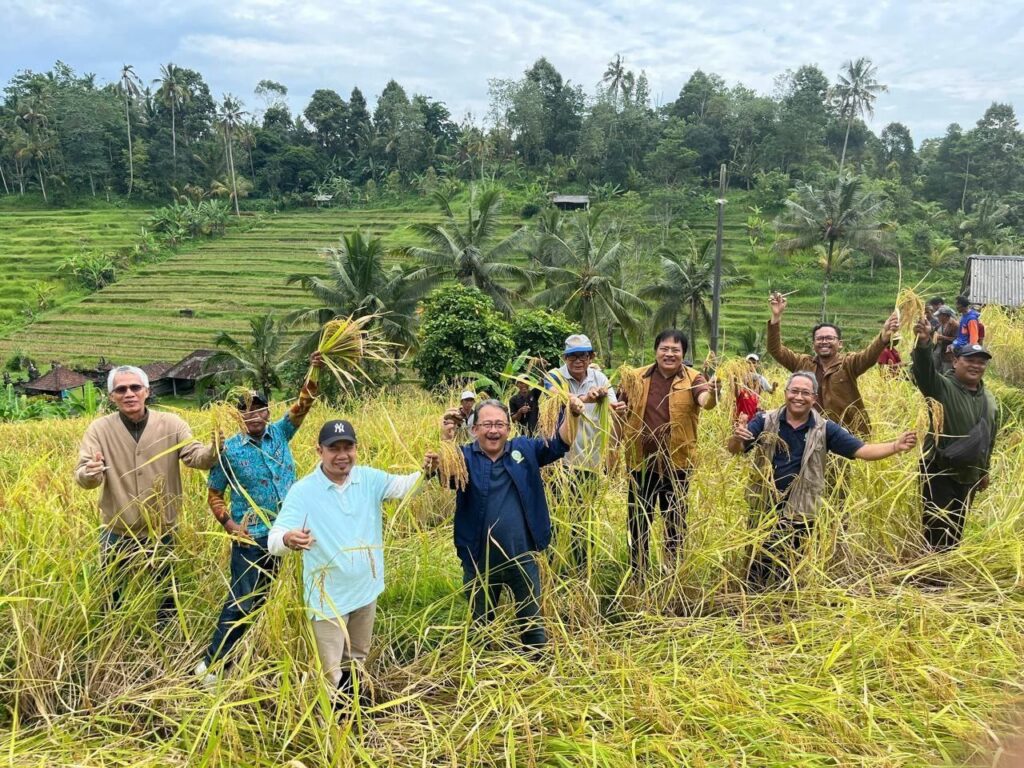
Tabanan - The Bali Local Rice Research Team of the Faculty of Agriculture, Udayana University, carried out a joint harvest activity for "Bali Local Rice Seeds" at Subak Wangaya Betan, Mengesta Village, Penebel District, Tabanan Regency, Bali, Sunday (12/21/2025). This activity was attended by the Rector of Udayana University along with the Vice Rector for Student Affairs, the Head of LPPM, the Dean of the Faculty of Agriculture, Prof. I Nyoman Suarsana, the Head of the Somya Pertiwi organic rice group, the Kelian Subak, the Village Head, the Kelian Adat of Mengesta Village, the BPP and PPL of Penebel District, the Bali Local Rice research team, and other farmer members.
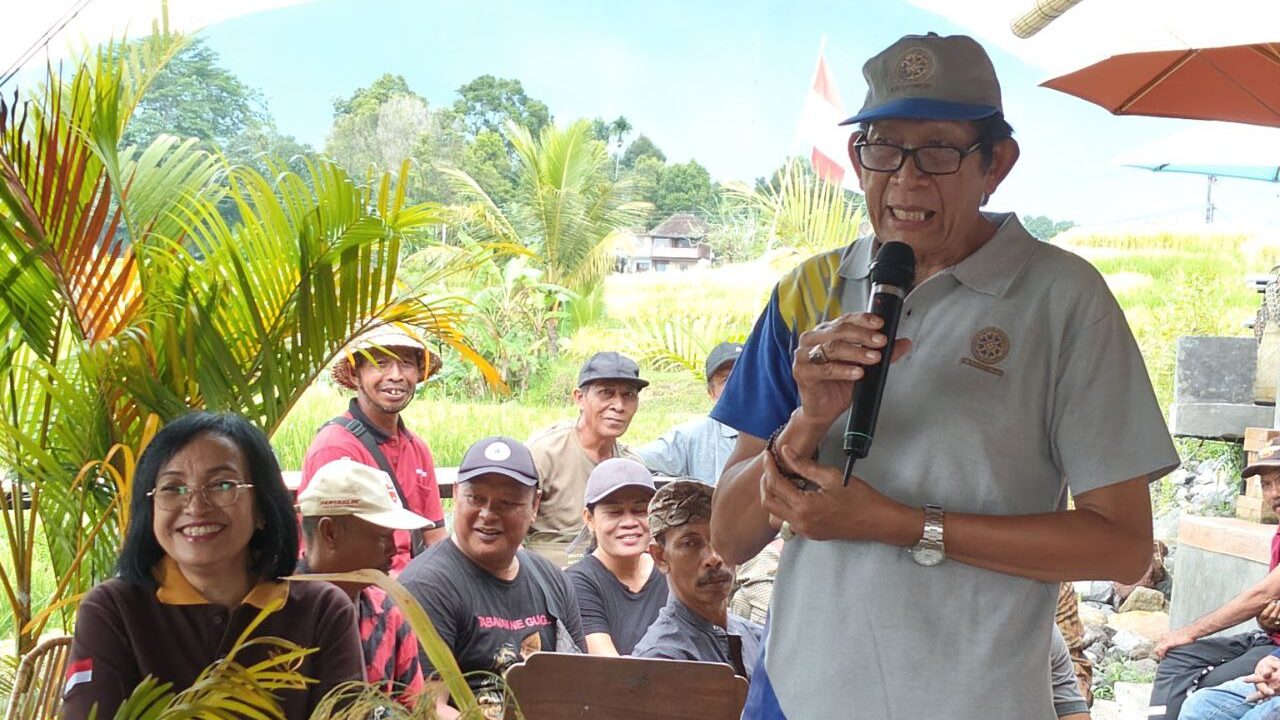
In his report, the head of the research team, Dr. Ir. I Gede Wijana, M.S., stated that Balinese local rice has distinctive advantages, including a soft, fluffy taste and a unique aroma, which are an important part of Balinese culinary and agricultural culture. However, this local variety still faces various challenges, such as a long harvest period, relatively low productivity, and unsecured genetic purity, which limit its optimal development. However, this local variety holds important germplasm value for both national and regional breeding programs.
Wijana hopes that in the future, superior Balinese local rice varieties can be developed with a faster maturity, high productivity, a soft, fluffy taste, and a preserved distinctive aroma, thus meeting the need for increased yields without abandoning local wisdom. As an initial step in the research program for developing Balinese local rice, parent stock collection and purification are being carried out as a basis for germplasm preservation.
"This activity aims to obtain original or truly pure seeds through a purification process. By planting the purified seeds, it is hoped that the sustainability of Balinese local rice can be maintained," he said.
It was further explained that this activity was a collaboration between Udayana University through the Bali Local Rice Development Research Team of the Faculty of Agriculture and the Somya Pertiwi Organic Rice Farmers Group, Mengesta Village, Penebel District - Tabanan. The Bali Local Rice Seed Harvesting activity for the purpose of seed purification was carried out on the fostered farmers' land with the aim of providing an understanding and direct examples of basic seed purification techniques. Several criteria that were considered included healthy land conditions, the right harvest age (≥85 percent of yellowing grains per panicle), healthy and full rice clumps and seeds, long panicles, and ensuring the correctness of the variety. After the grain was harvested and dried, a health test such as a float test using a salt solution could be carried out. The panicles selected were prioritized from the mother stem and tillers, not from advanced tillers.
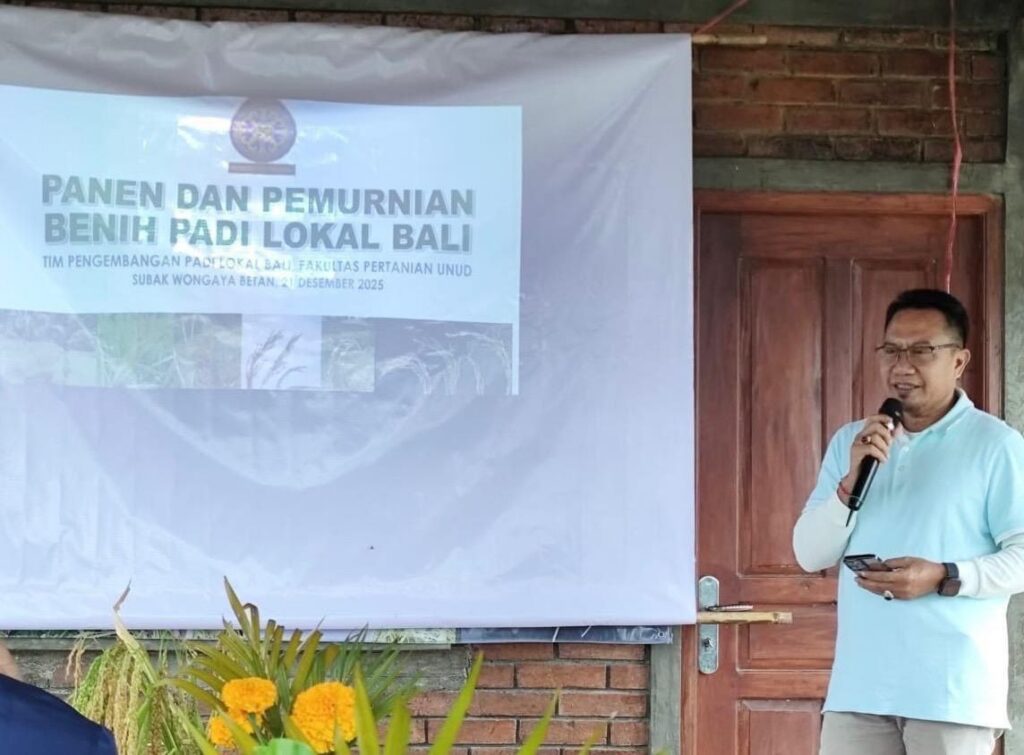
Meanwhile, Unud Rector Prof. Ir. I Ketut Sudarsana, S.T., Ph.D., in his remarks, conveyed that Balinese Local Rice is a very valuable germplasm heritage, not only for Bali, but also for the development of national agriculture. The superiority of Balinese local rice, such as the soft taste of rice and its distinctive aroma, is a cultural and culinary identity that we should all preserve. However, we also recognize that local rice faces challenges, including relatively low productivity, long harvest time, and the lack of guaranteed seed purity. Therefore, the activities we are carrying out today have strategic significance. Purifying Balinese local rice seeds is a very important first step in maintaining genetic purity, improving seed quality, and becoming a foundation for the development of superior varieties based on local wisdom.
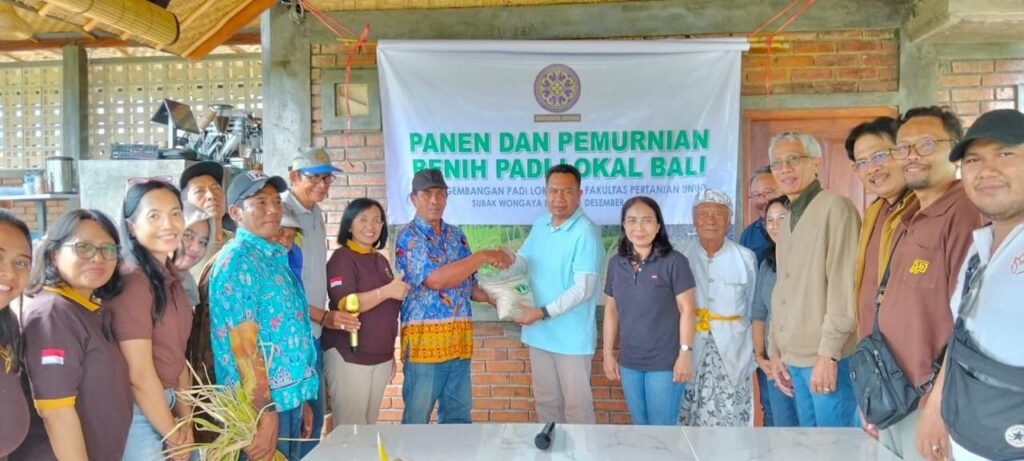
"This effort aligns with Udayana University's role as a university committed to the development of science, the preservation of local genetic resources, and community service," stated the Rector of Udayana University.
The Rector expressed his deepest appreciation for the collaboration between the Bali Local Rice Development Research Team of the Faculty of Agriculture, Udayana University, and the Somya Pertiwi Organic Rice Farmers Group. This collaboration reflects a true synergy between academics and farmers, where science goes beyond the laboratory and is applied directly in the field to provide tangible benefits to the community. He also expressed his hope that the farmers will gain understanding and skills in conventional seed purification techniques, while for the researchers, this activity will provide a valuable source of data and field experience for further research. This will ensure the sustainability of Bali's local rice, while also supporting food security and sustainable agriculture. In closing, he stated that Udayana University will remain committed to supporting research and community service activities that are based on local potential, oriented toward sustainability, and involve all stakeholders. He hopes this activity can become a model for collaboration that can be developed in other areas of Bali.
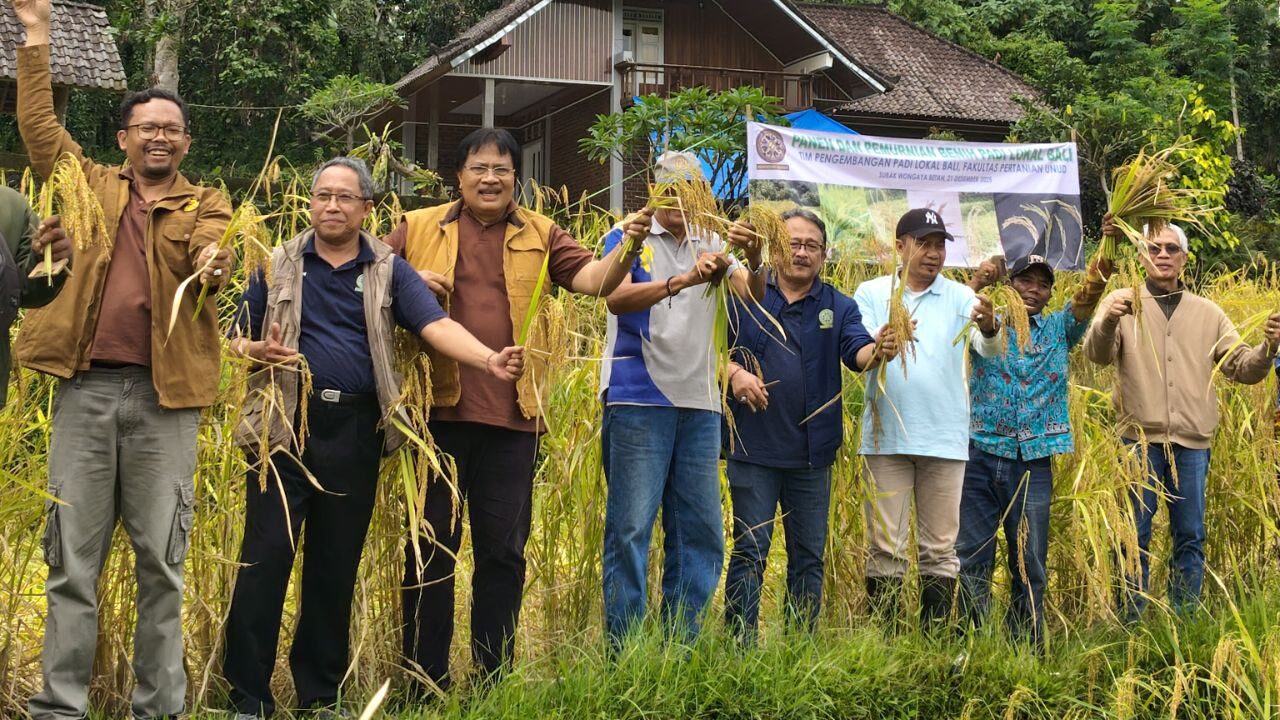
The Rector highly appreciated the collaboration between the Bali Local Rice Development Research Team of the Faculty of Agriculture, Udayana University, and the Somya Pertiwi Organic Rice Farmers Group. This collaboration reflects a real synergy between academics and farmers, where science does not stop only in the laboratory, but is applied directly in the field to provide real benefits to the community. He also hopes that farmers can gain understanding and skills regarding conventional seed purification techniques, while for researchers, this activity will be a source of data and invaluable field experience for further research development. Thus, the sustainability of Balinese local rice can be maintained, while supporting food security and sustainable agriculture. In closing, he stated that Udayana University will continue to be committed to supporting research and community service activities that are based on local potential, oriented towards sustainability, and involving all stakeholders. He hopes that this activity can become a model of collaboration that can be developed in other areas in Bali.